Drosera (Sundew) Growing Methods and Precautions
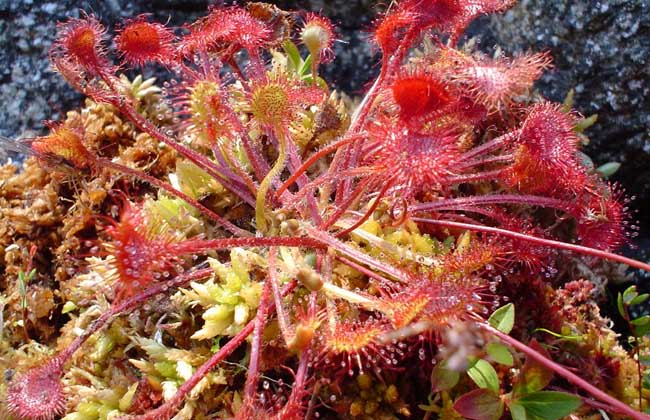
Drosera is a major category of carnivorous plants, also known as sundew, summer traceless, white flower leaf, etc. Its leaves are densely covered with crystal-clear "dewdrops" that are dazzling and deeply loved by people. However, for its prey, these dazzling lights are "deadly," because Drosera hunts precisely through these "dewdrops." Let us take a look at the growing methods for Drosera below!
Growing Substrate
1. Except for tuberous Drosera, other types of Drosera have low requirements for substrate. Pure sphagnum moss can be used, or two parts sphagnum moss or peat mixed with one part perlite, then add one part akadama soil, bark, vermiculite, or other substrates. To prevent green algae from growing on the substrate surface, spread a thin layer of non-decaying granules such as akadama soil on the surface to avoid contact between the lower substrate and light.
2. The growing substrate for tuberous Drosera is configured differently. It requires sandy soil with good drainage. Peat and perlite can be mixed at a 1:2 ratio, or peat, perlite, and river sand can be mixed at a 1:1:1 ratio. Also try to use a large pot with a diameter and depth of 15 cm or more.
Humidity Management
1. Drosera has low humidity requirements, needing to be controlled between 40 and 90%. When it is dry in winter, general indoor humidity can usually meet the requirements. During hot summers, humidity should not remain above 90% for several consecutive days, otherwise it may cause stem and leaf rot. If this occurs, ventilation should be strengthened immediately. In cool seasons, humidity as high as 95% generally does not cause problems.
2. Drosera that has just been repotted or newly planted after mailing is relatively fragile and usually has no mucus, so humidity needs to be increased. The simplest methods are to use a glass tank or cover with a transparent bag for enclosed cultivation. However, remember that during enclosed cultivation it must not receive direct sunlight, otherwise a sudden rise in temperature will suffocate the plant to death. It should be placed in a bright, cool place. After 1 week, gradually increase ventilation until it adapts to an environment without enclosed cultivation, then gradually increase light.
Light Management
1. The vast majority of Drosera species are relatively sun-loving and tolerant of full exposure. Try to provide more than 4 hours of direct light every day. They are suitable for placement on a balcony or windowsill with good light. If all-day direct light can be provided, they will display very vivid colors and the mucus will become stickier. If there is no good lighting environment, all-day bright indirect light should also be provided. Generally, Drosera other than Northern Territory Drosera can also grow normally, but the plants will appear emerald green, and their growth vigor and disease resistance will be relatively poor.
2. Northern Territory Drosera is the type of carnivorous plant most tolerant of full exposure and also has the highest light requirements. It is best to provide an all-day direct sunlight environment. Less than 4 hours of direct light may lead to poor growth, and if it cannot receive direct light for a long time, it will die. If there is no good lighting environment, using a plant grow light for supplemental lighting is a good choice.
3. Drosera admirabilis and Drosera binata are two special Drosera species that grow in woodland with weaker light. They are not tolerant of long periods of direct light or high temperatures, and only need bright indirect light.
4. Some Drosera species that are relatively afraid of heat or have summer dormancy habits should also be placed in a slightly weaker light and cooler place in summer, avoiding direct light from 11 AM to 3 PM as much as possible. A 30-80% shade net can also be used for shading. Common examples include Drosera binata, Drosera filiformis, Drosera capensis, Drosera regia, Drosera adelae, etc.
Watering Control
1. Drosera is generally relatively moisture-tolerant. The "tray method" can be used to supply water, that is, placing the flower pot in a water tray, glass tank, or other container with water so that the water permeates through the entire pot by itself. Simply keep about 1 cm of water in the tray to keep the substrate moist.
2. Drosera has relatively high water quality requirements. When watering, use soft water with low mineral content such as calcium and magnesium. Hard water will slow the growth of Drosera, especially under hot temperatures, and may cause its stems and leaves to rot, followed by rapid death. If this has already occurred, replace it with clean substrate for rescue, and use soft water such as rainwater, bottled water, purified water, air conditioner condensate, or water from a reverse osmosis purification machine.
Temperature Control
1. Miniature Drosera: Miniature Drosera has low temperature requirements. The survival temperature is mostly between 0 and 37 degrees, with the optimal temperature between 5 and 30 degrees. In late autumn after the temperature drops below 15 degrees, many "winter buds" will begin to grow at the growth point in the center of the plant. These winter buds will mature after one month and will sprout like seeds to grow into new plants.
2. Temperate Drosera: Temperate Drosera species are all relatively tolerant of low temperatures. Below 10-15 degrees, the insect-catching leaves will slowly wither and grow some very small dormant leaves that do not have mucus. In winter, they can generally survive low temperatures of 0 degrees, and after warming in spring they will grow very vigorously. In summer, temperate Drosera is also generally relatively heat-tolerant, and most can safely survive high temperatures of 37 degrees, but when exceeding their optimal growing temperature (about 30 degrees), they should be placed in a slightly weaker light and cooler place.