How to care for potted pothos and spider plants? Care methods and tips
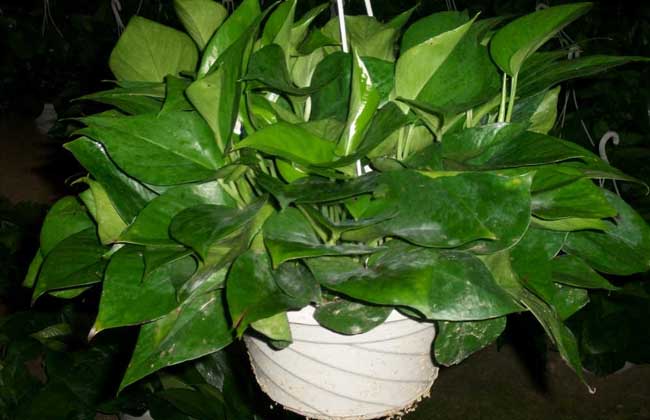
Pothos and spider plants are among the finest indoor decorative plants. Also known as devil's ivy and stone tangerine, pothos is a large evergreen climbing vine of the genus Epipremnum in the family Araceae, native to the Solomon Islands in Oceania. It is cultivated in Guangdong, Fujian and Shanghai in China, and is widely used for indoor potted display, carrying the meaning of "keeping watch over happiness." Let's take a look below at how to care for potted pothos and spider plants!
The growth habits of pothos and spider plants
Pothos and spider plants are shade-loving plants that prefer warm, humid environments and require loose, fertile, well-drained soil. They like hot and humid conditions, and the overwintering temperature should not fall below 15°C. The potting soil should be kept moist, and the leaves should be sprayed with water regularly to raise air humidity, which benefits the growth of aerial roots. For potting, leaf mold soil should be chosen, preferably slightly acidic. When grown indoors, they can be placed beside a window, but direct sunlight must be avoided. Too strong sunlight will scorch the leaves of pothos and spider plants, while too much shade will cause the beautiful markings on the leaves to disappear. Generally, receiving four hours of diffused light gives the best growth and development for pothos and spider plants.
Propagation methods for pothos and spider plants
1. Cuttings: Propagation of pothos and spider plants by cuttings is generally carried out in late spring and early summer. Cut 15-30 cm stems from healthy plants, pot them directly in loam soil, water thoroughly, and take care to shade them and keep them moist. They will take root and sprout in about 30 days.
2. Layering: Propagation of pothos and spider plants by layering involves weighing down the stems with a heavy object. Once the aerial roots enter the soil they can take root, and once new leaves grow, they can be separated from the mother plant.
How to care for potted pothos and spider plants?
1. Soil: When potting pothos and spider plants, choose fertile, loose, well-drained leaf mold soil. This plant tolerates shade and can be placed in a sunny indoor spot all year round. In dimmer indoor areas, it should be moved to a brighter environment every half month to recover for a period, otherwise the internodes tend to lengthen and the leaves become smaller.
2. Temperature: Pothos and spider plants like hot and humid environments. They can overwinter safely above 10°C, and generally grow normally above 20°C. Therefore, when keeping pothos and spider plants in winter, pay attention to keeping them warm, minimize opening windows, and avoid frost damage to the leaves. In addition, avoid excessive temperature differences and do not place pothos and spider plants near heat sources.
3. Light: Pothos and spider plants like shade and cannot be exposed to sunlight for long periods, otherwise the leaf edges will be scorched. However, note that pothos and spider plants should not be placed in a completely shaded environment; they must be given enough light for photosynthesis.
4. Water: Water pothos and spider plants so that the soil is moist, and never let the potting soil dry out, otherwise it easily causes yellow leaves and a poor plant shape. But watering should be moderate; too much water causes waterlogging in the pot, leading to root rot and withered leaves. In winter, when temperatures are low, watering can be reduced, and during the growing season, water more as appropriate. Also note to spray water on the leaves to wash away dust, which helps keep the leaves glossy and emerald green.
5. Fertilizer: Before winter sets in, pothos and spider plants are mainly given liquid inorganic fertilizer by watering or spraying, about once every 15 days. After winter begins, fertilization is mainly by foliar spraying, applied through the stomata on the leaves; the fertilizer is absorbed through the stomata on the leaves, so its effect acts directly on the leaves. Specialized fertilizer should be used for foliar feeding, as ordinary inorganic fertilizer is not easily absorbed by the leaves. The Beida Huhuashen series and Japan-made Hua Yifan can both be used as foliar fertilizers.
6. Pruning: Pruning of pothos and spider plants is done in spring. When the stems have covered the moss pole and the tips extend about 20 cm beyond the pole, cut back the stem tips of 2-3 of the plants by 40 cm. After the cut-back stems sprout new buds and leaves, cut back the stem tips of the remaining plants. For potted plants that have lost leaves on the whole plant or the lower half due to winter cold or other reasons, cut back half of the stems by 1/2 and the other half by 2/3 or 3/4, so that the cut points are staggered in height; in this way the new leaves growing below the cuts can quickly cover the moss pole.
Precautions for pothos and spider plants
1. Pothos and spider plants like moisture. During the growing season, watering should keep the potting soil consistently moist. In summer, while watering thoroughly, also pay attention to spraying the leaves regularly. Whether to water every day is affected by many conditions, such as how much potting soil there is, the size of the plant, the material of the pot, the care environment and so on; water consumption varies greatly, so it must be judged specifically according to the above principles.
2. Pothos and spider plants must not be watered with rice water. Although rice water contains nutrients that can be used, it must be composted and fermented to maturity before use, otherwise it not only easily breeds pests but in severe cases can also cause root rot.
3. Pothos and spider plants have strong shade tolerance and can be kept indoors all year round in home cultivation. If placed outdoors, pay attention to shading, especially in summer, and especially prevent direct strong light, otherwise the new leaves will become smaller, the leaf color will be dull, and the leaf edges will easily be scorched.