How to Grow Potted Pothos Well? Practical Care Tips Shared
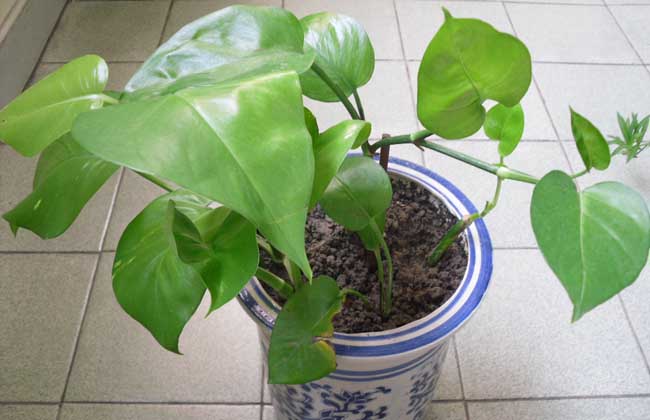
Pothos, also known as devil's ivy, golden pothos, and golden vine, is a large evergreen climbing plant of the genus Epipremnum in the Araceae family. It has strong twining ability, well-developed aerial roots, variegated leaves, and stays green all year round, with long branches trailing down. It can either climb on a cylinder made of palm fiber or on tree trunks for greening, or be grown as a hanging plant placed in a study, on a windowsill, on a wall, or along a wall. Let's take a look below at how to grow potted pothos well!
Pothos Growth Habits
Pothos is a shade-loving plant that prefers hot and humid environments, dislikes direct sunlight, and likes shade. It prefers soil rich in humus, loose and fertile, and slightly acidic. Its overwintering temperature should not be lower than 15°C. It survives upon contact with water, and because of its tenacious vitality, it is called the "flower of life." Its trailing green branches and leaves are very easy to satisfy. When grown indoors, whether in a pot or with a few stems cut for water culture, it can grow well. It can be allowed to climb on a cylinder made of palm fiber, or grown as a hanging plant placed in a study or on a windowsill, or simply kept as a potted plant.
Pothos Propagation Methods
1. Cuttings: For cuttings, choose semi-lignified branches that are robust and free of pests and diseases, cut them into 10-13 cm lengths, make the lower cut at an angle, leave 2-3 leaves at the upper end, and cut the leaves in half to reduce water evaporation and help the cuttings survive.
2. Substrate: The cutting substrate should be loose, breathable, well-drained loam or sandy soil with high humus content; vermiculite is best, as it allows fast rooting and a high survival rate. Before inserting, disinfect the soil with 2% formalin or 5% potassium permanganate.
3. Insertion: Quickly dip the lower end of the prepared cuttings in ABT rooting powder or indolebutyric acid, then insert them into the prepared substrate, burying 1/2 of the cutting. Water thoroughly so the cuttings make close contact with the substrate, then cover with plastic film.
4. Management: After insertion, keep the soil moist and the air temperature relatively high. Soil moisture should be around 50%, while air humidity is best at 80-90%. In the early stage of cutting, keep the shade shed at about 80% shading. This prevents direct strong sunlight while ensuring enough diffused light for leafy cuttings to photosynthesize, which helps rooting. After cutting, roots generally form after about 20 days.
How to Grow Potted Pothos?
1. Light: The original growing conditions of pothos are in forests shaded by towering trees, so its positive phototropism is not strong. However, in northern winters, to make up for the lack of temperature and photosynthesis, its light exposure should be increased. At the same time, when temperatures are low, open windows as little as possible, because leaves may be frostbitten in a very short time.
2. Humidity: Pothos grows faster in environments with higher air humidity. It is recommended to maintain indoor humidity, and a humidifier can be used to increase air humidity. A transparent plastic bag can be placed over the plant to create a mini greenhouse effect, but it should not exceed two hours.
3. Temperature: Although pothos does not like scorching sun, it is still quite sensitive to temperature. If the temperature is too low, it is easily frostbitten. A room temperature of around 20°C is enough. If heating equipment is used, the leaves of pothos should not be too close to it. If the indoor temperature is kept above 10°C, pothos can safely pass the winter.
4. Watering: In autumn and winter, the amount of watering should be strictly controlled according to room temperature. Before heating, when the temperature is lower, the plant's soil evaporates more slowly, so watering should be reduced, with the amount controlled at 1/4 to 1/2 of the original. Even after heating, watering should not be too frequent. When watering, pour less into the pot and let water seep through the palm fiber. In addition, water should also be sprayed on the areas where aerial roots grow on the palm pole to reduce insufficient root water uptake caused by overly rapid evaporation. For winter watering, water that has been left to sit for a day after being drawn is better; water that is too cold can easily damage the roots.
5. Fertilizing: Because pothos grown indoors absorbs nutrients less abundantly than outdoors, it is recommended to fertilize once every half month. You can buy fertilizer specially made for pothos on the market, or ask the flower shop owner to help choose fertilizer.
6. Pests and Diseases: Pothos plants are easily affected by pests and pathogens. Typical pests affecting pothos include mealybugs, red spiders, and scale insects. Mealybugs are usually the most common and can be controlled with alcohol, removed with cotton swabs, or picked off by hand.
What to Do If Pothos Leaves Turn Yellow?
1. Insufficient water, leaf edges dry: If there is not enough water in the pothos soil, the leaf edges will dry, turn yellow, and the leaves will fall off. Therefore, at this time, pothos needs to be watered sufficiently in time.
2. Too much water, leaf surface dull yellow: If there is too much water in the pothos soil or container, it will also cause yellow leaves. The leaf surface will look dull yellow and lusterless, and the roots may even rot. So at this time, stop watering and loosen the soil appropriately.
3. Direct sunlight, leaves wilt: Pothos grows in shady environments, so placing it under strong light for a long time can easily cause the leaves to wilt and wither, then turn yellow and fall off. At this time, place the pothos in a cool place with light and water it appropriately.
4. Dim light, new leaves yellowish: If pothos is placed in a dim and unventilated place for a long time, the green leaves will turn yellowish due to lack of chlorophyll, and especially the newly grown leaves will also be yellowish. At this time, place the pothos in a cool place with sufficient light.