What are the care methods for potted calla lilies?
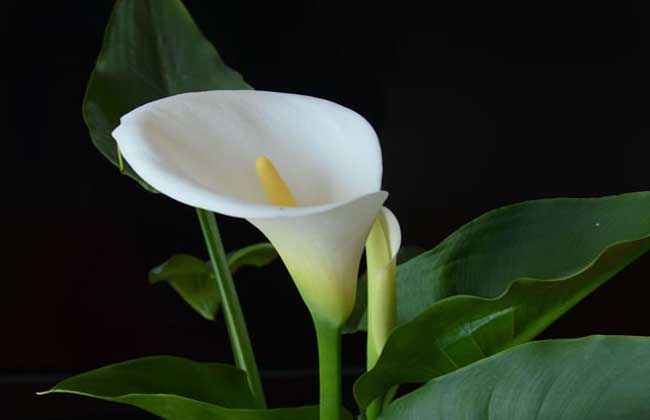
Calla lily, also known as arrowhead flower and taro, is a perennial robust herbaceous plant of the genus Zantedeschia in the Araceae family. It is native to northeastern and southern Africa. In China it is cultivated for ornamental purposes in Beijing, Jiangsu, Fujian, Taiwan, China, Sichuan, Yunnan and the Qinling region. It is often used for bouquets and wreaths, and can be used medicinally, having the effect of clearing heat and detoxifying. Let us take a look below at how to grow potted calla lilies!
Growth habits of calla lily
Calla lily is native to southern Africa and prefers a warm, humid environment with plenty of sunlight. It is not tolerant of cold or drought. The optimum growth temperature is 15-25°C, and the nighttime temperature should not be lower than 13°C. If the temperature is higher than 25°C or lower than 5°C, it is forced into dormancy. It likes water, and the soil should be kept moist during the growing period. After the tubers enter dormancy during the high-temperature period in summer, watering should be controlled. The soil should be fertile, clay loam with good water retention, with a pH between 6.0 and 6.5.
Propagation methods of calla lily
1. Division: After flowering in May to June, when the old leaves gradually wither and new leaves grow, or when repotting in mid-September, peel off the small tubers around the mother plant and pot them up by grade. They generally bloom 3 months after planting.
2. Sowing: Mainly sown indoors in pots. The optimum germination temperature is 18-24°C, and germination occurs 15-20 days after sowing. Seedlings need 3-4 years of cultivation before they can bloom.
How do you grow potted calla lilies?
1. Soil: For growing calla lily, the potting soil should preferably be sandy, acidic soil with good aeration and drainage. It is best to place a layer of coarse sand grains at the bottom of the pot to benefit the growth of the calla lily, then mix in one third garden soil and leaf mold, and add a small amount of organic fertilizer. It is best to choose a shallow pot for planting calla lilies.
2. Temperature: Calla lily likes a semi-shaded environment, so avoid placing it under strong light. The optimum growth temperature for calla lily is 22-30°C. Below 20°C, the growth rate of the calla lily slows down, and it may even stop growing. Calla lily likes a warm, humid environment, so when overwintering, special attention should be paid to keeping the calla lily warm.
3. Watering: Calla lily should be watered according to how dry the potting soil is. Before watering, first check the condition of the potting soil. Usually, water can be sprayed on the surface of the potting soil and on the flowers to keep the potting soil moist. During the growth period, calla lily likes sufficient moisture, so water should often be sprinkled on the leaves and the ground, and attention should be paid to keeping the leaves clean.
4. Light: Calla lily is fairly shade-tolerant in the early growth stage, but during vigorous growth it must have very sufficient light, and during the flowering period it needs even more sufficient light to ensure abundant flowers and lush leaves. If calla lily does not receive enough light during the flowering period, the buds can easily turn green or fail to bloom.
5. Fertilizing: During the growth period, fertilize calla lily once every 20 days, using decomposed soybean cake water. During the peak growth season, apply thin fertilizer frequently, once every 10 days. When fertilizing, do not pour the fertilizer water in from the leaf sheaths, so as to avoid causing the calla lily to rot and die. Too little fertilizer may cause the leaves to turn yellow and become malnourished, while too much fertilizer can also easily cause yellow leaves in calla lily.
6. Pests and diseases: Calla lily tubers are prone to rot during dormancy or storage. The tuber surface can be sprayed with a 1000-fold dilution of antibacterial agent 401 acetic acid solution, then dried before storage. Pests include red spider mites and thrips, which can be killed by spraying with a 1000-fold dilution of 50% dicofol and a 4000-fold dilution of 2.5% deltamethrin emulsifiable concentrate respectively.
What should you do if calla lily leaves turn yellow?
1. Overwatering: Calla lily likes moisture and must not lack water from the time it sprouts. It is best to water daily, but overwatering will cause the leaves to turn yellow. Calla lily should be watered when the soil is dry, and watered thoroughly when watering. Avoid overwatering.
2. Underwatering: Calla lily is a wetland flower, and drought and lack of water can also easily cause the leaves to turn yellow. Pay attention to watering and maintaining sufficient moisture, but also be careful to avoid water accumulating in the leaf center, so as to prevent soft rot.
3. Humidity too low: The growth of calla lily has certain requirements for air humidity. It is advisable to keep air humidity between 70 and 85%. When it is below 50%, the leaves will also show yellowing. Water and spray frequently to keep the potting soil and environment moist, and provide moderate ventilation to keep the air fresh and circulating.
4. Overfertilizing: Overfertilizing calla lily can cause strong fertilizer to burn the roots, which is the most common cause of yellow leaves in calla lily. Fertilization of calla lily should be done appropriately according to the growth stage.
5. Underfertilizing: Calla lily is fond of fertilizer, and too little fertilizer can cause the leaves to turn yellow. Generally, apply decomposed liquid fertilizer once every 10-15 days, and during the flowering period mainly apply phosphorus fertilizer.
6. Temperature too low: When growing calla lily, pay attention to temperature. It is advisable to keep the temperature between 20 and 25°C. It is afraid of cold and sensitive to saline-alkali conditions. In winter, the nighttime temperature must not be lower than 10°C. If it is too high or too low, the plant is prone to yellow leaves. When the temperature is too low, move it indoors to keep it warm.
7. Exposure to smoke: Calla lily is easily harmed by smoke, and frequent exposure to smoke will cause the leaves to turn yellow and affect flowering. When growing calla lily, pay attention to air quality issues, ensure air circulation, and prevent smoke exposure.