Reasons and Solutions for Yellowing Leaves on Dracaena
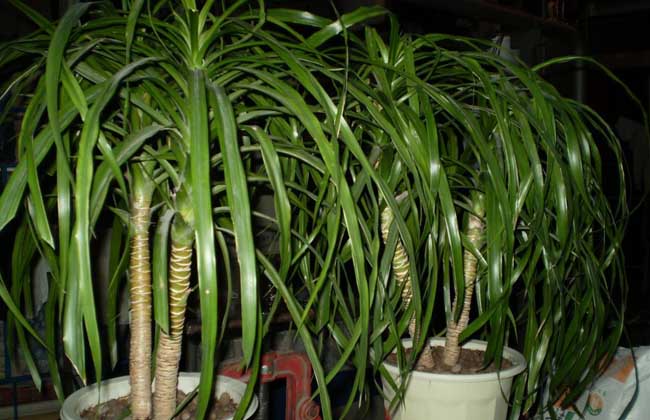
Dracaena, also known as Dracaena angustifolia, Dracaena longiflora, etc., is a shrub plant of the genus Dracaena in the family Agavaceae. It has strong adaptability to light, can be displayed continuously indoors in dim conditions for 2 to 4 weeks, and can be placed long-term in bright rooms. Small and medium potted plants can accent a study, living room, and bedroom, while medium and large plants can beautify and decorate halls. Now let us take a look at what to do when Dracaena leaves turn yellow!
Insufficient Light
[Cause] Dracaena likes warm, humid, and sunny environments, but it can also tolerate shade. However, if placed in an overly shady environment for a long time, the leaves will also fade.
[Solution] Place the flower pot on a southeast-facing windowsill so that it receives sufficient sunlight.
Temperature Too Low
[Cause] Dracaena likes warmth and cannot tolerate severe cold. The most suitable growth temperature is 20 to 28 degrees Celsius. If the summer temperature exceeds 32 degrees Celsius or the winter temperature is below 15 degrees Celsius, Dracaena will enter a dormant or semi-dormant state. When the temperature is too low, because the root system cannot absorb enough water, yellow-brown patches will appear on the leaf tips and leaf margins.
[Solution] In summer, keep it away from air conditioning to prevent the temperature from being too low and causing physiological disease.
Pests and Diseases
[Cause] Keeping Dracaena on a balcony or indoor windowsill for a long time makes it prone to red spider mites. When Dracaena is harmed by them, the leaves fade, chlorophyll is destroyed, dense small yellow spots and small yellow patches appear on the surface, and they gradually shrink, turn yellow, and wither. In severe cases, they fall off, losing their ornamental value.
[Solution] Red spider mites often hide on the back of branches and leaves or in places where the leaves are dense, spinning webs to stay concealed. Manual capture is relatively easy. If chemical agents are used for control, 20% dicofol emulsion can be added to 800-1000 times water to make a solution for spraying. This pesticide has a good killing effect on adults, nymphs, and eggs.
Unsuitable Soil
[Cause] Dracaena likes loose, well-drained soil rich in humus and nutrients. Unsuitable soil pH can cause Dracaena leaves to turn yellow.
[Solution] Dracaena likes acidic soil, which can be adjusted with ferrous sulfate, and it can also be used for foliar spraying.