What varieties of flowers are both easy to grow and beautiful?
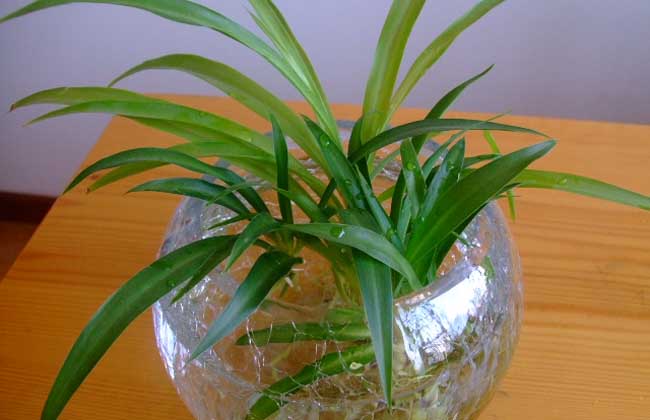
Flowering plants are beautiful or fragrant, and their three-dimensional, lively appearance can add vitality to home decor. Growing flowers at home not only purifies the air and beautifies the home environment, but also cultivates one's character. In fact, the flowers grown at home and in the office are much the same, and both can be the same. Below, let us take a look at what flowers are easy to grow and beautiful!
Pothos
Pothos is a plant of the genus Epipremnum in the family Araceae. Its stems are slender and soft, and its leaves are delicate and pleasing to the eye. Besides having high ornamental value, it also has a very strong air-purifying function and enjoys the reputation of a green purifier. In its metabolism, it can convert formaldehyde into substances such as sugar or amino acids, and can also break down and absorb benzene emitted by copiers and printers.
Cactus ball
Cactus ball is the collective name for spherical succulent plants in the family Cactaceae. Its stem is spherical or round and green, and its flowers grow among the clusters of spines on the vertical ribs, generally blooming in the early morning or evening and lasting from a few hours to one day. The cactus ball is a plant whose stem, leaves and flowers all have relatively high ornamental value. It is an artistic masterpiece among hydroponic flowers and a natural air freshener, and it also has the effect of adsorbing dust and purifying the air.
Scented geranium
Scented geranium is a shrub-like herbaceous plant of the genus Pelargonium in the family Geraniaceae, with a trailing habit. Its stems and branches are brown, and the young stems are green or tinged with red. The leaves are ovate or obovate, smooth, thickly leathery, with sparse teeth along the edges. The inflorescence is umbel-like, and the flowers are deep red, pink, white, and so on. It is much branched, and the whole plant is covered with fine dense white fuzz. The fleshy leaves are opposite and decussate, green, ovate, with blunt serrations along the edges. It likes sunlight but is also relatively shade-tolerant, fears cold, and needs to be cultivated in a greenhouse. It does not tolerate waterlogging and likes loose, well-drained soil. It likes warmth and does not tolerate cold; in winter it needs a temperature of 5-10°C. It does not tolerate dampness, and if too wet it easily develops root rot and dies.
Dolphin flower
Dolphin flower is native to South Africa and is a perennial herbaceous plant of the family Gesneriaceae. It has an elegant appearance and is easy to cultivate and propagate. With proper cultivation, it blooms throughout the year. Its flower stems are slender, and the flowers stretch out in all directions in countless poses. When the flowers are in full bloom, it is as if a group of little blue spirits are happily having a party in midair, very interesting and spectacular!
Madagascar periwinkle
Madagascar periwinkle is a subshrub plant of the genus Catharanthus in the family Apocynaceae. It is native to the Mediterranean coast, India, and tropical America. It likes high temperature and high humidity, tolerates partial shade, and does not tolerate severe cold. The most suitable temperature is 20-33°C. It likes sunlight, avoids dampness, and fears waterlogging. It can be cultivated in ordinary soil, but saline-alkali soil is not suitable; sandy soil that drains well and is well ventilated or soil rich in humus is best. Its flowering period and fruiting period are almost year-round.
Snake plant
Snake plant is a perennial herbaceous foliage plant of the genus Sansevieria in the family Liliaceae. It has rhizomes, and its leaves are basal, fleshy, linear-lanceolate, hard and leathery, upright, slightly grooved at the base, dark green, with horizontal bands alternating light green and dark green on both sides. The inflorescence is a raceme, the flowers are white to pale green, the berries are about 7-8 mm in diameter, and the flowering period is November to December. There are many varieties, with relatively large variations in plant shape and leaf color. It has strong adaptability to the environment and is suitable for decorating studies, living rooms, and office spaces, and can be viewed for a relatively long time.
Aloe
Aloe is a perennial evergreen herbaceous plant of the genus Aloe in the family Liliaceae. It is native to the Mediterranean and Africa. Because it is easy to grow and is an ornamental plant with both flowers and foliage, it is quite popular with the public. Aloe is a rising star among plants that combines food, medicinal, cosmetic, and ornamental uses. Its exudates have been widely used in medicine and daily chemicals, and in Chinese folk medicine it has been used as a natural remedy for beauty care, hair care, and treating skin diseases.
Cuban oregano
Cuban oregano is a shrub-like herbaceous plant of the genus Plectranthus in the family Lamiaceae. It is native to the Cape of Good Hope in Africa, Europe, and southwestern Asia. It is trailing, with brown stems and branches and green young stems. The leaves are ovate or obovate, smooth, thickly leathery, with some sparse teeth along the edges. The flowers are umbel-like, and the flowers are deep red, pink, white, blue, and so on. It is much branched, and the whole plant is covered with fine dense white fuzz. The fleshy leaves are opposite and decussate, green, ovate, with blunt serrations along the edges. After being touched with the fingers, it leaves a pleasant fresh fragrance on the fingers, hence the name “Cuban oregano”.