Detailed Guide to High-Efficiency Cultivation Techniques for Pecan
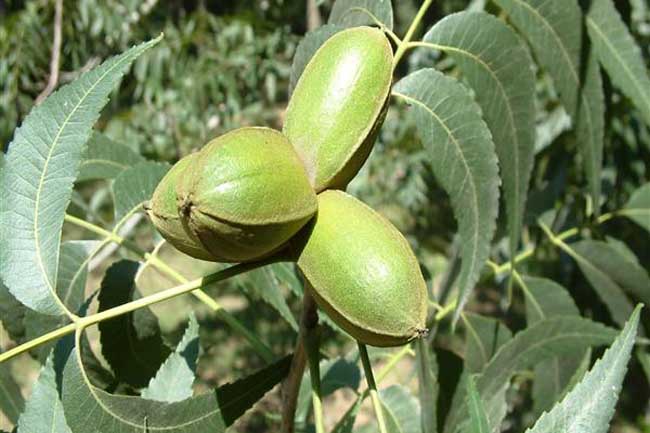
Pecan, also known as the American thin-shell hickory, thin-shell hickory or long hickory, is a deciduous tree of the genus Carya in the Juglandaceae family. The fruit of the pecan is called "Bigen fruit" or "longevity fruit" in the dried fruit market, and in recent years it has become a bestseller in the Jiangsu, Zhejiang and Shanghai region, with a trend of expanding northward. Pecan can not only produce delicious and nutritious nuts, but also produce top-grade timber, and can additionally be used as a street tree for landscaping and beautification, making it an excellent tree species with high comprehensive value.
Pecan is native to North America. As early as the beginning of the 20th century, China introduced a small number of trees from the United States. At present, in the vast areas of China from the Great Wall line in the north to Yunnan and Jiangxi in the south, there are reports of successful introduction and cultivation of pecan, and many regions have already achieved good economic and ecological benefits.
Practical Value
1. Dried nuts and nut shells
Pecan is one of the world's famous high-quality dried nuts, deeply loved by consumers in the United States and European countries. Its nuts are large, with thin shells, a high kernel yield (50%-70%), easy kernel extraction, and high yield (1500-2250 kg/hectare, equivalent to 100-150 kg/mu). The kernels are bright in color and fragrant in taste, without astringency, and rich in nutrition (containing 72% oil, 11% protein and 13% carbohydrates), with high amino acid content and rich in vitamins B1 and B2. The nut oil contains 73% monounsaturated fatty acids, with a calorific value of 32 kcal/kg; after consumption it can reduce the incidence of coronary heart disease, making it an ideal health product and food additive. The nuts sell for 6-7 US dollars/kg in the United States and about 80 yuan/kg domestically. Its shells, after crushing, are a high-grade polishing material, selling at a price comparable to that of the kernels.
2. Timber
Pecan is one of the three major high-quality hard broadleaf timber tree species, alongside American black walnut and black cherry. Its wood has a fine and dense structure, high mechanical strength, and beautiful grain and color, with a wide range of uses, especially suitable for making high-grade furniture and plywood veneer, as well as tool handles, pianos, gym equipment, sporting goods and interior decoration. In the United States, pecan wood furniture and handicrafts have always been a symbol of elegance and wealth.
3. Landscaping and beautification
The pecan tree is tall and straight with a beautiful tree form, and its life cycle lasts 80-100 years. During the fruiting period, the fruits and leaves enhance each other's beauty, making it an excellent tree species for courtyard beautification and urban landscaping. On many farms, estates, parks, schools and churches in the United States, the graceful figure of the pecan can be seen. In China, along Taiping North Road in Nanjing, there is a continuous stretch of pecan street trees about 80 years old, with excellent landscaping and beautification effects, deeply loved by citizens.
Variety Classification and Selection
1. Classification
Pecan is divided into eastern, western and northern varieties according to climate and geographical location. Eastern varieties are suitable for hot and humid climates and have strong disease resistance; western varieties are suitable for relatively dry climatic conditions, are salt-alkali tolerant, and have weak disease resistance; northern varieties are suitable for climates with a short growing season, have strong cold and drought resistance, and good kernel flavor. In China, they are roughly divided into southern varieties and northern varieties. Southern varieties are tolerant of high temperature and humidity, not tolerant of cold, and suitable for cultivation in the Jiangnan region, such as Moneymaker; northern varieties are cold-tolerant and drought-tolerant, suitable not only for cultivation in the region between the Yangtze River and the Great Wall, but also for cultivation in the Jiangnan region, such as Pawnee.
2. Traits
The shapes of pecan nuts include round, oval, ovate and obovate, among others, with oval being the most common. The fruits vary in size, with large-fruited types at about 60 nuts/kg and small-fruited types at 140-600 nuts/kg.
3. Selection
In the south, either southern-type varieties or northern-type varieties can be selected, with the main consideration being disease resistance; in the north, northern-type varieties must be selected, with the main considerations being cold resistance, drought resistance and the requirement for frost-free period.
Cultivation Environment
1. Climatic conditions
Pecan is generally distributed in regions between 26 and 42 degrees north latitude, with the main commercial cultivation areas located within the range of 28-36 degrees north latitude. The frost-free period in its natural distribution area is 140-280 days; the frost-free period in the main production areas is mostly more than 220 days, the annual accumulated temperature at ≥10℃ is 3300℃-5400℃, and the minimum accumulated temperature requirement for coldness is 500℃. Annual precipitation in the southeastern part of the distribution area is 1000-1600 mm, and in the western and northern regions 500-800 mm.
Pecan is most suitable for environments with an average annual temperature of 15℃-20℃. Northern varieties can tolerate low temperatures of minus 29℃, while southern varieties can only tolerate low temperatures of minus 18℃; the extreme high temperature they can tolerate is 46.5℃. According to reports, most areas of China south of the Great Wall and stretching from east to west are suitable for planting pecan. In addition, pecans planted in the north have better nut flavor and timber than those in the south. At the same time, northern varieties can grow better in the south, with larger fruits and fuller kernels.
2. Soil conditions
Pecan prefers sandy loam or loam with deep soil layers, loose texture, rich in humus, moist and well-drained, and is not adapted to overly heavy acidic soil. Pecan is not strict about soil pH and can grow well within a pH range of 5.8-8.