Where are the main origins of durian? Introduction to the distribution of production areas at home and abroad
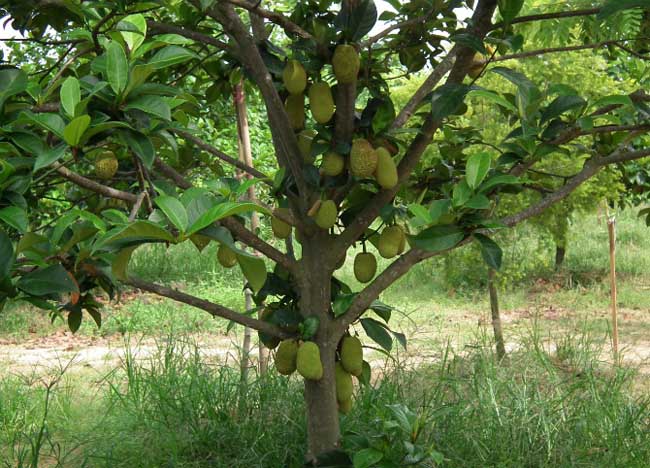
Where are durian origins distributed? Durian is something everyone loves to eat, right? Do you all know where durian origins are? After all, something like durian that is eaten often can be said to be all too familiar in our daily lives, so below the editor will tell everyone the relevant information about durian origin distribution!
Durian origin distribution
The native origins of durian are Brunei, Indonesia and Malaysia, and some people also believe it is native to the Philippines. Durian growing areas are spread across Southeast Asia, and it mainly grows in Thailand, Malaysia, Indonesia and other places. Other places where durian is planted include Cambodia, Laos, Vietnam, Myanmar, India, Sri Lanka, the West Indies, Florida, Hawaii, Papua New Guinea, the Polynesian Islands, Madagascar, northern Australia and Singapore.
Durian is cultivated in Guangdong and Hainan in China.
Durian origin environment
Durian is a purely tropical crop, and the phenological characteristics of durian require an average daily temperature of 22°C or above in the place where it grows. It can be planted in frost-free areas, and parts of Hainan Province and Yunnan Province in China can develop it.
Because durian needs a year-round high-temperature climate to grow and bear fruit, even in equatorial regions, at highlands above 600m in altitude, due to the drop in temperature, durian cannot be planted or cannot bear fruit.
Durian species classification
Thai durian has 200 varieties, but 60 to 80 are commonly planted. Among them, the three most famous are: light varieties: I-Luang, Kradum Thong, Chomphu Si, Golden Pillow and Chanee, which bear fruit after four or five years; medium varieties: Long Stalk and Gu, which bear fruit after six to eight years; heavy varieties: Kampang and I-Na, which bear fruit after eight years. They bear fruit once a year, and their ripening times differ by one or two months from one another. Among them, the ones people are more familiar with are:
1. “Golden Pillow”, (Monthong), is a very popular one, with lots of flesh and sweetness. The flesh is golden yellow, and there is often one segment that is relatively large, called the “main flesh”. Because the smell is not too strong, it is very suitable for beginners to “start” eating this fruit that is both stinky and fragrant. Golden Pillow can be eaten all year round, but the price varies with the season. In peak season the price is the cheapest, and it is also the best-tasting time.
2. “Chanee”, with small leaves and small size, is more popular when it has lots of flesh and a small seed. In price it is cheaper than Golden Pillow, and the flesh is best when dark yellow.
3. Long Stalk: it is named because the fruit stalk of this kind of durian is longer than that of other varieties. This variety has a long and round stalk, and the whole durian is also mainly round. The flesh and seed are also round in shape, the skin is green, the spines are numerous and dense, the seed is large, and the flesh is small in amount but delicate and strong in flavor.
4. Gu Ye Tao: the flesh is especially delicate, as sweet as honey, and the seed tip is small, welcomed by “gourmets”, and it is the most expensive kind of durian. Thai durian has a broad production area, from Nonthaburi Province in the central region to Rayong Province in the eastern region. The durian of Prachin Buri Province once won the championship. Durian in southern Thailand is inferior to that in the central and eastern regions, with large seeds and little flesh, but because it ripens later, after the peak season of other durians has passed, it becomes “precious because it is scarce”.