Don't be stingy with pruning your clematis - it will bloom bigger and more abundantly
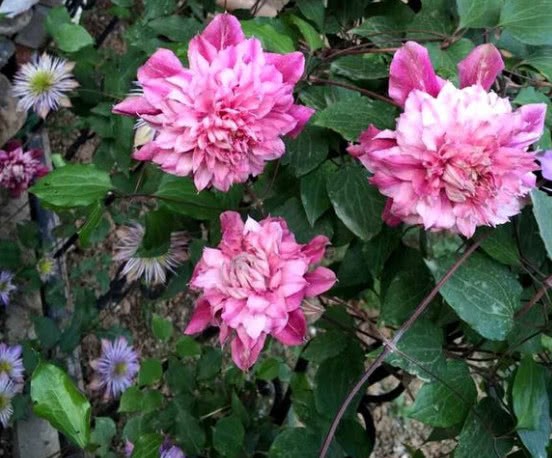
If there's any flower that lifts your mood in summer, it's undoubtedly the clematis. Its blooms come in so many colors - blue, pink, purple - not one of them fails to capture your heart. So if you want to enjoy its blooms, just follow along with Huahua and get to work!
The clematis grows at a pace that ranks among the fastest. Don't be fooled by its relatively thin stems - its explosive growing power is endless. And its flowers are especially large, standing out strikingly no matter where you place it.
Some gardeners run into the problem of their clematis not blooming even though the plant looks perfectly healthy, and the cause may well lie in pruning. It may already have what it takes to bloom, but the exit has been blocked, so what we need to do is clear the way for it in time.
Don't assume that more stems means more flowers - that's not how it works. In fact, the more stems there are, the more nutrients they consume, which in turn blocks flower buds from emerging. Because its stems are slender and long, they look messy and chaotic without proper care.
Especially those stems that haven't even grown leaves - it's best not to keep them; we need to learn to keep only the best. When cutting, make your cuts based on the growth buds, as this will encourage more new stems to sprout. Otherwise, once the cut wounds heal over, they will block the passage, and new stems and flower buds naturally won't be able to grow.
Prune when it doesn't bloom, and prune even more after it finishes blooming. Cut away the spent flowers and withered leaves along with the stems. Don't feel reluctant - only with a more generous cut will it have more drive to grow healthy new stems. Pay special attention to the stems at the base: once they get too dense and lack airflow, they will come under attack from bugs.
While we're tidying up the stems, we can also pick one healthy stem for cuttings. That way there's no need to worry about waste, and the survival rate is very high too.
The stem you cut can be a little longer, because you can divide it into several segments for rooting cuttings. The tool you use is best a sharp blade, which reduces damage to the surface tissue. After cutting the stem, divide it into segments according to the position of its growth buds.
Make a slanted cut about 1 cm above a growth bud, then keep just one leaf at one end - choose to keep the stronger one, otherwise it's just a waste of nutrients. With that, your cutting is ready.
Next we place it into a cutting box. After planting, put it in a cool, ventilated spot. If the temperature is high, remember to mist the potting soil every other day to increase humidity, and in about 20 days you'll be able to see its roots.
Once its leaves have had a while longer to adjust, you can take it out and move it into a slightly larger pot. For clematis, the most important thing is its roots, so be sure to choose breathable soil to give it enough room to breathe.
Water thoroughly each time, then place it in a ventilated spot, which helps reduce waterlogging. Also be careful to avoid the strong summer sun: although light helps its flowers grow better, the sunlight in this season will not only scorch its leaves but also crack the soil, directly harming its roots, so it's best to put it somewhere the midday sun can't reach.
Clematis doesn't need that much fertilizer. As long as the soil is normal, it will grow just fine on its own. If you do want to fertilize, try to do so in spring and autumn, and applying fertilizer once every two to three months is enough.