Clever tips for getting roses through the summer: prune the branches and the blooms will be bigger than your fist
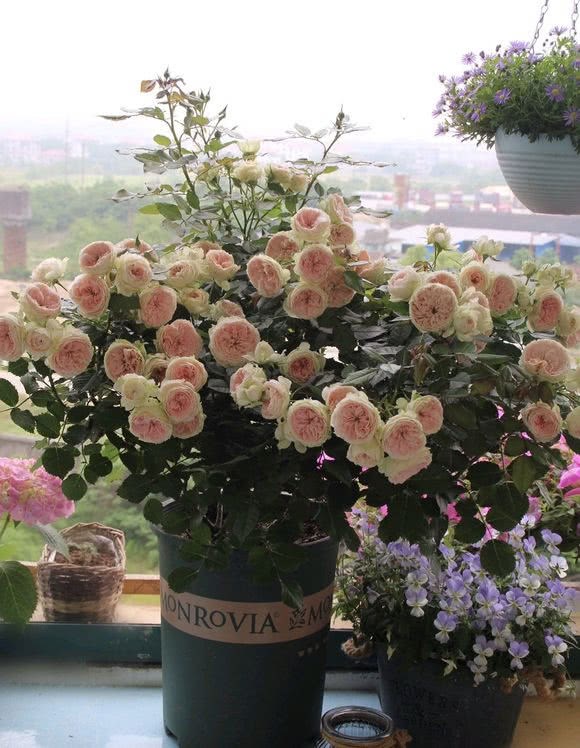
A while back, everyone had surely already taken in the beauty of roses, with their big, brightly colored flowers; anyone passing by simply had to stop and take a photo. But in the hot summer, they enter a dormant or semi-dormant state, so today I'm going to tell you how to care for them during this period.
Many roses have already finished blooming by now, and the hardest summer days have arrived. This period is a tough time for the flowers, so you must get the prep work done in advance; that way they will grow better.
The problem we run into most often when growing roses is pests, especially when the weather is hot. If the ventilation is poor on top of that, the bugs will gang up and overrun your roses. So what we need to do at this point is clean up the branches to reduce the chances of this happening, and it also helps more new shoots sprout!
When pruning, pay attention to the timing too: do it after the flowers have finished blooming, and try to prune in the early morning or evening. Mainly cut off the spent flowers and dead leaves, because faded blooms will gradually wilt; leaving them on not only consumes more nutrients but also attracts small flying insects, so if you grow them indoors, be sure to cut them off in advance.
And no matter how we care for them, roses will always end up with more or fewer dead leaves. Never leave them there to drop off on their own; although they will indeed fall off by themselves after a while, by then rot may already have set in, and the disease may already have spread to the stems. At that point, the loss is far more than a little.
So when pruning at this time, we must cut back fairly hard, so the plant can store up enough energy to support the next round of growth and blooming. It also improves air circulation between the leaves, which reduces pest problems, especially near the base of the plant.
Then there are the ones that have grown too long, because not all branches can bloom; especially these long, thin ones soak up so many nutrients yet only grow stems without flowering, so they absolutely must not be kept. Cutting them off lets the nutrients become more concentrated and go to the sturdy branches.
After pruning like this, we need to put it in a cool environment, which can be a bright spot, but not in too-strong sunlight. After all, it has just been pruned, so give it time to adjust, and also make sure its wounds heal smoothly.
Besides pruning, nutrition is also key, because it has just finished blooming and has already used up a large amount of nutrients. In addition to fertilizing before it blooms, you should also replenish nutrients promptly after it finishes blooming, so it won't wilt from a lack of nutrients.
But also be careful: because of the weather, improper use can burn the roots and, in serious cases, even cause death, so the concentration must be reduced, reduced, and reduced again! You can mix nutrient solution or fermented rice-washing water with water and pour it into the flowerpot; this both replenishes nutrients and avoids burning the roots.
Oh, right, you can also place peanut shells at the bottom of the flowerpot to improve airflow around its roots. But note that once the high-temperature period begins, all fertilizing must stop, because at this point it has "fallen asleep," so let it be comfortable; that way, when it wakes up, it will have more energy to grow!