Have you ever seen this kind of exquisite, elegant, quaint and unusual potted plant? Let me teach you how to care for it.
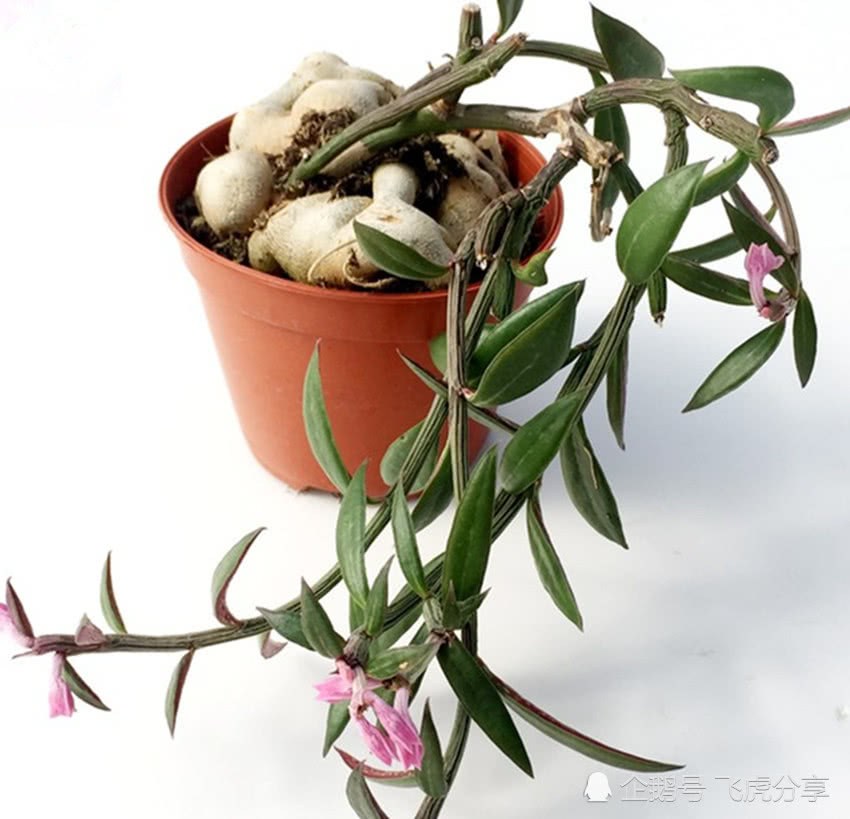
A couple of years ago I bought a few small potted plants from out of town, but when the neighbors saw them they all said they did not recognize them. Even now, several years later, apart from myself, very few of the people who have seen them know what they are. I believe many plant lovers have never seen one either. Although this small potted plant is very rare, it is actually very easy to grow. As long as you can grow a cactus well, you can grow it well too.
The name of this flower sounds very impressive: it is called the ginseng spurge (Euphorbia tirucalli 'Rosea'), named because it belongs to the root-stem type of succulent plants and its shape resembles ginseng. Unlike other flowers, this plant can be enjoyed for its flowers, its leaves and also its roots. Its root system is exquisite and elegant in form, quaint and unusual, and it is one of the representative species of typical tuberous succulents. It can rival the graceful, elegant and charming "ginseng ficus" bonsai, and is deeply favored by enthusiasts.
The ginseng spurge combines quaintness and elegance in one form, and some people call it "great fortune and great prosperity." Its petals are pink and its stamens are yellow, very lovely. Whenever the harvest season comes, the peach-pink little flowers arrive as promised. Its quaint and ingenious form is most suitable for making into graceful and elegant bonsai for viewing. It is a rare ornamental potted plant for decorating the living room, office, bedroom, coffee table, study and so on.
The ginseng spurge is native to the desert or semi-desert regions of Africa or South America. It likes a sunny, warm and dry environment, is drought-tolerant, dislikes damp shade, is not cold-tolerant, and tolerates slight semi-shade. During the growing season, keep the soil moist but not waterlogged, and apply a decomposed dilute liquid fertilizer or compound fertilizer once every 15 to 20 days. During the dormant period, watering must be strictly controlled to avoid root and stem rot caused by overly wet soil, and fertilization should be stopped. During cultivation, take care to avoid prolonged rain. In summer, a little shading can be provided to prevent scorching by the hot sun. In winter, reduce watering and ideally maintain a temperature of around 10°C. Repot once every 2 to 3 years in spring. The potting soil should be loose and fertile, with good drainage and aeration, and contain an appropriate amount of lime. To promote the growth and development of the root and stem, a small amount of plant ash or other fertilizer with a relatively high potassium content can be added to the soil.