What are the fig-producing areas in China? A complete overview of the main producing regions
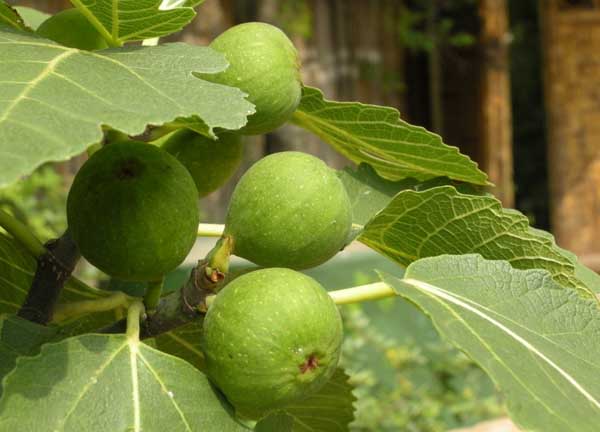
Figs originated along the Mediterranean coast, from Turkey to Afghanistan. They were introduced to China from Persia as early as the Tang Dynasty. China's fig-producing areas are mainly distributed in **, Shandong, Jiangsu, Shanghai, Zhejiang, Fujian, Guangdong, Shaanxi, Sichuan and other places. In North China, figs are mainly concentrated in the coastal cities of Qingdao, Yantai and Weihai in Shandong; in Jiangsu Province they are mainly distributed in Nantong, Yancheng, Danyang and Nanjing; in Fujian Province they are mainly cultivated in Fuzhou; and there is also a certain area in the suburbs of Shanghai. The figs of ** surpass the whole country in both yield and quality. Although figs are widely planted across China, there are very few concentrated contiguous plantations, making them a rare fruit variety.
In addition, there are several kinds of "figs" in China: Wenguang fruit in the Hebei area, Tianxian fruit in the Sichuan area, and Zuoduzi in the Guangdong and Guangxi areas are all called figs, but in fact their flowers are simply hidden and hard to see, similar plants include the rubber tree, banyan, bodhi tree and creeping fig.
The fig tree likes sunshine, warmth and a relatively dry continental climate. It is fairly drought-tolerant, not cold-tolerant, not wind-resistant, likes fertilizer, is not very demanding about soil, is fairly salt-alkali tolerant, but is not waterlogging-tolerant. The fig is currently one of the fastest fruit trees to come into production in the world, and is also an excellent ornamental plant. It not only provides dense shade, but its leaves contain a special fragrance that is fresh and pleasant. It suffers few pests and diseases, and can filter harmful gases such as sulfur dioxide, sulfur trioxide and benzene from the air, making it a suitable tree species for urban greening.
The fig is a multiple fruit formed by the development of the receptacle and other floral organs. The fig's receptacle curls inward, wrapping up the flower center the way a steamed bun wraps its filling; in fact, the whole fig is a single flower. Figs are spherical, oval, pear-shaped or loquat-shaped. The skin color can be yellow, green, light red, reddish brown, dark purple, etc., and the flesh can be pink, dark red or creamy yellow, etc. When you break a fig open, you will see many cluster-like structures as well as small seeds; those are the seeds formed after pollination. The ones that form seeds are pistils, and the ones that do not form seeds are stamens.
Almost every new shoot of the fig can become a fruiting branch, and almost every leaf axil is a fruiting site, with fruit gradually setting and ripening from the lower part of the branch upward. In spring, as the new buds unfold their leaves, a young fruit grows at the base of each leaf stalk, eventually forming the “summer fruit”; as the new shoots continue to grow, flower receptacles gradually form from the base upward, growing into the “autumn fruit”. The autumn fruit is borne on the new shoots produced in the current year, while the summer fruit is borne on the branches formed in the previous year. Around the end of the fifth lunar month (after the summer solstice), the fruits retained over the winter from the previous year ripen; in mid-July the fruits set for the first time that year ripen; after September the fruits set for the second time ripen; and the remaining unripened fruits must overwinter and ripen in the second year. This is one characteristic of the fig.