Detailed Explanation of Grape Cultivation Techniques and Planting Management Key Points
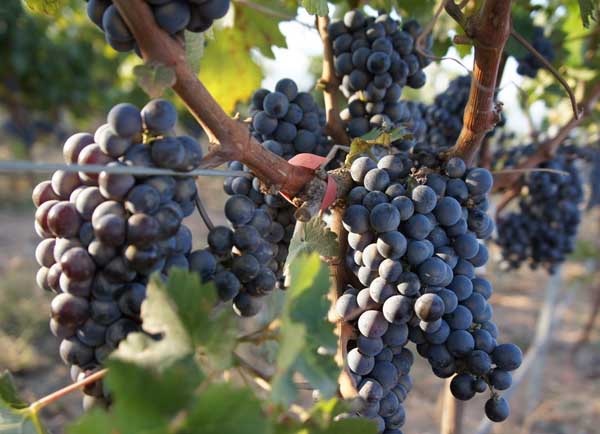
Grapes are a brightly colored, delicious and nutritious fruit, deeply loved by people. The cultivation area and total output of grapes worldwide rank first among all fruit trees. Grapes are highly adaptable and are planted across vast regions of our country. Cultivated grapes mainly fall into two major species: European grapes and American grapes. In the grape-producing regions of North China and Northwest China, “Longyan”, “Muscat Hamburg”, “Thompson Seedless” and “Milk” all belong to the European grape group, with good quality and high yield, but relatively weak disease resistance and cold resistance; American grapes are disease-resistant, moisture-tolerant and cold-tolerant, but their fruit quality is poor. “Concord” is one of them, and in the United States it is mainly used for juice or for making ordinary wine.
Cultivation Environment Requirements
1. Grapes are a warmth-loving plant. In early spring, they begin to sprout at 10ºC, and the higher the temperature, the faster the sprouting. The flowering period is best at 25-30ºC. When encountering low temperatures (below 15ºC), rain and fog, or dry winds, pollination and fertilization are poor, causing a large number of dropped flowers and fruit. July to September is the berry ripening period. If the temperature is insufficient, the berries color poorly, the sugar content decreases, and they may even fail to ripen fully. Whether the local area can satisfy the temperature needed for grapes to ripen fully is usually judged by accumulated temperature. For example, the ripening accumulated temperature of “Shifeng” (the sum of the daily average temperatures accumulated day by day from the flowering period to the ripening period) is 2564ºC, and its flowering period to ripening period is 102 days.
2. Grapes have a strong demand for light. Under conditions of sufficient light, the leaves are thick and dark green, photosynthesis is strong, the plant grows robustly, many flower buds form, the berries have high sugar content and are sweet, and the yield is high.
3. Humidity should not be too high. If there is a lot of rainfall before flowering, the new shoots grow too vigorously and consume the plant's stored nutrients; if it rains a lot during the flowering period, fertilization is poor and flowers drop; if there is a lot of rain from the fruit enlargement period to the ripening period, light is insufficient, the sugar content is low, coloring is poor, quality is inferior, and the fruit is prone to cracking. High temperature, abundant rain and humidity are also the main reasons for an increase in grape diseases.
Grape Cultivation Techniques
1. Transplanting after seedling raising. Cuttings, layering and grafting are common methods for raising grape seedlings. Among them, the cutting method is the simplest and most widely used. Some new methods of grape seedling raising in recent years are introduced below.
① Sunken seedbed small plastic bag cutting with plastic film mulching method. When cutting in spring when the soil temperature is 10~15ºC, mix chicken manure, sawdust, river sand and vegetable garden soil in a certain ratio as the growing medium, put it into a small plastic bag with a small hole at the bottom so that the growing medium is about 15 cm high, then soak a grape branch segment with three buds in clean water overnight, gently insert it into the growing medium, leaving one bud at the upper end outside the plastic bag. Then bury the plastic bag in the soil, water it thoroughly, and cover it with plastic film on top until the seedling is formed. Compared with open-air cutting seedling raising, this method has the following advantages: earlier seedling formation, nearly one month earlier than open-air cutting; high survival rate, reaching more than 95%, while open-air cutting is generally only about 80%; saves the labor of watering; and occupies less land.
② Green shoot cuttings. In June, take semi-lignified 2-3 node long branches from the current year's new shoots or secondary shoots for green shoot cuttings. Except that the top end of the cutting retains 1 green leaf (if the leaf is relatively large, half of it may be cut off) and the other nodes retain a section of petiole, the cutting and management are the same as for hard-wood cuttings.
③ Water rooting promotion. In June, cut current-year vines (with one or two nodes of two-year-old vine at the lower end); insert them into a canning jar filled more than half with water, cut kraft paper or plastic film into a circle the size of the jar mouth, and cut a slit to the center, then clamp the grape vine in the slit, and seal it with adhesive tape or the like; move the bottle with the inserted grape vine into a relatively warm room or kitchen. Roots appear in about 15 days, and then it can be moved into fertile, loose soil. Generally, rooting can be promoted 2-3 times a year, about 15 days each time. One canning jar can hold 8-10 seedlings. Using tiered racks, one room can hold 2000-3000 bottles and can raise 16,000-20,000 seedlings.
④ Raise seedlings by cutting in the same year, and layer branches in the same year to propagate seedlings from seedlings. This is a new technique for increasing the grape propagation coefficient. After cutting, strengthen fertilizer and water management to make the seedlings fertile and strong. When the seedlings grow to 50 cm, pinch the tips to strengthen the plants and promote the growth of secondary shoots, keeping 3-5 secondary shoots per plant. In mid-July, when the secondary shoots have grown to about 10 cm, carry out layering, pressing the main shoot into the soil 5-10 cm, with the secondary shoots growing upright above the ground. After “White Dew” and before “Autumn Equinox”, pinch the tips of the secondary shoots again to concentrate nutrients for growing the seedlings. At this point, one secondary shoot has grown into a robust grape seedling. That is to say, one cutting can cultivate 3-5 grape seedlings with well-developed root systems, substantial branches and plump buds in the same year, and the propagation coefficient is increased by 4-5 times compared with ordinary seedling raising methods.
⑤ Green shoot grafting combined with layering. This method yields a large number of own-rooted seedlings and cuttings of superior varieties in the same year. This method was successfully researched by the Zhengzhou Fruit Research Institute of the Chinese Academy of Agricultural Sciences. They grafted grape green shoots onto the sprouts of old grape vines cut back at the base, relying on the strong roots of the old vines to promote vigorous growth of the new shoots of the superior variety scions, and then in autumn carried out horizontal layering of the new shoots. After rooting, the seedlings could be lifted in the same year. In this way, the own-rooted seedlings and cuttings provided by one mature grape plant in one year can be planted on 68 mu. After lifting the seedlings, retaining a small section of the superior variety main shoot on the old vine cut back at the base can still be used for layering and seedling raising the following year or for trellising and fruiting.
⑥ Green shoot air layering. This method is simple and easy to master. When the new seedlings are transplanted, they do not need to go through a recovery period, greatly improving the survival rate. With careful management, they can bear fruit the following year.
The specific method is: during the period of rapid growth of current-year grape new shoots, when the stem at the 4th node counted from the base of the new shoot has become semi-lignified, use 0.08 mm thick, 30 cm×30 cm polyethylene film to wrap neutral moist soil (or other filler), and tie both ends and the middle tightly with fine string. Keep the front end of the new shoot pointing upward (it can be tied to the grape trellis or mother plant with fine string). One new shoot can be wrapped at 1 node, or at 2 or more nodes. Afterwards, use a syringe to replenish water into the wrapping bag every 7-10 days. After 1 month, when new young roots are found growing through the film bag, cut the wrapping bag from the lower end off the mother plant, and immediately plant it in a flower pot or directly in the vineyard.