Detailed Explanation of Longan Cultivation Techniques and Planting Management Points
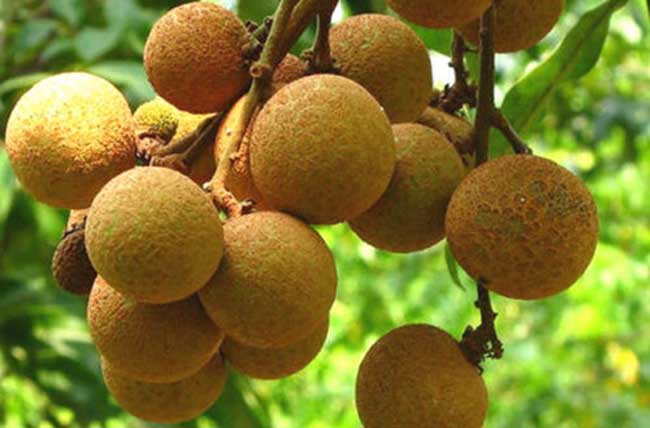
Longan, also known as guiyuan, is a precious specialty of southern China, rich in nutrients and valued as a tonic. The flesh contains 12.38-22.55% sugars, 3.85-10.16% reducing sugars, 9.59-13.59% invert sugars, 0.096-0.109% acids, and 43.12-163.70 mg of vitamin C per 100 g of flesh. It also contains vitamin K and inorganic salts. It has high medicinal value, with the effects of tonifying the heart and spleen, nourishing the blood and calming the mind, and can treat weakness after illness, anemia and sallow complexion, neurasthenia, and blood deficiency after childbirth. Besides being eaten fresh, longan can also be dried, or processed into canned goods, longan paste, and more. Its seeds can be used to make wine.
Selecting Fine Varieties
Varieties in Fujian include Fuyan, Wuqiuben, Jiaoyan, Chike, Wulongling, Youtanben, Pumingyan, Dongbi, Jidan Longan, and Honghezi; varieties in Guangdong, Guangxi, Sichuan and other places include Shixia, Wuyuan, Caopuzhong, Zaohe, Daguangyan, Guangyan, Niukouzi, Luyuanqiang, Luyuan No. 6, Luyuan No. 106, Bayuexian, and Fuling Huangke Longan.
Raising Seedlings
1. Seedling grown from seed: Choose a hillside plot sheltered from wind and frost, with good drainage and irrigation, deep soil, and loose, fertile texture as the seedling bed. Plow 20-33 cm deep, apply 5000 kg of turf soil, then plow and harrow and apply 2000-2500 kg of barnyard manure, then build beds 20-25 cm high and 1 m wide, with drainage ditches 33-40 cm deep. The ratio of the longan nursery to the transplant nursery should be 1:6 or 1:7. Longan seeds must be sown as soon as they are collected. The extracted seeds should immediately be mixed with sand at a ratio of 1:2-3 and piled to germinate; the most suitable germination temperature is 25°C, and the moisture content of the fine sand should be about 5%. When the embryo bud elongates 0.5-1 cm, they can be sown in the seedbed. Broadcasting is possible, with a seed spacing of 8×10 cm, and a sowing rate of 115-250 kg per mu; after sowing, cover with 2500-3000 kg of burnt soil or sand, cover with rice straw on top, then lead in water for irrigation, and drain immediately after wetting. After emergence, management must be strengthened, such as watering and removing the rice straw. Fertilize to ensure robust seedling growth. Transplant during the spring plum rain. When transplanting, prepare the land well and apply fertilizer well, with a plant and row spacing of 20×30-33 cm, planting 7000-8000 plants per mu. Manage promptly after transplanting.
2. Graft propagation: Use 5-6 year old seedling trees after field planting as rootstock and graft by the inlay method. Select 2-year-old strong branches as scions, 1 cm thick and 4-12 cm long; the approach grafting method can also be used, with March to April being the best time, and tongue grafting and bud patch grafting can also be used for graft propagation.
3. Air layering propagation: The method is to select 3-4 year old branches 3 cm in diameter with 2-3 side branches on robust trees over 15 years old. At 10-20 cm from the branch, carry out girdling about 40-50 cm wide, scrape off the cortex, and when nodular growth appears after 10-20 days, wrap it with grass mud, hang a pot and fill with soil, or wrap with plastic film and fill with rooting medium.
4. Cuttings: Take current-year tender longan branches, cut them into 15-17 cm segments, and insert them into a hotbed at 27-29°C, shading and watering regularly. Before cutting, first girdle the base of the selected branch, and after 1-2 days, apply 300 g of a mixed coating of 100 parts rice straw ash, 10 parts red mud, and 0.18 parts table salt, then wrap it, and after 2.5 months, cut it from the mother branch and insert it as a cutting.
Planting
Spring planting can be done in February to March, and winter planting can be done in late October. For planting density, a row spacing of 16 m and a plant spacing of 4.5 m can be used, planting 19-20 trees per mu. Before planting, dig a planting hole 1 m deep and wide, apply river mud at the bottom. Paddy soil and burnt soil, and on top apply decomposed compost, superphosphate and plant ash, all of which should be mixed with the topsoil. After planting, sufficient irrigation must be given first, and after irrigation cover with fine soil, then irrigate 1-2 times daily. As for planting depth, the root crown should be level with the ground.
Training and Pruning
Use natural open-center shaping; in the 2nd-3rd year after planting, set the trunk at 1.2-1.3 m above the ground, cultivate 5-7 main branches within 3-4 years, and finally remove the central leader. Prune 3 times each year. The first pruning is at the flower spike stage, mainly removing diseased spikes, shaded branches and obstructing branches. The second is at fruit harvest, mainly removing short fruiting branches, water sprouts, diseased branches, dead branches and shaded branches. The third is in winter, mainly removing shaded branches, dead branches and diseased branches.
Fertilization
Apply base fertilizer once each year and topdress 3-4 times. The first topdressing is in February to March, applying night soil and ammonium sulfate, etc. The second topdressing is at the young fruit stage after flowering, about April to May, mainly applying nitrogen fertilizer, with appropriate phosphorus and potassium fertilizer. The third topdressing is from late June to early July, mainly phosphorus and potassium fertilizer, followed by nitrogen fertilizer. The fourth topdressing is when the fruit is nearly ripe, still mainly nitrogen fertilizer. The fertilization method is to open a ditch 30 cm from the trunk and apply it in. When fertilizing, intertillage, weeding, hilling, and drainage and irrigation can be carried out in combination.