What to Do When Spider Plant Leaves Turn Yellow? Cause Analysis and Solutions
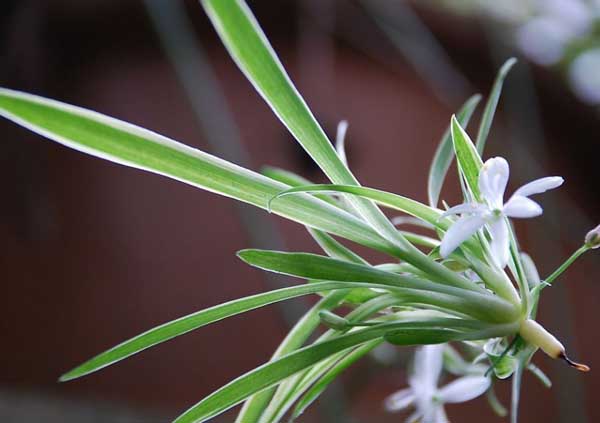
The spider plant (Chlorophytum comosum) has strong adaptability, is drought-tolerant but not cold-tolerant, and is not demanding about soil; it generally grows best in well-drained, loose, fertile sandy soil. It is not strict about light and generally does well in moderate light, and it also tolerates weak light. Improper care can make spider plant leaves turn yellow or even wither, so what should you do when spider plant leaves turn yellow?
What to do when spider plant leaves turn yellow?
1. Yellowing leaves caused by direct sunlight combined with dry air.
Spider plants like a semi-shaded environment. If exposed to direct sunlight and dry air, the leaf tips are most prone to scorching and the leaves turn yellow. Therefore, spider plants must be placed in a relatively cool, ventilated spot, and you should especially remember to mist the leaves often to increase the ambient humidity.
2. Yellowing leaves caused by improper fertilizing.
Improper fertilizing can also cause leaves to turn yellow and dry up. Apply light fertilizer frequently; during the growing season, apply a dilute liquid fertilizer once every 10 to 15 days. The fertilizer should be mainly nitrogen-based, which can keep the leaf color emerald green.
3. Yellowing leaves caused by compacted soil and poor drainage.
Spider plants are best grown in loose, fertile, well-drained soil. If the soil is compacted and drains poorly, it easily causes root rot and yellow leaves.
4. Leaves turning yellow caused by freeze damage.
The spider plant originated in Africa and likes a warm, humid environment. Its overwintering temperature must not fall below 5 degrees, and in winter you must watch out for freeze damage that turns the leaves yellow. When spring first arrives, it should not be taken outside to catch the wind; early spring wind is cold, and once it is exposed to wind, the leaves will also turn yellow and scorch.
5. Withered, scorched leaves caused by lack of water.
During the growing season, water frequently to keep the potting soil moist; the potting soil must not be too dry. In particular, mist the leaves often: first, to keep the leaf surface fresh, and second, to prevent the leaves from scorching.
6. Yellowing leaves caused by an incorrect placement position.
Spider plants can be hung up, which gives a distinctive look; the height should be level with people's eyes or slightly higher, as hanging them too high makes watering inconvenient. When fertilizing, take them down from the hanging basket, and after fertilizing, rinse the leaves with a fine spray. In addition, placing a spider plant on a heated iron plant stand or close to a wall easily causes the leaf tips to turn yellow, so when hanging it, keep a certain distance from the wall.
Solutions:The simplest and most effective way to deal with spider plant leaves turning yellow and gradually scorching is to repot and change the soil; if you find rotten roots, carefully trim them off. Carefully peel away any old leaves that have already turned yellow or scorched. Spider plants grow very fast, and they have now gradually begun to enter the growing season, so you can rest assured: as long as you cut away all the yellowed leaves and any others that have lost their ornamental value, the warm spring weather will soon have you enjoying a fresh, lovely pot of spider plant again.
How should spider plants be cared for so they grow well?
1. Growing medium: Spider plants adapt well to all kinds of soil and are easy to grow.
2. Container: Any container that can hold water can be used to grow spider plants in water; it is best to use a transparent vessel so you can enjoy the dazzling white roots in the water. Glass wine glasses, teacups and mineral water bottles you have around are all economical and attractive containers for growing spider plants in water. The container for water-grown spider plants can be single-layered or double-layered. A single-layer container is a bottomless glass or plastic bottle in which the spider plant is planted directly. A double-layer container uses a plastic basket (also called a planting basket) as the upper layer, with a bottomless bottle or vessel as the lower layer; the spider plant is planted in the upper plastic basket, with its roots extending down into the lower vessel.
3. Watering: Spider plants like a humid environment, and the potting soil should be kept moist at all times. However, the spider plant's fleshy roots can store a large amount of water, so it has strong drought resistance and will not dry out and die even if not watered for several days. In winter, when the temperature is below 5°C, water less, and do not let the potting soil get too wet, otherwise the leaves easily turn yellow.
4. Temperature: Spider plants tolerate high temperatures. The suitable temperature is above 15°C, and the overwintering temperature in winter should be above 4°C.
5. Humidity: They like a humid environment. To keep spider plants fresh and green, you can often mist the leaves to wash them.
6. Pruning: At ordinary times, cut off yellow leaves at any time. Once a year in March, you can repot, cutting off old roots, rotten roots and excess fibrous roots. In early to mid-May, cut off some of the old leaves of the spider plant, which will encourage more new leaves and small plantlets to sprout.
7. Light: Spider plants like a semi-shaded environment. In spring and autumn, avoid strong direct sunlight; in summer, when the sunlight is especially strong, they should only get some slanting light in the morning and evening, and during the day 50% to 70% of the sunlight needs to be blocked, otherwise the leaf tips will dry up. Variegated varieties are especially afraid of strong sunlight. A golden-edged spider plant (Chlorophytum comosum 'Variegatum') grows even more beautiful in a spot with weak light, with its yellow edges more pronounced and its leaves more glossy. But in winter it should get more sunlight to keep the leaves tender and fresh green. When grown as a potted plant at home, the spider plant should be placed in front of a south-facing window, otherwise the leaves will lose their luster or even wither.
8. Fertilizing: The spider plant is a foliage plant that is relatively tolerant of fertilizer. If fertilizer and water are insufficient, it easily scorches and ages, the leaves turn yellow, and it loses its ornamental value. From late spring to early autumn, apply an organic fertilizer solution once every 7—10 days, but for variegated varieties such as golden-edged and golden-centered spider plants, apply less nitrogen fertilizer, so the variegation does not fade or even disappear and spoil the look. You may appropriately apply organic fertilizer made by fermenting bone meal, eggshells and the like; once fully fermented, take an appropriate amount of the diluted liquid and apply it once every 10 to 15 days, which can make the variegated leaves bright and vivid.