A detailed guide to the cultivation methods of Pistacia weinmannifolia - even beginners can grow it well
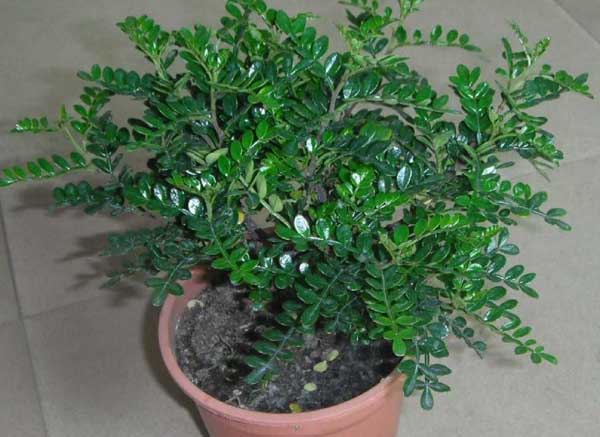
Pistacia weinmannifolia is a sun-loving tree, but it also tolerates slight shade. It likes warmth and requires deep soil. It has strong sprouting ability, grows slowly, and has a long lifespan, but seedlings are not very cold-resistant and need protection in North China. The plant can withstand low temperatures of -10°C. It likes soil with ample sunlight and poor water accumulation. It can be used for garden shrubs and cut branches. It grows wild in the dry-hot river valley areas of central and northern Yunnan and southern Sichuan in China at altitudes of 1300-2300 m.
Cultivation methods of Pistacia weinmannifolia
Pistacia weinmannifolia is drought- and barren-tolerant, with a well-developed root system and strong resistance. It is a pioneer tree species for afforestation and greening in dry-hot river valley areas, and is also the main fuelwood and timber species there. Pistacia weinmannifolia has a beautiful tree shape and a fresh fragrance, and has multiple edible and medicinal functions, with broad development prospects. In North China it needs protection. The plant can withstand low temperatures of -10°C and likes soil with ample sunlight and poor water accumulation. It can be used for garden shrubs and cut branches.
Pistacia weinmannifolia is relatively sensitive to fertilizer. For seedlings, apply as little fertilizer as possible or even none, to avoid burning the seedlings or causing excessive leggy growth due to over-fertilization. For cutting propagation, cuttings can be taken in both spring and autumn. Using plant non-test-tube rapid propagation technology, it can be done year-round: during the growing season use one leaf and one bud, and during the dormant period take a branch segment. During the tree's dormant period, select 1-year-old vigorous branches from a mature mother tree, cut them into propagation material 10-15 cm long and 0.3-1.0 cm thick, with the upper cut 1.0-1.5 cm from the bud and the lower cut 0.3-0.5 cm from the bud.
For the propagation substrate, well-aerated river sand or perlite is preferable. Before rapid propagation, the substrate can be disinfected with chemical agents such as potassium permanganate. Soak the base of the cut end of the propagation material in 50 ppm-100 ppm ABT rooting powder or indolebutyric acid solution. The soaking time is 12-24 h. For leafy one-leaf-one-bud propagation material, a treatment time of 1-2 hours is suitable; plant it shallowly in an intelligent seedling bed and start the system immediately. Branch-segment propagation material from dormant bases generally begins to root in about 30 d, while leafy propagation material generally begins to root in 15-20 days, with a survival rate of over 95%. This is currently the most effective method for rapid propagation of Pistacia weinmannifolia.
Propagation techniques for Pistacia weinmannifolia
Pistacia weinmannifolia is a sun-loving tree, but it also tolerates slight shade. It likes warmth and requires deep soil; it has strong sprouting ability and grows slowly, and needs protection in North China. The plant can withstand low temperatures of -10°C and likes soil with ample sunlight and poor water accumulation. It can be used for garden shrubs and cut branches.
Artificial cultivation of Pistacia weinmannifolia seedlings mainly uses seed propagation, and cutting propagation can also be used.
1. Sowing propagation. The seed maturity period of Pistacia weinmannifolia is very close to its shedding period. Once mature, the seeds fall off when there is wind or rain, making them difficult to collect, or they are pecked and eaten by birds and animals. When the seeds begin to show signs of maturity, collect the seeds from the tree in time. Pistacia weinmannifolia seeds are wrapped in juicy flesh and are prone to contamination and mold. The collected seeds must be processed immediately: pile the fruits to ferment, crush the fruit skin, wash them in water, remove the seeds and discard impurities, then dry them in the shade and store them in a ventilated, dry place.
2. Sowing season. Both spring and autumn are suitable, and generally the germination rate of autumn sowing is higher than that of spring sowing. Before sowing, soak the carefully selected seeds in warm water with an initial temperature of about 20°C for 24 hours. After the seeds absorb water and swell, remove them and place them under warm, moist conditions to promote germination. Generally, the seeding rate is 6 kg per mu.
3. Notes on seedling management. Pistacia weinmannifolia seedlings have three fears: first, fear of waterlogging. The soil should be kept as dry and loose as possible, and generally do not water or water as little as possible. Second, fear of shade. During the seedling stage, thin the seedlings in time to increase light penetration and ventilation. Third, fear of fertilizer damage.
4. Cutting propagation. Cuttings can be taken in both spring and autumn. During the tree's dormancy period, select 1-year-old vigorous branches from a mature mother tree and cut them into cuttings 10-15 cm long, with the upper cut 1-1.5 cm from the bud and the lower cut 0.3-0.5 cm from the bud. For the cutting substrate, choose a cutting soil with good aeration, medium water-holding capacity, and a neutral or slightly acidic pH. Before cutting, the substrate must be disinfected. Soak the base of the cuttings in ABT rooting powder solution (use according to the instructions). The soaking time is 12-24 hours. Open a trench and bury them, inserting the cuttings about 2/3 into the soil. After insertion, cover with plastic film to increase air humidity. Careful management is required before rooting, and rooting begins in about 45 days.
Potted care techniques for Pistacia weinmannifolia
The young leaves of Pistacia weinmannifolia are red, glossy, delicate in color and shape, slow-growing, easy to shape, and have a faint fresh fragrance. They help purify the air and repel mosquitoes and flies. People like to use them for indoor potted plants. Choosing ideal plant material is the basis for making bonsai. Household potted plants mainly aim to see the large in the small, creating a natural, fresh feeling of bringing wild mountains, waters, and trees into the home. Therefore, materials must be carefully selected: choose small Pistacia weinmannifolia seedlings with curved or deformed trunks, and old tree stumps with an aged posture and beautiful, ancient tree forms for potting and cultivation. Wild tree stumps dug from mountains and fields are even better, but because this causes ecological damage, the author does not advocate it. After the plants to be cultivated are selected, carry out preliminary shaping and pruning according to the design concept, flexibly applying pruning methods such as thinning and heading back, and remove crossing branches, overlapping branches, diseased and pest-infested branches, and leggy branches. Choose a purple clay pot with good aeration as the potting container. When potting, cover with soil and press firmly, then water to keep it moist. Because Pistacia weinmannifolia likes light and faces the sun, it should be placed in a ventilated and well-lit place such as a windowsill or balcony for cultivation. In daily care, flexibly apply shaping techniques such as wiring, tying, twisting, and pressing, and shape according to the plant's form. After several years of care, an ideal potted plant can be cultivated.