How to grow Calathea roseopicta? A detailed guide to cultivation methods
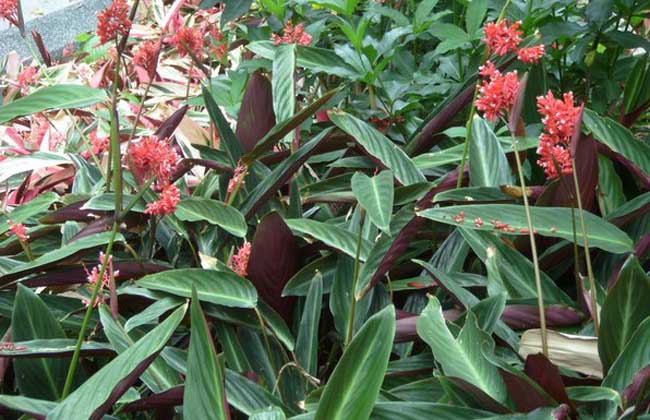
Calathea roseopicta, also known as red-backed calathea, red-backed prayer plant, and red-backed maranta, is a perennial herbaceous plant of the genus Calathea in the family Marantaceae. Its plant form is attractive, its leaves are brilliantly colorful, and it has strong shade tolerance. It is often used as an indoor potted ornamental; large varieties can decorate the halls of hotels and shopping malls, while small varieties can accent balconies, living rooms, bedrooms, and more. Let us take a look below at the cultivation methods for Calathea roseopicta!
Growth habits of Calathea roseopicta
Calathea roseopicta is native to Central America and Brazil, and is cultivated in the southern provinces and regions of China. It prefers warm, humid, and shaded environments. The suitable growth temperature is 20-30°C; it needs more water and is not drought-tolerant. It is fairly heat-tolerant and slightly cold-tolerant, and can overwinter safely above 5°C. It fears frost, and prefers loose, fertile, moist, well-drained acidic soil.
Propagation methods for Calathea roseopicta
1. Division: Calathea roseopicta is generally propagated by division. Propagation is most ideal in spring when the temperature is around 20°C, but as long as temperature and humidity are suitable, it can also be done year-round. When propagating, use a sharp knife to cut apart the root clumps that bear stems and leaves or leaf buds. For small-scale propagation, the cut root clumps with stems, leaves, and leaf buds can be placed directly into clay pots; for large-scale propagation, they should be placed on a seedbed. When temperature and humidity do not meet the requirements, cover with plastic film, and be sure to bring the temperature inside the film to 20-28°C and the humidity above 80%.
2. Cuttings: Calathea roseopicta is generally propagated by cuttings taken from tender shoot tips. The cuttings are 10-15 cm long; depending on leaf size, retain one-third or one-half of the leaf. Treat the cuttings with 500 ppm naphthalene acetic acid for 2-3 seconds, or use indoleacetic acid, indolebutyric acid, or ABT rooting powder. After treatment, insert the cuttings into the seedbed, preferably at a spacing of 5×10 cm. Cuttings usually root in 30-50 days, but the survival rate of cuttings is not as high as that of division propagation, generally around 50%.
Cultivation methods for Calathea roseopicta
1. Soil: The soil for growing Calathea roseopicta should be fertile, loose, and well-drained. Compacted and waterlogged soil should be avoided. Fertile humus soil and porous coarse media are often used as the substrate. Generally, use an equal mix of leaf mold and peat soil; you can also use pond mud, peat, and perlite mixed at a ratio of 2:3:1, or use loose, organic-rich leaf mold plus 1/3 perlite and a small amount of base fertilizer.
2. Watering: Calathea roseopicta is not drought-tolerant. During the growing season, it must be given sufficient water to keep the potting soil constantly moist, and attention should be paid to spraying water on the leaves. Especially in summer and autumn, when temperatures are higher and the air is dry, it is also necessary to frequently spray water on the leaves and the surrounding area to maintain relatively high air humidity. However, be careful not to let the potting soil become waterlogged, so as not to affect root aeration and cause poor growth or root rot. After late autumn, when temperatures are lower, control the amount of watering and just keep the potting soil slightly moist.
3. Temperature: Calathea roseopicta is native to tropical and subtropical regions and prefers high temperatures, high humidity, and a semi-shaded environment. The suitable growth temperature is 20-30°C; the optimal daytime growth temperature is 18-21°C and at night 16-18°C. The safe overwintering temperature is 10°C. Therefore, in summer, prevent exposure to high temperatures and place it in a cool spot; in winter, pay attention to cold protection, and the plant can be moved to a windless, warmer indoor area to overwinter.
4. Light: Calathea roseopicta dislikes direct sunlight and grows better under indirect radiation or diffused light. In summer, direct sunlight easily causes leaf scorch. Therefore, in production, it is cultivated under artificially controlled light conditions with a 75-80% shade net. If leaf scorch is found, immediately move it to a place without direct light or to a location with shade facilities or under tree shade, and cut off the scorched leaves to prevent other pathogenic bacteria from invading through the wounds.
5. Fertilizing: Calathea roseopicta should follow the principle of "frequent application in small amounts." During the peak growing season, apply a mixed fertilizer of peanut cake and compound fertilizer or decomposed compost once every 2 weeks. The nutrient composition of the fertilizer should be mainly nitrogen fertilizer, followed by phosphorus and potassium fertilizers. Appropriately increasing nitrogen fertilizer can make the leaf color more beautiful. However, the fertilizer concentration should not be too high, otherwise it easily causes leaf scorch and fertilizer damage, and in severe cases can even cause the plant to die. Stop fertilizing during the winter dormancy period and when summer is too hot.
6. Pests and diseases: Common diseases of Calathea roseopicta mainly include leaf spot and leaf blight. In the early stage of the disease, spray with 200-fold Bordeaux mixture 2-3 times at half-month intervals, or spray with 65% zineb wettable powder at 600-fold dilution for control. Common pests mainly include scale insects, which are prone to occur when ventilation is poor. During the nymph stage, spray with 50% fenitrothion emulsifiable concentrate at 1000-fold dilution to kill them.