Detailed Guide to the Cultivation Methods and Care Points of Sorbaria sorbifolia
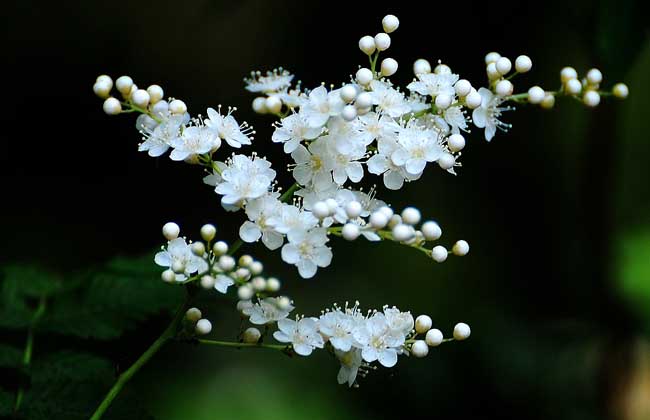
Sorbaria sorbifolia, also known as mountain sorghum strip, gaokaizi, babentiao, etc., is a shrub plant of the genus Sorbaria in the Rosaceae family. It is named for its flowers resembling pearls and has high ornamental value. It is pretty yet elegant, braving frost and snow. In autumn, when all flowers have withered and sandstorms are severe, it stands alone in full bloom, becoming a beautiful symbol of strength, bravery, and the courage to struggle against difficulties. Now let us take a look at the cultivation methods of Sorbaria sorbifolia!
Growth Habits of Sorbaria sorbifolia
Sorbaria sorbifolia grows in sparse mountain forests at an altitude of 250-1500 m. It is distributed in Hebei, Jiangsu, Shanxi, Shandong, Henan, Shaanxi, Gansu, Inner Mongolia and other places in China. Its flowering period is July to August, and its fruiting period is September. It is cold-resistant, tolerant of half shade, and tolerant of pruning. It grows better in well-drained sandy loam soil. It grows fast and easily produces root suckers.
Propagation Methods of Sorbaria sorbifolia
1. Division: Sorbaria sorbifolia has the characteristic of easily sprouting root suckers, and division propagation can be carried out in early spring in March and April. Dig open the soil around the roots of the mother plant that is more than 5 years old, cut down from the middle of the gap, and separate the suckers from the mother plant. Each clump can be divided into 5 to 7 plants, and the separated root sucker seedlings must have complete roots. After division, water thoroughly, move the plants to a slightly shaded place, and after one week gradually place them in sunlight for normal care.
2. Cuttings: This can be done all year round, but cuttings in March and October root fastest and have a high survival rate. Select mature branches from robust plants, cut them into 15 to 20 cm lengths, and keep 4 to 5 buds or leaves. When taking cuttings, insert 2/3 of the cutting into the soil, leaving only the top one or two buds or leaves above the soil surface, and water thoroughly once. After that, spray water 1 to 2 times a day, always keeping the soil moist. After 20 days, reduce the frequency of spraying, and after about 1 month they can root and be transplanted.
3. Layering: Layering propagation of Sorbaria sorbifolia is usually carried out in March and April by directly bending the outer branches of the mother plant into the soil. The part pressed into the soil can also be ring-barked or nicked to promote rapid rooting. After new roots grow, separate them from the mother plant and transplant them in spring or autumn planting season.
Cultivation Methods of Sorbaria sorbifolia
1. Soil: Sorbaria sorbifolia has no strict requirements for soil, but it grows better and blooms more profusely when cultivated in deep, fertile sandy loam.
2. Watering: Water Sorbaria sorbifolia promptly during spring drought. During summer and autumn droughts, water thoroughly to keep the soil from drying out. Before winter begins, water once more with antifreeze water.
3. Light: Sorbaria sorbifolia is tolerant of half shade, but it also grows well in sunlight.
4. Fertilizing: Sorbaria sorbifolia has low fertilizer requirements. When first planted, applying sufficient base fertilizer can meet its growth needs, and generally no additional topdressing is needed. Later, in combination with winter management, apply base fertilizer once every 1-2 years.
5. Pruning: After flowering, prune away remaining flower branches, diseased and pest-infested branches, and old and weak branches in time to keep the plant shape neat, avoid nutrient consumption, and promote robust growth with abundant flowers and leaves.
6. Diseases: The main diseases of Sorbaria sorbifolia include leaf spot, powdery mildew, and brown spot. The main pests to prevent and control include scarab beetles and spotted leafhoppers. Early prevention and control should be carried out to promote healthy growth of the plants.
Precautions for Sorbaria sorbifolia
1. Sorbaria sorbifolia has strong adaptability and low fertilizer requirements. Apart from applying a small amount of base fertilizer when newly planted, no further fertilizer is needed afterward, but watering is required. Generally, water thoroughly 2-3 times from bud break to the flowering period, and water 2-3 times from the beginning of autumn to before frost, including one antifreeze watering. In summer, water according to drought conditions; when there is a lot of rain, there is no need to water.
2. After the flowers of Sorbaria sorbifolia fade, the inflorescences turn yellow and withered, affecting the appearance. Therefore, the remaining inflorescences should be cut off to keep the plants clean and neat and to prevent the remaining inflorescences from competing with the plants for nutrients and water. After autumn or in early spring, diseased and pest-infested branches and old and weak branches should also be cut off. Annual branches can be heavily pruned to promote branch renewal and abundant flowers and leaves.
3. In late autumn, remove diseased and remnant plants of Sorbaria sorbifolia to reduce sources of pathogens. Pay attention to ventilation, reduce air humidity, strengthen light, and increase phosphorus and potassium fertilizer to enhance resistance. After disease occurs, promptly prune away the affected parts, or pull out diseased plants and burn them, then spray pesticide. During the dormant period, spray an equal-strength 1% Bordeaux mixture. In the early stage of disease, spray 70% thiophanate-methyl 800 times solution or 50% amobam 800-1000 times solution.
4. Spraying flower-strengthening agent during the bud stage of Sorbaria sorbifolia can promote strong buds, large petals, bright flower color, and rich fragrance. After the flowers fall, promptly prune remaining flower branches, diseased and pest-infested branches, and old and weak branches to keep the plant shape neat, avoid nutrient consumption, ensure healthy growth the following year, and produce abundant flowers and leaves.