How to grow and care for a potted ginkgo tree: cultivation methods and precautions
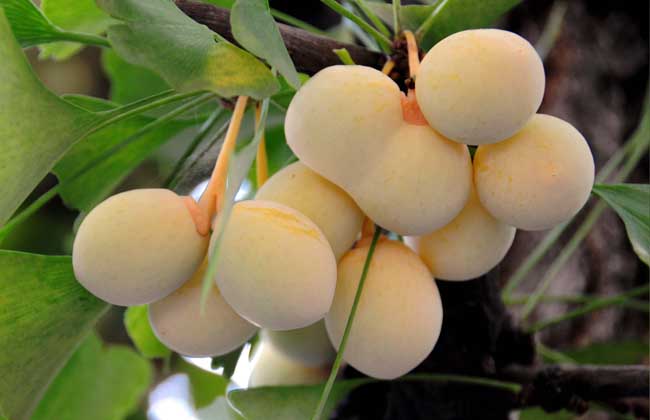
The ginkgo tree is an ancient tree species unique to China, also known as the white fruit tree, the gong-sun tree, the duck-foot tree, and so on. It is a deciduous tree of the genus Ginkgo in the family Ginkgoaceae. Its form is ancient and elegant, and it is often made into bonsai for appreciation. The resulting bonsai has a thick trunk, curved branches, exposed roots, a unique shape, is vigorous and unrestrained, and full of delightful charm, and is praised as a masterpiece among Chinese bonsai. Let us take a look below at how to grow a potted ginkgo tree!
Growth habits
The ginkgo tree is a light-loving tree species with a deep root system. It adapts fairly broadly to climate and soil and can grow in regions with high temperatures and abundant rain, as well as in areas with scarce rainfall and cold winters, but its growth is slow or poor there. It can grow in acidic soil (pH 4.5), calcareous soil (pH 8) and neutral soil, but it is not tolerant of saline-alkaline soil or overly wet soil.
Propagation by seed
Seed propagation of the ginkgo tree is mostly used for large-scale landscaping seedlings or for making clump-style bonsai. After harvesting the seeds in autumn, remove the outer seed coat and dry the seeds with the fruit coat still on; they can be sown in winter of the same year or in spring of the following year. If sowing in spring, the seeds must first undergo mixed-sand stratification to promote germination. When sowing, place the seed embryo horizontally in the sowing furrow, then cover with 3 to 4 cm of soil and press firm; the seedlings can grow to 15 to 25 cm tall in the same year.
Planting in a pot
Ginkgo trees are propagated by methods such as cuttings, division, grafting and sowing. Because the ginkgo tree is a deep-rooted tree species, a relatively deep flower pot should be used when potting. Planting is generally done in spring and autumn, and the requirements for soil are not high, but if you can use a sandy soil rich in humus, loose and fertile, with good drainage, the ginkgo you grow will do even better.
Placement location
A potted ginkgo tree has requirements for its placement. Although it is a light-loving tree species, it cannot be placed in a spot with long periods of sunlight; you must choose a spot with limited sunlight that is ventilated and moist. In summer, avoid exposure to the scorching sun, and provide appropriate shading. Although the ginkgo tree is a cold-tolerant tree species, in winter you should still bury the whole pot in the ground; this is the safest way to overwinter.
Reasonable watering
The ginkgo tree likes moist soil, but on no account should water accumulate in the pot. Watering a ginkgo tree in winter also has its particular points: when winter temperatures are relatively high, water evaporates rather quickly, so watering is generally done in the morning and evening. If the temperature is average and the potting soil is moist, then there is no need to water.
Timely fertilizing
In winter, a potted ginkgo tree can be given homemade organic fertilizer; organic fertilizer must be used, such as decomposed soybean cake or barnyard manure. After entering spring and summer, the ginkgo tree also enters its growth period, and it is then fairly suitable to water with human excrement or animal manure; this kind of fertilizer can promote leaf growth and keep the leaves fresh and green.
Shaping and pruning
Before the ginkgo tree buds in spring, one pruning should be carried out. Because its leaves are relatively large, the branches kept should be sparse rather than dense; for small and medium-sized bonsai, keeping 3 to 5 branches is enough. At the same time, according to the needs of the shape, the branches should be appropriately wired or pruned so as to reveal a trunk with a certain amount of curvature for people to appreciate.
Timely repotting
Generally, potted plants all need repotting, and a potted ginkgo tree is no exception. A potted ginkgo tree is generally repotted once every 2 years, and this needs to be done around the Spring Equinox. When repotting, note that the well-developed root system of the ginkgo tree can be appropriately shortened, then replace one third of the old soil with new soil, and place base fertilizer in the bottom of the pot; only in this way is it beneficial to the growth of the ginkgo.