How to grow fairy primrose? Master the correct cultivation methods
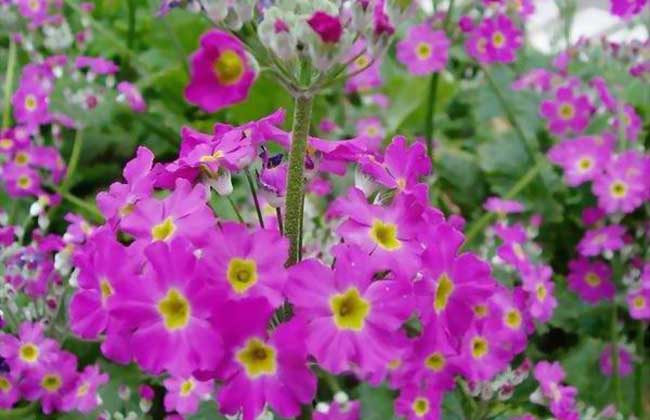
Fairy primrose, also known as primrose, yingchun flower, wanjing flower, etc., is a perennial herbaceous flower of the genus Primula in the family Primulaceae. Its leaves are all basal, forming a rosette-like leaf cluster. The flowers come in red, yellow, orange, blue, purple, white and other colors, arranged on the scape in umbels, racemes, heads, or borne singly among the leaf cluster. The corolla is funnel-shaped or salver-shaped. It is often cultivated as an ornamental. Let us take a look at the cultivation methods for fairy primrose below!
Growth habits of fairy primrose
Fairy primrose prefers well-drained soil rich in humus and is relatively moisture-loving. However, it needs dry conditions; during the seedling stage it dislikes strong sunlight and high temperatures, and prefers a warm, ventilated environment. It grows well in sandy loam and clay loam containing more humus (pH 5.5 to 6.5). In places in the south where the soil is heavy clay, it is generally mixed with homemade leaf mold (soil made by composting collected leaves, acidic soil, chicken manure and charcoal powder). Before mixing, all existing clay clods must be broken up, otherwise it will not improve the soil.
Propagation methods for fairy primrose
Fairy primrose is mostly propagated by seeds, but its seeds have a short lifespan and quickly lose germinability. Seeds harvested in spring and sown in autumn will have their germination rate drop by half. Therefore, the harvested seeds should be dried and refrigerated to reduce their metabolic activity and extend their lifespan. The sowing time should be determined according to the desired flowering period: for winter flowering, sow in late spring; for spring flowering, sow in early autumn. Seedlings sown in late spring quickly enter the hot summer, so cooling measures must be taken, otherwise the seedlings are very likely to die in the scorching weather. For small-scale planting, sow in April; by the time summer arrives the seedlings have grown larger and have stronger heat resistance, and can safely pass the summer if placed in a shady, ventilated spot.
Cultivation methods for fairy primrose
1. Soil: Fairy primrose relatively prefers humus-containing clay soil and sandy soil, and its pH value can be kept at around 5.5 to 6.5.
2. Environment: Fairy primrose prefers a warm, ventilated and humid environment, and can appropriately receive diffused light; it is not suited to direct sunlight.
3. Watering: Fairy primrose likes a humid environment, but it cannot itself come into contact with too much water, otherwise it will cause root rot.
4. Diseases: Fairy primrose mainly suffers from leaf and stem diseases. In the early stage of disease onset, use a 75% chlorothalonil wettable powder 600 to 700 times water solution, spraying once every 5 to 7 days; several consecutive sprays can control the development of the disease.
5. Pests: The main pests and diseases of fairy primrose are red spiders, aphids and other pests. Prevention should be the main approach, spraying 3 to 4 times a year: the first time before flowering, the second time after flowering, and the third time in July to August.