How to grow potted crape myrtle? Cultivation methods and precautions
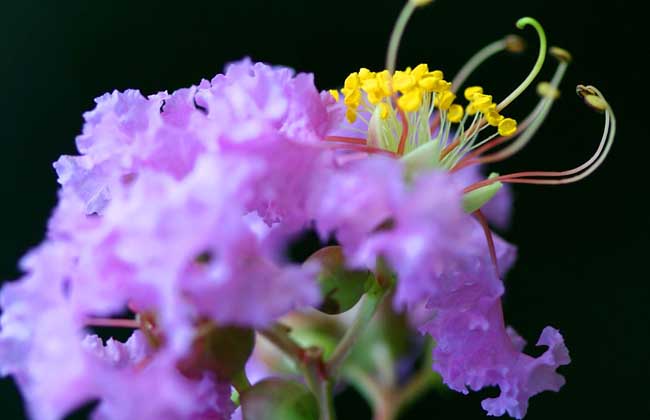
Crape myrtle is also known as itch flower, itch tree, purple gold flower, etc. It is a deciduous shrub or small tree of the genus Lagerstroemia in the Lythraceae family. It has a cultivation history of several thousand years in China and is widely planted as a flowering tree species. As early as the Tang Dynasty, it was extensively planted in the palace of Chang'an, and in recent centuries it has been introduced to various parts of the world. Now let us take a look at how to grow potted crape myrtle!
Growth habits of crape myrtle
Crape myrtle prefers warm and humid climates, likes light, is slightly shade-tolerant, likes fertilizer, and especially prefers deep and fertile sandy loam. It thrives in places with slight moisture, is also drought-tolerant, and dislikes waterlogging. It should not be planted in low and wet places with a high groundwater table. It likes warmth and can resist cold, with strong sprouting ability. It has relatively strong pollution resistance and is relatively resistant to sulfur dioxide, hydrogen fluoride and chlorine gas. It is semi-shade growing, likes to grow on fertile and moist soil, can also tolerate drought, and grows well in both calcareous soil and acidic soil.
Propagation methods of crape myrtle
1. Grafting propagation: carried out from late February to early March before the crape myrtle branches sprout. When grafting, select vigorous seedling stock as the rootstock, take branches of the desired flower color as scions, and use the cleft grafting method. First make a vertical cut about 5-8 cm deep on the outer part of the top of the rootstock, then take a 5-8 cm long scion with more than 2 buds, cut it into a wedge shape, insert it into the cleft of the rootstock and align the cambium. Then wrap the entire scion branch completely with plastic film, exposing the bud tip.
2. Hardwood cuttings: generally carried out from mid-to-late March to early April before the branches sprout. Select thick one-year-old branches, cut them into 15 cm long cuttings, and insert them into a loose, well-drained sandy loam seedbed. The insertion depth should be such that the topmost bud of the cutting is exposed. After insertion, water thoroughly and cover with plastic film to retain moisture and heat. When the seedlings grow to 15-20 cm, the film can be removed and replaced with a shade net, watering timely. In the same year, the branches can grow to about 60-80 cm.
3. Softwood cuttings: carried out in July-August, when new branches grow vigorously and are most vital. Select semi-lignified branches, cut them into 8-10 cm long cuttings, leaving 2-3 leaves at the upper end. The insertion depth is 3-4 cm. After insertion, water thoroughly and set up a shade shed for shading. Generally, roots can form in about 20 days. Remove the film, keep the shade net, and water timely. In the same year, the branches can grow to about 60-80 cm, with a very good survival rate.
4. Layering propagation: layering propagation is better from March to April in spring. Select 1-year to 2-year-old branches, use a sharp knife to score and girdle the bark by about 1.5 cm, exposing the xylem, apply rooting powder solution (diluted according to instructions) about 3 cm above the scored part. After it dries, cover the scored part with a cylindrical plastic bag, fill it with loose garden soil, water it, and tie both ends tightly. Check after one month. If the soil is too dry, replenish water to retain moisture. After rooting, cut it off and plant separately.
5. Division propagation: in early March to April or in autumn, dig out the tiller seedlings sprouting from the root crown of the plant with roots, properly prune the root system and branches, and plant them separately. Small seedlings can be bare-rooted, while large seedlings should be with mud balls. During cultivation, they should be pruned and shaped frequently to maintain a beautiful tree shape and promote lush flowering branches.
6. Seed propagation: usually in March, sow in wide rows or broadcast on a sandy loam seedbed, cover with a layer of fine burnt mud ash, to the extent that the seeds are not visible, and cover with grass on top. They germinate and emerge in more than 10 days. Remove the grass in time. When the seedlings have 2 pairs of true leaves, thin them after rain. During the seedling stage, weed frequently. From June to July, apply thin fertilizer 2-3 times. In summer, irrigate to prevent drought. At the end of the year, the seedlings are about 40-50 cm tall. Vigorous ones can bloom in the same year and should be pruned in time. In the following spring equinox, transplant them to grow larger.
How to grow potted crape myrtle?
1. Soil: crape myrtle has strong vitality, is easy to cultivate, and has no strict requirements for soil. It likes to grow on fertile and moist soil, can also tolerate drought, and grows well in both calcareous soil and acidic soil. It thrives in places with slight moisture, and grows best when planted in deep and fertile sandy loam.
2. Watering: crape myrtle is drought-tolerant and afraid of waterlogging. Each year, before spring growth starts and after leaf fall in autumn, water once with green-returning water and freezing water. Normally, if it is not too dry, there is no need to water. Generally, water 1-3 times during spring drought. In the rainy season, drainage work should be done well to prevent root rot from excessive water. It is not suitable to water in autumn.
3. Sunlight: crape myrtle bonsai likes light. Generally place it in conditions with sufficient sunlight and good ventilation. In southern regions, it can overwinter outdoors in a wind-sheltered, sunny place in winter. In northern regions, it should be moved indoors. Insufficient light not only results in fewer or no flowers, but may even cause weak growth, thin branches and small leaves. Therefore, during the growing season, crape myrtle should be placed in a sunny outdoor spot.
4. Temperature: crape myrtle is not very cold-resistant and is prone to freezing and drying up, and in severe cases may freeze to death. Therefore, in winter it should be moved indoors to overwinter, and the room temperature should be kept above 7°C. When it is lower than 7°C, methods such as covering with plastic bags for insulation, heating with hot water, and increasing temperature with a stove fire should be used. Attention should also be paid to ventilation. When the indoor temperature is too high, doors and windows can be opened and watering reduced, otherwise normal dormancy will be affected, and even root rot may occur.
5. Fertilizing: crape myrtle is a fertilizer-loving plant. Lack of fertilizer will lead to thin and weak branches and yellowing color, thus causing weak growth and few or no flowers. However, excessive fertilization will cause excessive growth of branches and leaves. Fertilize each year after leaf fall in winter and before spring growth starts. Applying human manure or sesame paste residue is even better, which can make crape myrtle grow vigorously the next year with large and brightly colored flowers.
6. Pruning: crape myrtle inflorescences are borne at the top of new branches of the current year, so when pruning, one-year-old branches should be heavily pruned and cut back to concentrate nutrients and produce robust branches. Water sprouts, dried branches, drooping branches, diseased and insect-damaged branches, slender branches and inward-growing branches should be cut off. In the young tree stage, lateral branches on the lower part of the main trunk should also be cut off in time, so that the upper part of the main trunk can receive sufficient nutrients and form a good crown.