How to Grow Lisianthus from Seed? A Detailed Guide to Sowing Methods
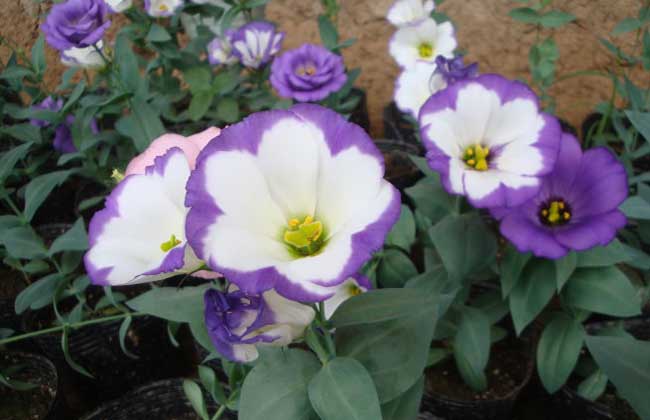
Lisianthus, also known as prairie gentian and Turkish gentian, is a perennial plant of the genus Eustoma in the Gentianaceae family. It is commonly propagated by seed, and its seeds are extremely tiny, with roughly about 10,000 seeds per gram. For this reason, lisianthus seeds are mostly sold as coated seeds, and coated seeds have a relatively high germination rate. Let's take a look below at how to grow lisianthus from seed!
Preparing the Seedling Soil
Before sowing lisianthus seeds, first prepare seedling soil or seedling plugs. For convenience, it is best to use individual small seedling pots, as this avoids the problem of leggy growth caused by seeds germinating at different times. After filling the pots with soil, mist them with a spray bottle, then set them in a larger water basin so the soil becomes completely saturated.
Sowing Method
Lisianthus seeds are extremely tiny, like dust, and even a deep breath seems enough to blow them away, so you must be very careful. It is best to have something underneath to catch them, such as a sheet of white paper, so that even if they accidentally fall, you won't have trouble finding them. Then take a toothpick, dip it lightly in water, and touch it to the seeds so they stick to the toothpick; this makes sowing them into the seedling pots much easier. Note that lisianthus seeds do not need to be covered with soil; simply place them on the surface of the soil.
Moisture Retention After Sowing
After placing the lisianthus seeds, if there is a lid, you can cover them to retain moisture. If there is no lid, you can cover them with a layer of household plastic wrap to maintain humidity, opening it once a day for ventilation. You can also mist them daily with a very fine spray bottle. If you find that hard to manage, you can simply set them in a water basin to maintain humidity. But be sure to remember not to leave them in there 24 hours a day; a light misting or a short soak each day is enough. Seeds need to breathe too, and if soaked too long they will rot and actually be less likely to germinate.
Germination Management
After sowing, lisianthus seeds generally germinate in about 15 to 20 days, and some take as long as 30 days. You must be patient and not give up on them, and keep the humidity steady until they germinate. Once they have germinated, there is no need to keep the lid on, and they can receive bright indirect light, but never expose them to harsh sun, because newly sprouted seedlings are very fragile and can easily dry out and die from sun exposure. At this point there is also no need to keep them in the water basin every day; just put them back in when the soil looks slightly dry. For newly sprouted seedlings, mist as gently as possible, because the seedlings are very small and a strong spray will knock them over.
Growing Management
1. Light: Lisianthus is relatively sensitive to light. Long-day conditions are very favorable for the growth and development of lisianthus, helping stem and leaf growth and flower bud formation and achieving earlier blooming. Generally, 16 hours of light per day gives the best results.
2. Temperature: Lisianthus likes warmth, with an optimal growing temperature of 15 to 28°C, and night temperatures during the growing period should not fall below 12°C. When winter temperatures are below 5°C, the leaf rosette forms and the plant cannot bloom. It can also tolerate short periods of 0°C cold. If the growing temperature exceeds 30°C, the flowering period is noticeably shortened.
3. Watering: Lisianthus likes a moist environment, but excessive water is harmful to root growth and makes the plant susceptible to disease invasion. After flower buds form, avoid high-temperature and high-humidity conditions, otherwise fungal diseases are easily triggered. At the same time, insufficient water supply during the growing period leads to thin, weak stems and leaves and premature flowering.