What are the cultivation methods for potted bird of paradise flowers?
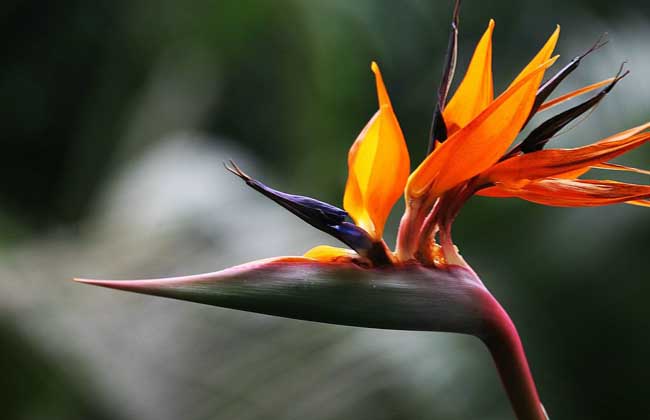
The bird of paradise flower, also known as the crane flower or paradise bird flower, is a perennial herbaceous plant of the genus Strelitzia in the family Strelitziaceae. It is cultivated in parks and flower nurseries in major cities in southern China, while in the north it is grown in greenhouses. It stays green year-round, with large, graceful leaves and unusual flower shapes. It can be planted in clumps in courtyard corners for courtyard landscaping and as accents in flowerbeds and flower borders. Now let us take a look at how to grow potted bird of paradise flowers!
Growth habits of the bird of paradise flower
The bird of paradise flower is native to southern Africa and is a subtropical long-day plant. It prefers a warm, humid environment with plenty of sunlight, fears severe cold, and dislikes extreme heat, drought, and waterlogging. It requires loose, fertile sandy loam with good drainage and a pH of 6 to 7. The suitable temperature during the growing period is 20 to 28°C. It is cultivated in parks and flower nurseries in major cities in southern China, while in the north it is grown in greenhouses.
Propagation methods for the bird of paradise flower
1. Sowing: Under ordinary cultivation conditions, the bird of paradise flower must be hand-pollinated to set seed. Before sowing, select large, plump, smooth-skinned, fresh, undamaged seeds free of pests and diseases, soak them in warm water at 30 to 40°C for 4 to 5 days, then disinfect them for 5 minutes with a 1000-fold dilution of 5% benzalkonium bromide. The sowing time is from May to July. Use spot sowing, cover with 1 to 1.5 cm of soil, water, and cover with plastic film to keep warm and moist. The suitable germination temperature is 25 to 30°C. After sowing, they will germinate in 15 to 20 days, emerging gradually.
2. Division: Division propagation of the bird of paradise flower is carried out in early spring from February to March, in conjunction with repotting and changing the soil. Tip the plant out of the pot, gently remove the old soil around the outside of the root ball, and do not break the fleshy roots. Let it dry in a shaded place for 1 to 2 days. After the root system softens, use a sharp knife to cut away the sucker shoots growing around it from the root gaps along with their roots, so that each small clump has 2 to 3 buds, and each bud has 2 to 3 fleshy roots. Coat the cuts with plant ash and let them dry to form a protective layer, then replant in a wooden tub, ceramic jar, or deep white plastic pot.
Cultivation methods for the bird of paradise flower
1. Potting soil: The bird of paradise flower has thick, fleshy roots, so you can use a mix of 5 parts leaf mold or peat soil, 3 parts garden soil, 1 part decomposed manure soil, and 1 part coarse sand, blended evenly. If the prepared growing medium has poor permeability, combined with excessive watering, it can easily cause root rot. Its root system is well developed and grows quickly, so it needs to be repotted in time.
2. Temperature: The bird of paradise flower likes a warm, humid, semi-shaded environment. The suitable growing temperature is 12°C to 25°C, and the indoor temperature in winter should be kept above 5°C. It does well in loose, deep humus soil. Its natural flowering period is autumn and winter. If temperature, light, fertilizer, and water are suitable, it can bloom in all four seasons, and each flower can remain open for over a month.
3. Watering: Water the bird of paradise flower by the principle of watering when dry and keeping it dry between waterings. In summer, watering should be ample. In spring and summer, also frequently mist the leaves and sprinkle water on the ground around the pot to increase air humidity and create a cool environment, which benefits its growth and development. After late autumn, reduce watering. In winter, control watering and keep the potting soil on the drier side.
4. Fertilizing: During the growing period, the bird of paradise flower requires a dilute liquid fertilizer once every half month. For home cultivation, it is best to water with fermented rice-washing water or soybean soaking liquid. From flower stalk formation to full bloom, you can add 0.5% superphosphate to the fertilizer solution, which will make the flower colors more brilliant.
5. Light: The bird of paradise flower needs no less than 4 hours of direct light each day, and ideally bright light all day long. Take some protective measures when the sunlight is intense. In winter, which is mainly the flowering period, sufficient sunlight helps increase flower production. Light regulation emphasizes the management principle of “not shady in winter, not scorched in summer”. When the plant is shaded, the leaves look more beautiful, but the number of flowers will be relatively fewer.
Pest and disease control for the bird of paradise flower
1. Anthracnose: It harms leaves and stems. The lesions are round, bordered by a reddish-brown line, with a flat brownish-gray center. When conditions are suitable, conidia spread by splashing water and invade through wounds, and the disease occurs easily when humidity is high. When diseased leaves are found, cut them off along the edge. You can also remove the diseased leaves and burn or bury them deeply. Spray with a 500-fold dilution of 25% carbendazim wettable powder or 40% sulfur-multiplex suspension concentrate.
2. Root rot: When root rot is found, disinfect the soil and control watering promptly, remove the rotten roots, and spread quicklime in the soil or disinfect the soil with 70% quintozene. In the early stage of the disease, alternately spray the plant or drench the roots with an 800-fold dilution of 50% cheshunt mixture wettable powder, a 1000-fold dilution of 50% benomyl wettable powder, or a 500-fold dilution of 70% thiophanate-methyl wettable powder, spraying once every 10 days.
3. Wilt disease: The vascular bundles of affected plants are infected, and symptoms generally appear only at the mature plant stage. In the early stage, the leaves appear dehydrated or show yellow patches, net-veined faded spots, and so on. In severely diseased plants, the leaves fall off one after another, and eventually the whole plant dies. Remove the diseased remains and burn them in a centralized manner. In the early stage of the disease, spray with a 4000-fold dilution of 72% agricultural streptomycin soluble powder or a 4000-fold dilution of xinzhiromycin, spraying once every 10 days for 2 to 3 consecutive applications.
4. Leaf spot: When diseased plants are found, remove them promptly and burn them in a centralized manner. Cut off the diseased leaves, and apply 30% basic copper sulfate suspension to the wounds or cut surfaces. In the early stage of the disease, spray the leaf surface with a 400-fold dilution of 30% basic copper sulfate suspension or a 500-fold dilution of 70% zineb wettable powder once every 10 days for 2 to 3 consecutive applications.