How to Grow Peace Lilies in Water? A Detailed Guide to the Growing Method
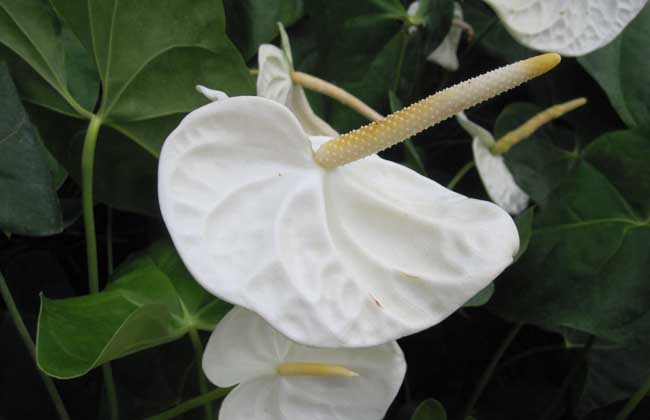
The peace lily, also known as spathe lily, "smooth sailing", and lily intent, among other names, is a perennial herbaceous plant of the genus Spathiphyllum in the family Araceae. It has emerald-green leaves and white spathes, is very fresh and elegant, has excellent ornamental value, and can filter indoor exhaust air, with a certain purifying effect on ammonia, acetone, benzene, and formaldehyde. Now let us take a look at how to grow peace lilies in water!
The Growth Habits of Peace Lilies
Peace lilies prefer high temperatures, high humidity, and a semi-shaded environment. They are quite sensitive to humidity and afraid of strong direct sunlight, requiring 60-70% shading in summer, but long-term insufficient light makes it hard for them to bloom. The soil is best as fertile loam rich in humus. The optimum growth temperature is 22-28°C, with 24-30°C from March to September, 18-21°C from September to March of the following year, and a winter temperature no lower than 14°C. Below 10°C, plant growth is hindered and the leaves are prone to frost damage. During storage and transport, peace lilies are kept at 13-16°C with a relative humidity of 80-90%, and can tolerate a dark environment for 30 days.
Propagation Methods for Peace Lilies
1. Division: Division propagation of peace lilies is best done in May-June. Lift the whole plant out of the pot, cut the rhizome apart from the base of the clump, making sure each division has at least 4 leaves, then plant them separately and place them in a semi-shaded spot to recover.
2. Sowing: After the peace lily blooms, artificial pollination can produce seeds. The seeds must be sown immediately after collection; the germination temperature is 30°C, and they sprout 10-15 days after sowing. If the temperature is too low during germination, the seeds are prone to rot.
3. Tissue culture: Using young inflorescences and lateral buds of the peace lily as explants, after disinfection they are inoculated onto MS medium supplemented with 10 mg/L 6-benzylaminopurine and 2 mg/L indoleacetic acid. After 40-45 days, callus tissue and adventitious buds form. The adventitious buds are then transferred to MS medium supplemented with 2 mg/L indoleacetic acid, and after 30-40 days roots are induced, forming complete plantlets.
How to Grow Peace Lilies in Water?
1. Container: Peace lilies grown in water are usually kept at home, so of course you should choose a very nice-looking container; the specific choice depends on personal preference.
2. Temperature: The optimum growth temperature for peace lilies is 20-28°C, so when growing them in water indoors, be careful to control the room temperature well.
3. Light: For peace lilies grown in water, the light should mainly be scattered light; they do not necessarily need to be exposed to the sun, and direct sunlight should be avoided as much as possible in summer.
4. Changing the water: For peace lilies grown in water, change the water about once every 7 days in summer and about once every 10-15 days in winter, adding a few drops of special nutrient solution for hydroponic flowers.
5. Fertilizing: In daily care of peace lilies grown in water, spray the leaves with clean water to keep them moist; it is best to spray a foliar fertilizer once a week.
Precautions for Growing Peace Lilies in Water
1. In winter and early spring, peace lilies need relatively good light and should not be kept in shade. As the light gradually intensifies, shade them gradually. If they are being enjoyed in a shaded spot, do not place them directly in the sun to bake, otherwise they will show discomfort due to the drastic change in environment, appearing as wilting, yellow leaves, or even death.
2. Peace lilies need relatively high growing humidity. If the air is too dry, the leaves will wilt. This can be solved by increasing misting or sprinkling water on the floor of the environment. Covering them with a transparent plastic bag also works, but when the light is good, ventilate slightly or cut an opening at the top of the plastic bag for ventilation, otherwise the temperature inside the bag will rise sharply.
3. To prevent the leaves of peace lilies from drying out, in daily care spray the leaves with clean water to keep them moist; it is best to spray a foliar fertilizer once a week, which not only provides nutrients to the leaves and increases their gloss, but also helps resist low temperatures in winter. Use a nutrient solution for foliage plants; at the bud stage, spray the leaves 2 to 3 times with a 0.3% potassium dihydrogen phosphate solution, which can promote blooming.
4. If peace lilies are harmed by pest mites, the leaves will show adverse symptoms such as wilting, faded gloss, and yellowing and withering. Miticides can be sprayed for control, such as dicofol, hexythiazox, and pyridaben. Common bacterial leaf spot, brown spot, and anthracnose harm the leaves and can be sprayed with a 500-fold dilution of 50% carbendazim wettable powder.