How to Grow Potted Mosaic Plants and Key Points to Note
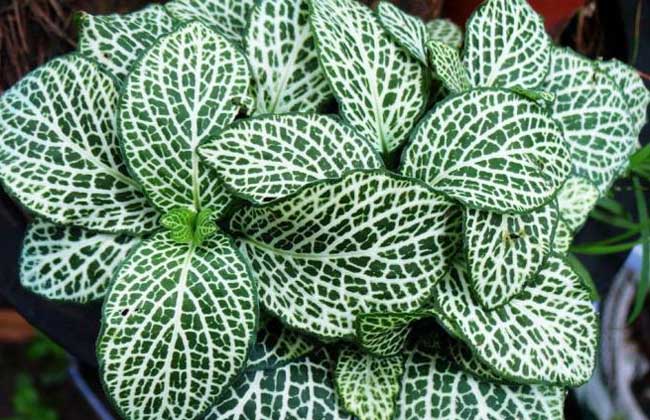
Mosaic plant, also known as feidaohua, silver net grass, etc., is a perennial evergreen herbaceous plant of the genus Fittonia in the family Acanthaceae. It has a light and graceful form, and the plant is small and delicate. Among foliage plants, it is a small potted plant. Because it is exquisitely delicate, with clear leaf veins, elegant leaf color, and even texture, it is deeply loved by people. In Europe and America, it is very popular as a small potted variety. Now let us take a look at how to grow a potted mosaic plant!
Growth Habits of Mosaic Plants
Mosaic plants like high temperature, high humidity, and a semi-shaded environment. They are particularly sensitive to temperature. The suitable growth temperature is 18-24°C. They prefer a humid environment, and during the growing period they need relatively high air humidity. Especially in the high-temperature summer season, when water evaporation is high and the air is dry, in addition to watering to increase the humidity of the potting soil, spraying water on the leaves and sprinkling water on the ground are even more necessary. For light, scattered light is best, and direct light should be avoided. In summer, a shade net is needed, with a shading rate of 50-60% being most suitable. In winter, sufficient sunlight is needed, with slight shading protection at noon. On rainy and snowy days, supplementary light should be added, so that the leaves grow robustly, the leaf color is emerald green, and the leaf veins are clear. For soil, sandy loam rich in humus is suitable.
Cultivated Varieties of Mosaic Plants
1. Purple Anne mosaic plant: Purple Anne mosaic plant is a low-growing perennial herb, creeping and trailing in habit, with leaves opposite in a cross arrangement. The leaves are relatively broad and oval, spreading flat and open, with a dark green leaf surface, strong glossiness, and white netted veins distributed densely in a feather-like pattern, very clear, and this is the main ornamental trait. It also has a light and graceful form, is small and delicate, with even texture, and is deeply loved by people.
2. White Snow Anne mosaic plant: White Snow Anne mosaic plant is a low-growing perennial herb, creeping and trailing in habit, with leaves opposite in a cross arrangement. The leaves are ovate or oval, spreading flat and open, with large and small wavy wrinkles along the leaf margins. The green color of the leaf surface is not obvious, and white netted veins densely cover the leaves, making the leaves appear snow-white, which is the main ornamental trait. It also has a light and graceful form, is small and delicate, with even texture, and is deeply loved by people.
3. Large Flame mosaic plant: The leaves of the Large Flame mosaic plant are petite, ovate or oval, with wrinkled leaf margins. The leaves are flat, with a dark green leaf surface, and brick-red leaf veins distributed in a feather-like pattern, very clear, which is the main ornamental trait. It also has a light and graceful form, is small and delicate, with the leaf color turning red, and even texture, and is deeply loved by people.
Propagation Methods of Mosaic Plants
1. Division: When the stems and leaves of mosaic plants grow relatively densely, many creeping stem nodes have already produced adventitious roots. As long as the creeping stems are more than 10 cm long, they can be cut off with roots and directly potted. Then, after recovering in a semi-shaded place for 1-2 weeks, they can be transferred to normal care.
2. Cuttings: Under suitable temperature conditions, mosaic plants can be propagated by cuttings throughout the year, and cuttings taken from May to September, when the temperature is slightly higher, have the best results. Cut cuttings from creeping stems that have grown out of the pot surface, about 10 cm long, generally requiring 3-4 stem nodes, remove the lower leaves, let them dry slightly, and then insert them into a sand bed. If the cutting medium temperature is 24-30°C, roots can form 7-14 days after insertion. If the temperature is too low, rooting of the cuttings is relatively difficult. Generally, they can be transplanted into pots about 1 month after insertion.
3. Tissue culture: Mosaic plants often use leaves and stem tips as explants. After disinfection and sterilization, the leaves are cut into 8-10 mm lengths and inoculated onto MS medium supplemented with 6-benzylaminopurine 2 mg/L, naphthaleneacetic acid 2 mg/L, and 2,4-D 1 mg/L. After 30 days, the leaves bend, and after another 20 days, clustered shoots grow out. After the clustered shoots are cut and transferred to 1/2 MS medium supplemented with naphthaleneacetic acid 0.1 mg/L, adventitious roots grow out in about 1-2 weeks, forming complete plants.
How do you grow a potted mosaic plant?
1. Potting soil: The best culture soil for mosaic plants is sandy loam rich in humus. A mix of 50% fine tree fern fiber, 20% peat moss, and 30% river sand can also be used. For potted mosaic plants, a mixture of equal parts peat soil, leaf mold, and river sand can be used.
2. Potting up: When potting up mosaic plant cuttings, be careful not to damage the roots, and keep them separate from fertilizer to avoid root burn. After planting, water to settle the roots, and then transfer to normal care.
3. Light: Mosaic plants like medium-intensity light and avoid direct sunlight, but they also have relatively strong shade tolerance. Indoors, it is best to place them by a bright window.
4. Watering: Mosaic plants must be watered carefully. If the potting soil is allowed to dry out completely, the leaves will curl up and fall off. If it is too wet, the stems are prone to rot.
5. Fertilization: For vigorously growing mosaic plants, a nitrogen-based compound fertilizer at half the normal concentration can be applied once every half month.
6. Temperature: Mosaic plants like warmth. The suitable growth temperature is 18-25°C. Mosaic plants have poor cold tolerance. If the temperature is below 12°C, the leaves will suffer cold damage, and at about 8°C the plant may die.
7. Diseases: Common diseases of mosaic plants include leaf rot and root rot. For leaf rot, spray 25% carbendazim wettable powder at 1000 times dilution for control. For root rot, soak the roots in streptomycin at 1000 times dilution to sterilize.
8. Pests: Pests of mosaic plants include scale insects, red spiders, and snails. For scale insects and red spiders, spray 40% omethoate emulsifiable concentrate at 1000 times dilution. Snails can be caught manually or lured and killed with metaldehyde.