How to grow potted Sempervivum tectorum? Cultivation methods and precautions
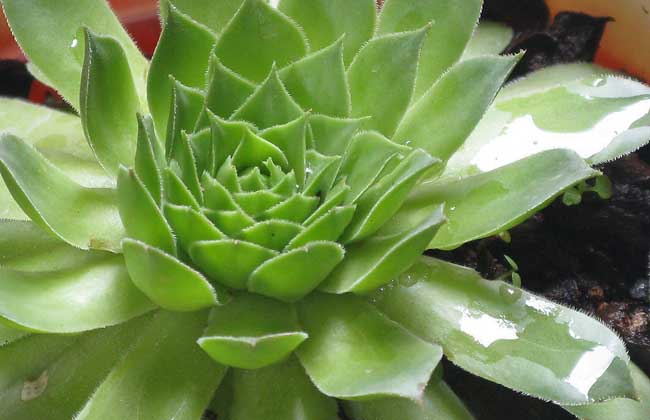
Sempervivum tectorum, also known as Hens and Chicks, is a succulent plant of the genus Sempervivum in the Crassulaceae family. As its name suggests, it has a rosette-like shape, with richly varied leaf colors and a very distinctive purplish-red leaf tip. It is suitable for small to medium-sized potted plants or combination plantings. Grown in pots of different shapes, its ornamental effect varies greatly. Let's take a look at how to grow potted Sempervivum tectorum!
Growth habits of Sempervivum tectorum
Sempervivum tectorum is an alpine-type succulent plant that prefers a sunny, cool and dry environment. It is suitable for acidic, neutral and alkaline soils alike. Except for appropriate shading during high summer temperatures to avoid scorching sun exposure, it needs full sunlight in all other seasons. Water should be restricted in winter. It can tolerate low temperatures of -20°C. The plant goes dormant during high summer temperatures and cold winters. The cooler spring and autumn seasons are its main growing periods, when it requires ample sunlight. If light is insufficient, the plant will become loose and not compact, affecting its appearance and ornamental value. Plants grown in ample light have thick, plump leaves, a compact form and bright leaf color, looking very beautiful.
Propagation methods of Sempervivum tectorum
1. Cuttings: During the growing season, the small rosettes around the large rosette can be removed. Those with roots can be potted directly; those without roots should be dried for a few days until the wounds heal before planting. The small rosettes at the front of the stolons can also be cut off, dried for a few days, and then inserted into sand or vermiculite. After insertion, keep the medium slightly moist, and they will root easily. Leaf cuttings, although occasionally successful, have a very low success rate.
2. Seeding: If seeds can be collected from Sempervivum tectorum, they can be used for propagation. Sow in early spring in a cold frame. At a temperature of 10°C, germination usually takes 2 to 6 weeks. Transplant into pots when the seedlings are large enough, but seedlings grown from seed grow slowly.
3. Tissue culture: Sempervivum tectorum can be rapidly propagated using tissue culture. The required materials are easy to obtain and the propagation success rate is relatively high. It can also produce many variations, making it a rather promising propagation method.
How to grow potted Sempervivum tectorum?
1. Soil: The potting soil for Sempervivum tectorum should be loose and fertile, with good drainage and aeration. You can add one-third humus soil to the potting soil, plus one-third river sand or coal cinder, and mix in a little bone meal. Since the soil is moist, newly planted specimens do not need too much water; keep it in a semi-dry state to help the root system recover.
2. Temperature: Sempervivum tectorum prefers a warm, humid, semi-shaded growing environment. The optimum growing temperature is 20-30°C, and the overwintering temperature is 15°C. If the nighttime temperature in winter is not below 5°C and the daytime temperature is above 15°C, the plant can continue to grow, and normal watering and appropriate fertilizing can be carried out. If watering is controlled to induce dormancy, it can also tolerate low temperatures of 0°C.
3. Light: Sempervivum tectorum goes dormant during high summer temperatures and cold winters. Its main growing periods are the cooler spring and autumn seasons, when it requires ample sunlight. If light is insufficient, the plant form will become loose and not compact, affecting its ornamental value. Plants grown in ample light have thick, plump leaves, a compact form and bright leaf color.
4. Watering: Water Sempervivum tectorum according to the principle of "“don't water until dry, water thoroughly when you do.”" Avoid prolonged waterlogging to prevent root rot, but do not let it become too dry either, otherwise the plant will not die but will grow slowly, with dull leaf color and a lack of vitality. During high summer temperatures, leaf water evaporation is high and water demand is greater. If water is lacking, the leaves are very likely to wilt, so you must frequently mist the leaves and keep the environment humid, but you must avoid water accumulating in the pot, otherwise it will cause root rot.
5. Fertilizing: Apply a decomposed, diluted liquid fertilizer or a low-nitrogen, high-phosphorus-potassium compound fertilizer once every 20 days or so. When fertilizing, do not splash the fertilizer solution onto the leaves. Generally do this on a clear morning or evening, and water thoroughly once on the evening of the same day or the morning of the next day to dilute any residual fertilizer solution in the soil.
6. Repotting: Repot Sempervivum tectorum once every 1 to 2 years in spring or autumn. During repotting, prune the root system, cutting off dead roots or overly long old roots. The potting soil should be loose and fertile, with good drainage and aeration. You can use a mixture of leaf mold, coarse sand and vermiculite in a 2:1:1 ratio, and add a small amount of plant ash and bone meal as a base fertilizer.
Precautions for Sempervivum tectorum
1. Spring: Repot when the spring temperature stabilizes above 15°C. When the outdoor temperature stabilizes above 20°C, you can also move Sempervivum tectorum to a semi-shaded balcony for cultivation. When the temperature is higher in late spring, keep the soil moist and fertilize appropriately. When the clump is dense, some old leaves can be pruned appropriately to encourage new leaf growth.
2. Summer: Sempervivum tectorum prefers a high-temperature, high-humidity environment, and summer is its peak growing season, so the potting soil should be kept moist. It is not heat-tolerant; after May, the plant gradually stops growing and enters its summer dormancy period. At home, it can be placed under a corridor or on the inner side of a balcony, in a spot without direct sunlight, with good ventilation and shelter from rain, and watering should be controlled and fertilizing stopped, to avoid plant rot caused by stuffiness, humidity and water accumulation in the soil.