Cultivation Methods and Precautions for Rixianggui (Osmanthus fragrans 'Rixianggui')
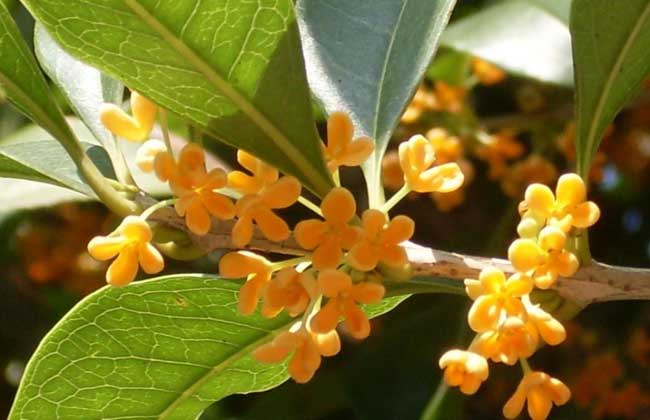
Rixianggui is a horticultural cultivar of Osmanthus fragrans, also known as Muxi, Jiulixiang, Jinsu, and so on. It gets its name from its characteristics of continuous blooming and rich fragrance, combining greening, fragrance, and color functions in one. It can be cultivated into a graceful spherical small tree, or into a dense spherical large shrub, and can also be grown in pots or used for flower arrangements. Let us take a look at the cultivation methods for Rixianggui!
Growth Habits of Rixianggui
Rixianggui has wide adaptability and strong stress resistance. It prefers neutral to slightly acidic soil rich in organic matter, requires a cool and humid microclimate, and has a certain degree of cold tolerance. Its bud-breaking period is relatively early each year. In Northeast and North China, potted plants can bloom normally. In areas south of the Qinling Mountains and Huaihe River, it can overwinter safely outdoors. In provinces and regions with high temperatures year-round such as Fujian, Guangdong, Guangxi, and Hainan, it can also adapt relatively well and bloom on schedule each year. Its flower buds can continuously differentiate, and it has the remarkable characteristic of blooming on spring buds and tender branches, while lignified old branches can also bear dense flower buds and bloom. This ensures the long duration and continuity of Rixianggui's blooming. Two-leaf seedlings of the current year can bloom, which is unmatched by ordinary Osmanthus fragrans.
Propagation Methods for Rixianggui
1. Layering propagation: Usually at the end of March and beginning of April, around the mother plant, depending on the number of branches that can be layered, dig a small trench 20 cm deep and 20 cm wide along the natural direction of branch growth, then bend the branches into the trench, fill the trench with fertile soil and firm it down, water thoroughly, and then mound the soil at the layered position into a steamed bun shape.
2. Air layering: Usually between September and October, split one section of a bamboo tube into 2 pieces, fill them with moist soil, and wrap them around a healthy branch of Rixianggui. Support it with a frame, add water frequently to keep the inside of the tube moist. After more than 1 month, new roots will grow. The following spring, remove and transplant it, and it becomes an Osmanthus tree, which can bloom in about 3 years.
3. Seed propagation: Every year at the end of May and beginning of June, harvest ripe drupes from the Rixianggui tree, remove the outer shell, dry them slightly in the shade, and store them in moist sand. In early spring of the following year, broadcast sow them on a pre-prepared seedbed. When the weather warms up in March, they will germinate and take root. Generally, seedlings can reach about 15 cm in height in one year, and can grow to 1 m tall in 2 to 3 years, at which point they can be lifted from the nursery and planted out.
4. Grafting propagation: Select one-year-old healthy lateral branches from a plant about 20 years old, cut off two buds, graft them onto a Ligustrum (privet) rootstock, wrap with plastic film strips, and they can sprout in the same season. They can bloom after 4 years, but Osmanthus trees propagated by this method have crooked trunks and are not suitable for use as street greening trees.
5. Cutting propagation: Choose February, when sap is about to flow, as the cutting season. One month before cutting, spray the cutting bed with 800 to 1000 times diluted trichlorfon solution to eliminate nematodes. 10 to 15 days before cutting, disinfect with lime water, and 3 days before cutting, rinse the cutting bed with clean water. After cutting, firm the bed soil, cover the rows with grass, water thoroughly once, and set up a shade frame. When new branches grow to more than 6 cm, they can be moved out of the seedbed for cultivation.
Cultivation Methods for Rixianggui
1. Soil selection: Rixianggui is best grown in loose sandy loam containing organic matter. Mushroom residue, sawdust, peat, mountain forest leaf mold, and so on can also be used (the substrate should be chosen so that the roots of potted flowers can grow and breathe). The pH of the substrate should be neutral to slightly acidic. After choosing the substrate, it is best to also carry out disinfection and sterilization treatment (such as using thiophanate-methyl, dichloran, carbofuran, and other chemicals).
2. Reasonable watering: Newly planted Rixianggui should be watered thoroughly once. Its water requirements are the same as other flowering plants; soil that is too dry or too wet will affect growth and development. If young tender branches and leaves are found to be wilting, place the flower pot in a basin of clean water deep enough to submerge one quarter of the pot soil for about 1 hour, and it will recover to normal. Excessive water can also cause oxygen deficiency and root rot. However, avoid watering with alkaline water such as tea water or laundry detergent water.
3. Timely fertilization: Because Rixianggui consumes more nutrients due to continuous blooming, more phosphorus fertilizer should be applied to promote continuous blooming. Based on this, its fertilization standard should follow the principle of "light fertilizer applied frequently." Normally, an appropriate amount of organic fertilizer can also be added, but never fertilize excessively or too frequently. Fertilization should be combined with watering, generally once per flowering period.
4. Shaping and pruning: For Rixianggui, according to the desired tree shape, cut off some water sprouts, overly dense branches, dead branches, diseased branches, and so on. For newly planted potted flowers, part of the tender branches should be pruned. Pruning is generally carried out after tender shoots sprout but before they have lignified.
5. Pest and disease control: Common diseases of Rixianggui include leaf blight, anthracnose, and so on, which can be controlled with 800 times diluted "Duojunqing" or "Tobuchin." Common pests include red spider mites and scale insects, which can be controlled with 1000 times diluted "Chlorshaomancun" and "Supujie" respectively.
Daily Care of Rixianggui
1. Light management: Rixianggui prefers light. In a place with sufficient sunlight, its leaves are emerald green, branches are thick and strong, and flowers are abundant and fragrant. If placed in a shaded place with insufficient sunlight, branches and leaves will be sparse, and the fragrance of the flowers will be faint. Rixianggui grows most vigorously when the temperature is between 15°C and 30°C, but in summer it is afraid of high temperatures and scorching sun burning tender leaves and young buds. In midsummer, potted seedlings should be placed in a well-ventilated and cool place.