How to grow potted cyclamen? Growing methods and precautions
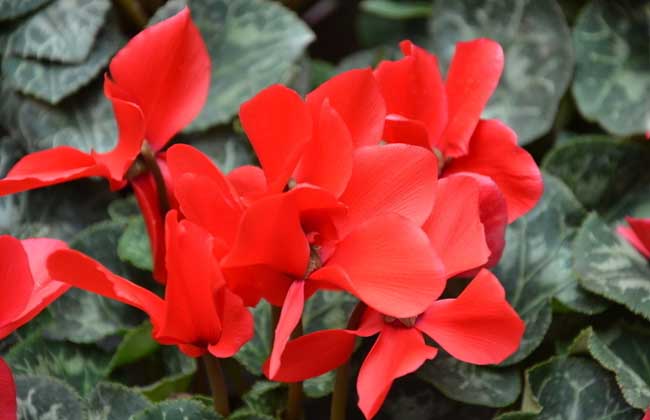
Cyclamen is a commonly grown flower, also known as bunny ear flower, rabbit flower, one-cap crown, etc. It is a perennial herbaceous plant of the genus Cyclamen in the family Primulaceae. Some cultivated varieties have a rich fragrance, while others have a faint or no fragrance. It is suitable for growing in indoor flower pots, and in winter it needs to be grown in a greenhouse. Now let us take a look at how to grow potted cyclamen!
Growth habits of cyclamen
Cyclamen prefers warmth and fears heat. It grows best in a cool environment and in fertile sandy loam rich in humus. It is relatively cold-tolerant and can withstand low temperatures of 0°C without freezing. Autumn to the spring of the following year is its growing season, and it is semi-dormant in summer. The suitable growing temperature in winter is between 12-16°C, and when promoting flowering it should not exceed 18-22°C. Above 0°C the plant will enter dormancy, and above 35°C the plant is prone to rot and death. In winter it can tolerate low temperatures, but below 5°C growth is slow, flower color is dull, and flowering is reduced. Supplementing carbon dioxide gas in winter can promote growth and flowering. During the growing period, it requires an environment with humid air and sufficient sunlight.
Propagation methods of cyclamen
1. Sowing: Cyclamen seeds can only be obtained after artificial pollination. The seeds generally mature in May and should be harvested in time. To promote seed germination, the seeds can be soaked before sowing to hasten germination, soaking in cold water for 24 hours or in warm water at 30°C for 2-3 hours, then washing off the sticky material on the seed surface, wrapping them in a wet cloth to hasten germination, keeping the temperature at 25°C for 1-2 days, and once the seeds slightly sprout they can be taken out and sown. The sowing time is generally in September-October, and sowing with ordinary flower pots is sufficient.
2. Tubers: Cyclamen tubers cannot naturally produce offsets, so they cannot be propagated by dividing bulbs like ordinary bulbous flowers; they need to be propagated by artificial cutting into pieces. Generally in late August, when the tubers are about to sprout, cut the tuber vertically from the top into several pieces, each piece should have a bud eye, coat the cut surfaces with plant ash, let them dry slightly, and then they can be planted separately in flower pots. With careful management, they will soon unfold leaves and bloom.
3. Tissue culture: Cyclamen tissue culture propagation can use flower stamens, tubers, leaves, young stems, etc. as explants, generally collected from one- or two-year-old young plants, among which tubers are the easiest to induce seedlings as explants. When using tubers as explants, MS medium can be selected, with MS+3 mg/L 6-BA+1 mg/L NAA as the induction medium, 1/2MS+0.3 mg/L NAA as the rooting medium, and MS+3 mg/L 6-BA+0.4 mg/L NAA as the subculture medium.
How to grow potted cyclamen?
1. Potting soil: Cyclamen requires fertile, well-drained, slightly acidic soil. If the soil is not managed for a long time or managed unscientifically, cyclamen will grow poorly, bloom less, have dull colors, and lose or reduce its ornamental value. For pot cultivation, loose and fertile nutrient soil is best. Apply a topdressing of decomposed dilute organic fertilizer such as human and animal manure every 10 days or so, and after budding, apply two additional applications of 0.1% potassium dihydrogen sulfate.
2. Temperature: The most suitable temperature for cyclamen growth is around 15°C. The suitable temperature for growth and flower bud differentiation is 15-20°C, with humidity of 70-75%. In winter during the flowering period, the temperature must not be lower than 10°C. If the temperature is too low, the flower color will be dull and the flowers will easily fall. If the summer temperature reaches 28-30°C, the plant will become dormant. When the temperature reaches above 30°C, cyclamen leaves will turn yellow and fall off, and the flowers will fade and lose ornamental value. If it reaches above 35°C, the tubers are prone to rot.
3. Watering: When cyclamen enters dormancy in summer, reduce watering of the dormant corms. After potting up and repotting in autumn, water thoroughly and gradually increase fertilizer and water, keeping the soil moist. In winter, reduce the amount of water. When watering, do not let water get on the flower buds and tender leaves, so as to avoid rot and affect flowering. The best watering time is from 10:00 to 12:00 in the morning, and the water temperature and the substrate temperature should be as close as possible.
4. Fertilizing: Cyclamen is also a fertilizer-loving plant. In spring and autumn each year, apply 2‰ potassium dihydrogen phosphate once each time, and avoid applying high-nitrogen fertilizer. During the growing period, fertilizers should generally be applied lightly and frequently, and liquid fertilizer must be fully decomposed and fermented. Fertilizing should be done on sunny days. From June to August, stop or reduce fertilizing. After late August, as the weather gradually cools and growth gradually becomes vigorous, fertilizer can be applied once every 7-10 days, with more phosphorus- and potassium-containing fertilizer to promote lush flowering later. When fertilizing, be careful to prevent the fertilizer liquid from covering the top of the corm, so as to avoid causing rot.
5. Light: Cyclamen should be placed in places with sufficient light such as windows and balconies, and the position of the flower pot should be changed frequently. Sufficient light can make the flowers more brilliant and the leaves more glossy. Although cyclamen is a relatively shade-tolerant plant of the family Primulaceae, long-term insufficient light can easily cause cyclamen leaves to turn yellow.
6. Diseases and pests
① Gray mold: The diseased area has small water-soaked spots 1-2 mm in diameter, which gradually expand and become brown rot. When the petiole or flower stalk is infected, the leaves or flowers bend and break, and there is a gray mold layer at the diseased area, which later turns into a yellowish-brown mold layer. The cause is excessively high humidity and poor ventilation. For prevention and control, first, ventilate in time to reduce air humidity; second, remove diseased leaves in time to reduce sources of infection; third, spray broad-spectrum fungicides such as zineb and carbendazim.
② Soft rot: Soft rot is mostly caused by bacterial infection. The diseased area shows soft rot, and the affected area is mostly seen on the corm. It is mainly caused by incomplete or absent disinfection of the substrate, and it easily occurs under high temperature or high humidity conditions. For prevention and control, agricultural streptomycin or carbendazim, etc. can be sprayed.