How to grow Cuban oregano? A detailed guide to cultivation methods
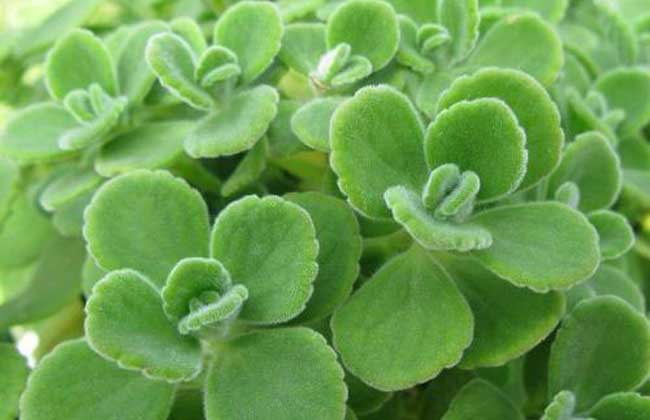
Cuban oregano, also known as Yimoxiang, Chuliuxiang, and fuzzy-leaved spurflower, is a shrubby herbaceous plant in the Lamiaceae family, genus Plectranthus. It is native to the Cape of Good Hope in Africa, Europe, and southwestern Asia. It is suitable for potted ornamental display, and its scent is refreshing to the senses. It is best placed in a high spot or hung indoors, and can also be used as a decorative accent on a small table or desk. Let us take a look below at the cultivation methods and precautions for Cuban oregano!
Growth habits of Cuban oregano
Cuban oregano is much branched, and the entire plant is covered with fine, dense white fuzz. Its fleshy leaves are arranged in opposite pairs, the stems are slender, and the small flowers are white. It likes sunlight and can be grown in full sun year-round, but it is also fairly shade-tolerant. It likes warmth and fears cold, requiring temperatures above 0°C in winter. It prefers loose, well-drained soil and cannot tolerate waterlogging; if too wet, the roots easily rot and the plant dies.
Propagation methods for Cuban oregano by cuttings
1. Cuttings: Cut the lowest end of the Cuban oregano cutting at a slant with a sharp knife, then place it in a ventilated, shaded spot for about a week, after which you can see the wound at the lowest part of the stem have contracted. Cutting it at this point will prevent rotting. Then insert the Cuban oregano cutting into sand or disinfected soil with a high perlite content (if there is mold in the soil, it will rot).
2. Care: After inserting the Cuban oregano, water it thoroughly once, then keep it ventilated in a spot with light but no direct sunlight. From then on, do not water it; just wait until the soil dries, and in the morning and evening spray a little water vapor around the flowerpot, increasing air humidity in summer. Keep this up for half a month to 1 month, and the roots should have emerged.
Cultivation methods for Cuban oregano
1. Soil: Cuban oregano likes loose, well-drained soil. It is best to place a saucer under the pot to prevent the branches at the edge of the pot from touching the plant stand.
2. Sunlight: Cuban oregano likes sunlight. Only in an environment with ample sunlight will the fleshy leaves be thick; with insufficient light, the leaves will become flat and thin.
3. Temperature: Cuban oregano is shade-tolerant and fears cold, so it needs to be cultivated in a greenhouse. It cannot tolerate waterlogging, likes warmth, and cannot tolerate cold; in winter it needs a temperature of 5-10°C.
4. Watering: Cuban oregano cannot tolerate dampness, but if too wet, the roots easily rot and the plant dies. The soil should be allowed to dry out between waterings; on cloudy days, watering and fertilizing should be reduced or stopped.
5. Pruning: Cuban oregano branches very easily and grows along a horizontal plane, so when planting, the spacing between plants and rows should be wide so that the branches and leaves can spread out. Moderate pruning can promote branching and make growth robust.
5. Fertilizing: Cuban oregano cannot tolerate heavy fertilizer; once a month during the growing season is enough, mainly with phosphorus and potassium fertilizer, and with little nitrogen fertilizer.
Precautions for Cuban oregano
1. Cuban oregano likes sunlight. Only in an environment with ample sunlight will the fleshy leaves be thick; with insufficient light, the leaves will become flat and thin. The duration of light exposure should be appropriate, and too high a temperature can also cause the leaves to turn yellow.
2. Cuban oregano cannot tolerate waterlogging. After summer, be sure to water less, and in winter control watering even more. Improper handling can cause the leaves to turn yellow.
3. When fertilizing Cuban oregano, follow the principle of light fertilizer applied frequently, that is, give a little fertilizer each time and fertilize again after a few days. Never give too much fertilizer at once.
4. Cuban oregano is cultivated in a greenhouse year-round and requires air circulation and freshness; otherwise, it is prone to scale insect damage, which causes the leaves to turn yellow. It should be grown in a well-ventilated location.
5. When Cuban oregano has been grown for a long time, the lowest part of the stem will gradually become woody, which will also cause the surrounding leaves to turn yellow and then wither. This is normal.