What is the flower language and legend of the water lily? Read this article to understand
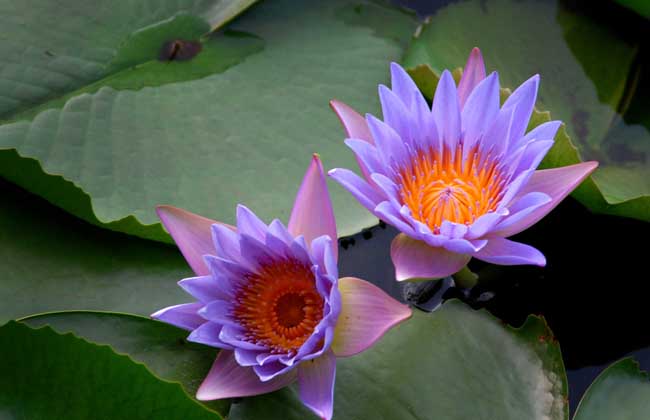
The water lily, also known as pink water lily, wild water lily, dwarf water lily, etc., is a perennial aquatic herbaceous plant of the genus Nymphaea in the family Nymphaeaceae. It grows in still water bodies such as ponds and lakes. Many park water bodies cultivate it as an ornamental plant. Its rhizome can be eaten or used to brew wine, and when used as medicine it can treat chronic infantile convulsions. The whole plant can be used as green manure. Let's take a look at the flower language and legend of the water lily!
The flower language of the water lily
Purity, innocence, glamour. In ancient Greece and ancient Rome, the water lily, like the lotus in China, was regarded as the embodiment of holiness and beauty, and was often used as an offering to goddesses. In the New Testament, there is also the saying of “a holy thing, emerging from mud unstained”. In the minds of Germans, the flower language of the water lily is glamour. Anyone born blessed by this flower is naturally endowed with a charm that the opposite sex finds hard to resist, yet finds it difficult to get along peacefully with friends of the same sex. In ancient Egyptian mythology, the sun was born from the blooming of the lotus, so the water lily was revered as the “sacred flower” and became a totem spread across the pillars of ancient Egyptian temples, symbolizing the blessing of “only a beginning, never fading”.
The value of the water lily
1. Ornamental value: The water lily is a perennial emergent herbaceous plant and an ornamental plant with both beautiful flowers and leaves. It has rich flower colors and a long flowering period, and is deeply loved by people.
2. Decorative effect: When used as a household potted plant, the water lily not only gives a refreshing feeling but also adds interest. It can be used to decorate a room, making the room more interesting and charming.
3. Water purification: The water lily is a rare plant material for water purification. Its roots can absorb toxic substances in water such as mercury, lead, and phenol, and can also filter microorganisms in the water.
4. Medicinal value: The rhizome of the water lily can be used as medicine, used as a tonic and astringent, and can be used to treat nephritis and other diseases.
5. Edible value: The water lily has a certain edible value. Its rhizome is rich in starch and can be eaten or used to brew wine.
The legend of the water lily
Legend has it that long ago, a girl lived in a remote mountain village, where a river surrounded the village. One day, that river dried up. For the sake of her family, the girl rushed about all day just to find the pitifully little water. On a foggy morning, she walked along the river alone, her heart full of sorrow.
Suddenly, a voice came clearly into her ears: “Your eyes are so beautiful.” Just as she turned her head, she saw a fish in the mud of the river looking at her. It was a beautiful fish. His scales were as blue as the sky, he had a pair of gentle eyes, and his voice was also so clear and transparent.
The fish told the girl that if she was willing to come see him often and let him see her eyes, he could give her a jar of water. Of course, that was nothing but an excuse. The fish's heart was as spotless as hers. So the girl would meet the fish every morning, and the fish also kept his promise. Every day, her family would keep asking about the origin of the water, but the girl only smiled and did not answer.
Although they looked at each other across the water, a certain state of mind could still connect them. On the third day, the girl found that she had fallen in love with the fish. In the morning mist, the lingering affection was almost unreal. In the end, the fish told the girl that he hoped she would become his wife, and the girl, full of tenderness, agreed. So the fish came out of the river and embraced the girl on the bank. Thus they became husband and wife.
Finally, one day the villagers saw the scene of their meeting. They believed that the fish had used sorcery on the girl. So they locked the girl up, and carrying knives, forks, and spears, they came to the river. They called out the fish and threatened him with his wife. At the moment he appeared, they struck, and the fish died in despair. Then the people carried the fish's corpse back in triumph. They threw the fish's corpse at the girl's feet.
She fantasized that he would wake up. But that only brought her heartbreak. So she picked up the already cold fish and walked toward the river. If time cannot heal the pain, then death always can. And so they died under the astonished and suspicious gazes of the people. Yet their children multiplied in the water for generations. That is today's water lily.