How to Grow Potted Christmas Cactus? Detailed Care Methods and Tips
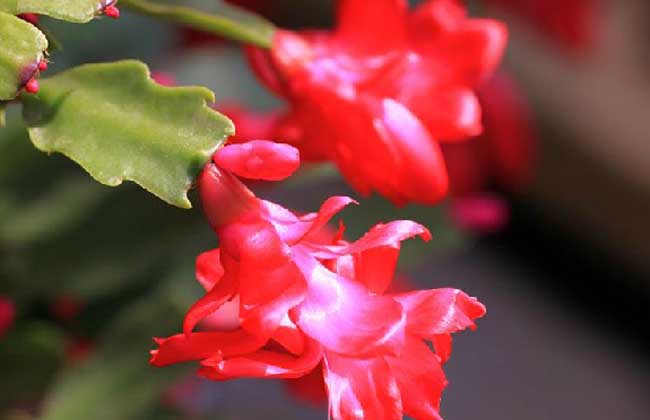
Christmas cactus is also known as Christmas cactus, "icing on the cake," crab orchid, and so on. It is an epiphytic succulent plant of the cactus family, Schlumbergera genus. It is commonly cultivated in parks and flower nurseries across China, and is often grafted onto Hylocereus or other rootstocks to obtain vigorously growing plants. Potted cultivation is suitable for windowsills, entranceways, and exhibition hall decoration. Let us take a look below at how to grow potted Christmas cactus!
Growth Habits of Christmas Cactus
Christmas cactus is native to Brazil in South America, and is commonly cultivated in tropical and subtropical regions worldwide. It prefers a cool, warm environment, is relatively drought-tolerant, fears high summer heat, and is relatively shade-tolerant. The suitable growth temperature is 20-25°C, and the dormancy temperature is around 15°C. It likes loose, organic-rich, well-drained and breathable substrate. Christmas cactus is a short-day plant. Under 8-10 hours of sunlight per day, it can bloom in 2-3 months, and the flowering period can be regulated by controlling light.
Propagation Methods of Christmas Cactus
1. Cuttings: Select healthy, plump stem segments, cut off 1-2 segments, place in a cool place for 2-3 days, and after the cut surface dries slightly, insert into a sand bed. The substrate is peat and sand at a ratio of 4:1, and the bed temperature is 15-20°C. The humidity of the cutting bed should not be too high, to avoid the cut surface becoming too wet and rotting. Roots begin to form 2-3 weeks after insertion, and they can be potted after 4 weeks.
2. Grafting: Usually carried out in May-June and September-October. The rootstocks used are Hylocereus and Pereskia; for those requiring large-pot cultivation, Opuntia ficus-indica is chosen. The scion should be selected from robust stem segments of the current year. Generally, one rootstock can take 3 scions. After grafting, place in a semi-shaded area for care and maintain relatively high air humidity. If the scion remains fresh and firm within 10 days after grafting, it has healed and survived. Careful maintenance is needed, and after 1 month the successfully grafted plant can be transferred to normal management.
3. Sowing: Christmas cactus needs artificial pollination before it can set fruit. Indoor pot sowing is often used. The suitable germination temperature is 22-24°C. The sowing substrate is a mixed soil of peat, leaf mold, and coarse sand, and it needs high-temperature disinfection before sowing. After sowing the Christmas cactus seeds, cover the pot opening with glass to maintain soil moisture. Germination occurs 5-9 days after sowing. The seedlings grow slowly and should be managed carefully.
How to Grow Potted Christmas Cactus?
1. Potting: When potting small seedlings, first place 1-2 cm thick broken tiles or ceramsite at the bottom of the pot as a drainage layer, then sprinkle a layer of fully decomposed organic fertilizer on top as base fertilizer, about 1-2 cm thick. Then cover with a layer of soil, which can be a relatively fertile mixed soil of leaf mold, peat, and coarse sand. The pH should be maintained between pH 5.5-6.5, then place the plant in, keeping the fertilizer separate from the root system to avoid burning the roots. After potting, water thoroughly once and place in a slightly shaded environment for one week of care.
2. Watering: Watering should vary with the seasons. Although winter is the growing season, due to low temperatures, watering should not be excessive; just keep the potting soil moist, generally watering once every 4-5 days. In summer, temperatures are high, and although shaded, the potting soil still dries easily, generally watering once every 1-2 days. In summer, water can be sprayed on the leaves frequently, which both prevents heatstroke and cools the plant, and helps the plant grow well. In spring and autumn, water once every 2-3 days.
3. Fertilizing: Fertilizing is mainly carried out before flowering in September-October and after flowering in April-June, applying decomposed human manure and cake fertilizer water once every 10 days. Spring fertilizing is to promote more branches and leaves, mainly with nitrogen fertilizer. Fertilizing is not suitable in summer, otherwise it easily causes rot. Autumn fertilizing is mainly with phosphorus fertilizer, which can promote flower bud differentiation. Stop watering before fertilizing, so that the potting soil is on the dry side, for better effect. Never use strong chemical fertilizers.
4. Temperature: The suitable growth temperature for Christmas cactus is 15-25°C. In summer, it needs shading and rain protection, and it is best placed on a well-ventilated windowsill or under eaves and corridors. After autumn, it can be moved indoors to a sunny place for cultivation. In winter, maintaining the temperature at 15°C is better; below 5°C it grows poorly and may even suffer frost damage. On clear days, let it receive sunlight. On severely cold nights, a large plastic bag can be used to cover the plant to prevent frost damage.
5. Light: Christmas cactus likes light and is also quite shade-tolerant. It does not have high light requirements, and indoor light can maintain its normal growth. In summer, be sure to prevent direct sunlight, otherwise it will cause great damage. In other seasons, as long as it is placed in a bright place such as a window, it can grow very well. After flowering, place it in a cool place to extend the viewing period of the flowers.
6. Pruning: Christmas cactus grows relatively quickly. Generally, after 3-5 years of cultivation, its crown width can reach more than 50 cm. In order to control the plant shape, attention should usually be paid in spring to shortening the stem segments, and at the same time removing weakly growing or overly dense stem segments. After thinning and shortening, the new stems that grow will be greener and more robust.
6. Pests and diseases: Usually pay attention to ventilation and light transmission, creating a relatively dry micro-environment. When necessary, chemical control can be used, such as spraying with thiophanate-methyl 800 times solution or copper hydroxide 1000 times solution once every 7-10 days. If scale insects are found, spraying with fenvalerate 4000-5000 times solution once about every 7 days is sufficient.
Precautions for Christmas Cactus
1. Christmas cactus has a dormant period after flowering. At this time, the potting soil should be kept slightly dry. After dormancy, when new buds grow from the tips of the stem segments, normal watering management can resume.