How to care for a potted areca palm? Detailed care methods
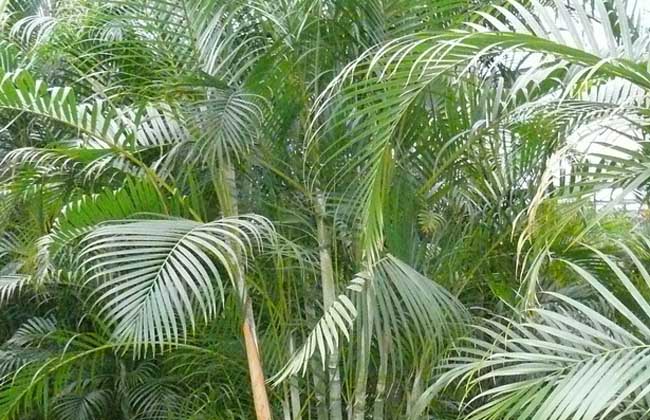
The areca palm, also known as yellow butterfly palm, purple palm, etc., is a clumping evergreen shrub or small tree of the genus Dypsis in the palm family Arecaceae. In tropical regions it is often planted as an ornamental tree in courtyards on lawns, in tree shade, and beside houses, while in northern regions it is mainly grown as a potted plant, serving as a high-grade potted foliage plant for decorating living rooms, dining rooms, conference rooms, family rooms or balconies. Now let us take a look at how to care for a potted areca palm!
Growth habits of the areca palm
The areca palm is a tropical plant that prefers warm, humid, semi-shaded environments. Its cold tolerance is not strong; below 20°C the leaves turn yellow, the minimum wintering temperature needs to be above 10°C, and around 5°C it will freeze to death. In South China it can still be grown in the open, while in the Yangtze River basin and areas to its north it should be kept in a greenhouse for care. Seedlings grow slowly, then grow rapidly afterward. It prefers loose, well-drained, fertile soil. Its branches and leaves are dense, it stays green all year round, and it has strong shade tolerance.
Propagation methods of the areca palm
1. Division: The areca palm can be propagated by division in all four seasons. Around April, choose plants with many tillers at the base, remove part of the old potting soil, and use a sharp knife to split them from the connected base into several clumps; the wounds need to be coated with plant ash or sulfur powder for disinfection. Each clump should not be too small; it must have 2 to 3 plants and retain good roots. Avoid prolonged exposure to strong light, water moderately, and keep them at 20-25°C for care; they will recover and take shape fairly quickly.
2. Sowing: For areca palms from which seeds can be obtained, wash the harvested fruit clean of the flesh, soak the seeds in 35°C warm water for two days, and then sow them. Transplant them as they germinate. On sunny days, spray the leaves with water more often. However, in general they grow slowly in the young stage and rapidly after reaching maturity.
How to care for a potted areca palm?
1. Soil: Indoor potted areca palms should be given slightly acidic soil. In the north, care should be taken to choose sandy loam with high humus content. A culture soil can be made by mixing leaf mold, peat soil, 1/3 river sand and some base fertilizer. The tiller buds grow rather close to the rhizome, so when potting, plant it slightly deeper than before so that new buds can root better. May to October is its vigorous growth period, when relatively sufficient water and fertilizer conditions must be provided.
2. Potting: When potting areca palm seedlings, first place a 2-3 cm thick layer of coarse-grained medium at the bottom of the pot as a drainage layer, sprinkle a layer of fully decomposed organic fertilizer on top as base fertilizer at a thickness of about 1-2 cm, then cover it with a thin layer of medium about 1-2 cm thick, and then place the plant in, so as to separate the fertilizer from the roots and avoid burning the roots.
3. Watering: Watering should follow the principle of drying out completely and soaking thoroughly according to the season. In dry, hot seasons water appropriately more, while in low-temperature rainy weather control watering. In northern regions, especially where the water contains more salt and alkali, care should be taken to regularly use black alum to adjust soil acidity. Usually keep the potting soil constantly moist. During the high-temperature period in summer and autumn, also keep relatively high air humidity around the plant, but never allow water to accumulate in the pot, so as to avoid root rot.
4. Fertilizing: May to October is the vigorous growth period of the areca palm, when relatively sufficient water and fertilizer conditions must be provided. Generally apply a decomposed liquid fertilizer or compound fertilizer once every 1-2 weeks to promote vigorous growth and deep green leaf color. In autumn and winter, fertilize less or not at all, while keeping the potting soil in a dry-wet state.
5. Light: The areca palm prefers semi-shade. In spring, summer and autumn it should be shaded by 50%. It most fears direct scorching sun; even a short period of exposure can cause the leaves to scorch yellow, and it is very hard to recover. For indoor cultivation and viewing, it should be placed in a spot with relatively strong scattered light. It can also tolerate a rather dark environment, but should be moved periodically to a place with better outdoor light for care, so as to help it recover and maintain a relatively high ornamental condition.
6. Temperature: The areca palm prefers warmth, and its optimum growth temperature is 20-35°C. If it exceeds 35°C or falls below 10°C, and cultivation management is slightly improper, its lower leaves will turn from green to yellow. In winter, good insulation and freeze protection work must be done. Generally it can overwinter relatively safely at around 10°C. If the temperature is too low, the leaves will turn yellow, the leaf tips will dry up, and the roots will be damaged, affecting the growth of the coming year.