How to Grow and Care for Potted Lucky Bamboo
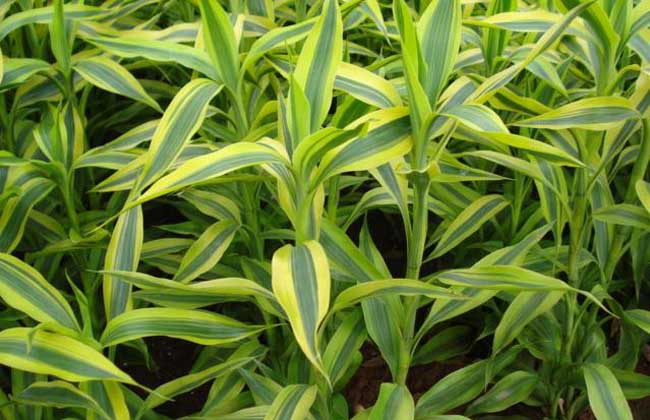
Lucky bamboo, also known as Wanshou bamboo, kaiyun bamboo, and lucky tower, is a perennial evergreen small tree foliage plant of the genus Dracaena in the Asparagaceae family. It is native to the Canary Islands and the tropical regions of Africa and Asia, and has been widely introduced into China since the late 1980s. It is generally used for household vase cuttings or potted care, and has extremely high ornamental value. Let us take a look below at how to grow potted lucky bamboo!
Growth Habits of Lucky Bamboo
Lucky bamboo likes shady, humid and high-temperature conditions, tolerates waterlogging, has strong fertilizer tolerance and strong cold resistance, and prefers semi-shaded environments. It is suitable for growing in well-drained sandy soil or semi-muddy sand and alluvial clay. It likes a warm environment, with an optimal temperature of 18-24°C; it can grow all year round, but below 13°C the plant goes dormant and stops growing. When the temperature is too low, due to insufficient water absorption by the roots, yellow-brown patches will appear on the leaf tips and leaf margins, and the minimum wintering temperature should be above 10°C. It is not strict about light requirements and is suitable for growing under bright scattered light. Too strong light or exposure to the sun will cause the leaves to turn yellow, lose green color, and grow slowly.
Propagation Methods of Lucky Bamboo
1. Soil propagation: For soil propagation of lucky bamboo, cut a robust stem of at least 10 cm with leaves, make a slanted cut at the incision to encourage aerial root growth, insert it into a sand bed, and maintain the temperature at around 25°C; it will take root and survive in one month.
2. Water propagation: For water propagation of lucky bamboo, first cut a robust stem of 10 cm with leaves, make a slanted cut, then insert it into water, taking care that one third of the whole plant is submerged in the water. Since the nutrients in water are scarce, nutrient solution needs to be added to increase the survival rate.
How do you grow potted lucky bamboo?
1. Soil: Lucky bamboo has a very good ability to adapt to the environment. It is suitable for growing in clay and sandy soil, and grows best in loose, fertile, well-drained humus sandy soil. Special plant nutrient soil, leaf mold, and river sand can also be mixed together for planting. During cultivation, change the pot once every two years, which helps lucky bamboo grow healthily and vigorously.
2. Watering: In summer, spray water once a day on lucky bamboo to wash dust off the leaf surface and increase humidity. It usually likes moisture. During the growing season, keep the soil moist, and often spray or sprinkle water on the leaf surface to increase the humidity of the air. However, too much water will cause leggy growth and affect its appearance, so generally keeping the soil moist is sufficient.
3. Fertilizing: Lucky bamboo is not so strict about environmental requirements, especially fertilizing requirements, but some additional fertilizing should still be done during growth. Use chemical fertilizers and organic fertilizer liquids for fertilizing. Use chemical fertilizers in small amounts and frequently, and water a little after fertilizing.
4. Temperature: Lucky bamboo is relatively cold-resistant, with a suitable growth temperature of 20-28°C, and can tolerate low temperatures of 2-3°C. However, frost protection is needed in winter; too low a temperature will cause frost damage and lead to withering. Summer and autumn are high-temperature and high-humidity seasons, which are very favorable for the growth of lucky bamboo and are its best growing period.
5. Light: Lucky bamboo likes to grow in a warm environment, but it fears high temperatures and cannot grow under direct summer sunlight. For potted cultivation, it can be placed under a window or on a balcony to avoid direct sunlight, and a certain amount of light can be given, which is beneficial to its healthy growth. Otherwise, the leaves will become dull and lusterless or turn golden yellow, with no good ornamental value.
6. Pests and diseases: During the growth of lucky bamboo, there will be harm from leaf spot disease, root rot, stem rot, and other viral diseases. A 100-fold Bordeaux mixture can be sprayed on the leaves to prevent and control them. Pests include thrips and scale insects. When these occur, 50% omethoate and emulsifiable concentrate at 1000-fold dilution can be sprayed, which can help effectively kill the insects.
What should you do if the leaves of lucky bamboo turn yellow?
1. Too much watering: Newly grown leaves are relatively dark yellow and lusterless, while old leaves show no obvious changes. The branches are relatively small and rather yellow-green, and the new shoots are somewhat shrunken. These are all caused by too much watering. It needs to be placed in a ventilated and shaded environment to dry, and then the potting soil should be tidied up.
2. Lack of water: When lucky bamboo lacks water, the leaves will also turn yellow. The leaf tips and leaf margins will dry out and wither, and the old leaves will fall off from bottom to top, but the newly grown tender leaves will be relatively normal. Water thoroughly and give sufficient water.
3. Too much light: Too much light will cause the leaves of lucky bamboo to turn yellow, the leaf tips and leaf margins will become withered, and yellow spots will appear on the leaves. It needs to be placed in a relatively shaded place for cultivation. For potted cultivation, it can be placed under a window or on a balcony to avoid direct sunlight, and a certain amount of light can be given, which is beneficial to its healthy growth.
4. Too little light: If lucky bamboo is placed in a relatively shaded environment for a long time, the leaves cannot absorb sufficient light, the leaves cannot form chlorophyll, and the leaves will also turn yellow. It needs to be placed in a place with relatively sufficient sunlight for cultivation, but direct strong light should be avoided.
5. Too much fertilizer: When growing lucky bamboo, too much or too concentrated fertilizer will cause the leaves to turn yellow. Generally, dry brown appears at the tips of new leaves. Although the leaves are thick, they have no luster at all, and the leaves are not fully spread out. Old leaves will turn yellow and then fall off naturally. Stop fertilizing and water more to wash out some of the nutrients.