How to Grow Potted Snake Plants? A Detailed Care Guide
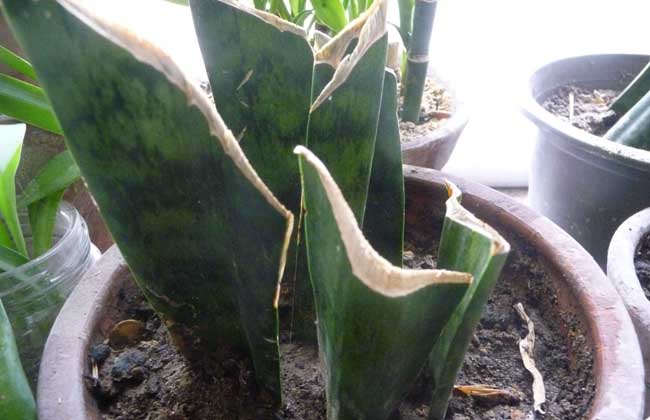
Snake plant, also known as mother-in-law's tongue, bowstring hemp, and thousand-year plant, is a perennial evergreen herbaceous plant of the genus Sansevieria in the Asparagaceae family. Its rhizome grows in a creeping manner, and the plant can reach a height of about 1 m. The leaves grow in clusters and stand upright, thick and leathery, with irregular dark green cloud-like horizontal stripes on both sides. When grown at home, it rarely blooms, and it is mainly grown for its foliage. Below, let's take a look at how to grow a potted snake plant!
Growth Habits of the Snake Plant
The snake plant is native to western Africa and is cultivated in various parts of China. It has strong adaptability, prefers warmth and humidity, tolerates drought, and likes light but also tolerates shade. It is not demanding about soil, and sandy loam with good drainage is preferable. Its optimum growth temperature is 20-30°C, and its overwintering temperature is 10°C. Common cultivated types in China also include the golden-edged snake plant and the cylindrical snake plant; the former has golden-yellow leaf margins, while the latter has cylindrical leaves with longitudinal grooves, making them easy to identify.
Propagation Methods for the Snake Plant
1. Division: Snake plant division propagation is generally carried out together with repotting in spring. The method is to cut overly dense leaf clusters into several clusters. In addition to the leaves, each cluster should have a wound-healing antiseptic membrane applied to the cut, and then a new high-fat membrane should be sprayed on the plant to keep it warm and prevent freezing. After drying slightly, it can be potted. When potting, some fine sand can be sprinkled at the plant's roots to help it survive. The potting soil should be a loose, fertile, well-aerated sandy culture soil. Each division should also have a section of rhizome and a sucker, and they can be potted separately.
2. Cuttings: Snake plant cutting propagation is only suitable for varieties whose leaves do not have golden-yellow edges or silver veins; otherwise, the yellow and white markings on the leaves will disappear, and the plant will become an ordinary variety of snake plant. The method is to select healthy and plump leaves, cut them into 5-6 cm lengths, insert them into sand or vermiculite with half exposed above the soil surface, keep them slightly moist, and they can root in about one month.
How to Grow Potted Snake Plants?
1. The snake plant likes light, so it should be placed in a sunny spot for care. However, when the light is too strong, it should be placed in a shaded or semi-shaded spot to prevent its leaf color from becoming dull and pale, which would affect its ornamental value. The snake plant likes warmth, and its optimum growth temperature is 20-30°C. Below 13°C, it will stop growing, and in winter the care temperature for the snake plant must not be lower than 10°C; otherwise, its roots will rot, causing the entire plant to die.
2. The snake plant is a desert plant and can withstand harsh environments and long periods of drought. Watering should follow the principle of watering thoroughly when watering, but without water accumulation. If watered too frequently, its leaves will turn white and the color of the markings will also fade. During the peak growth season, the snake plant should be watered regularly. During the winter dormant period, watering should be controlled, and it is best to keep the soil dry. When growing it in decorative flowerpots with poor drainage, absolutely avoid water accumulation, so as not to cause root rot and make the leaves fold and fall over.
3. The snake plant should not be fertilized excessively. During the peak growth season, it is suitable to apply fertilizer 1-2 times per month, in small amounts. Compound fertilizer is commonly used for snake plants. If only nitrogen fertilizer is applied for a long time, the markings on the leaves will become dull. Of course, you can also evenly bury 3 holes of cooked soybeans in the soil around the edge of the snake plant pot, with 7-10 beans per hole, but be careful that they do not touch the roots. From November to March of the following year, fertilization should be stopped.
4. The snake plant likes loose sandy soil and humus soil, tolerates drought and poor soil, and is not demanding about soil; it can grow normally even in a very small volume of soil. For cultivating the snake plant, it is best to use loose, fertile, well-aerated sandy soil, so that it grows more robustly, and even when the pot is full it will not inhibit growth. Generally, the snake plant is repotted once every two years, preferably in spring, and standard compost can be used when repotting.
5. Compared with other common household green plants, the snake plant grows relatively quickly. Therefore, once the snake plant grows to fill the pot, it is best to prune it manually, mainly by cutting away old leaves and overly dense areas. Although this cannot inhibit its growth, pruning can ensure that it has more sufficient sunlight and growing space.
6. The most common diseases of the snake plant are mainly leaf spot and anthracnose. If they occur, 50% carbendazim can be sprayed for treatment. Common pests include weevil damage, which can be killed by spraying with a 1000-fold dilution of 50% fenitrothion emulsifiable concentrate. In daily care of the snake plant, there should be plenty of ventilation, absolutely no water accumulation, and also sterilization and disinfection, in order to minimize the occurrence of pests and diseases.