What are the cultivation methods and precautions for the Blireiana plum (Prunus × blireana)?
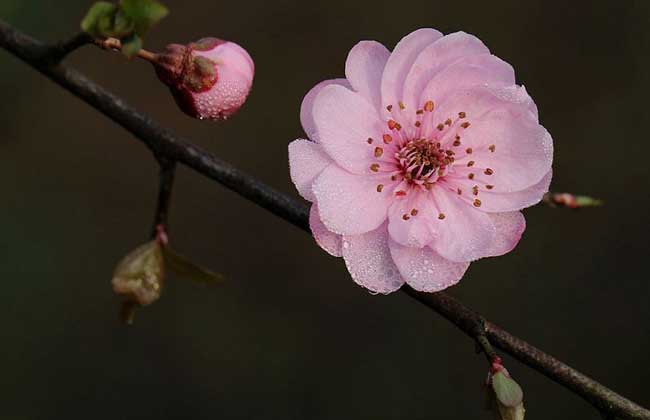
Prunus × blireana is a deciduous small tree of the genus Prunus in the Rosaceae family. Its bright red leaf color and purplish-red branches are rarely seen in other plum blossom varieties, and it can be enjoyed year-round. It can be used to decorate courtyards, create dedicated gardens, or be planted in large areas such as plum gardens and plum streams. It can also be grown as a potted plant or bonsai for flower displays in major hotels and restaurants, and can also be used as cut flowers and other decorations. Let's take a look at the cultivation methods for Prunus × blireana!
Growth Habits of Prunus × blireana
Prunus × blireana has strong cold resistance and is a sun-loving tree species. It grows robustly and blooms profusely in places with ample sunlight. It has relatively strong drought resistance, prefers high air humidity, and is not tolerant of waterlogging. It is not demanding about soil, but slightly acidic clay loam (pH around 6) is best. It is not tolerant of air pollution and is relatively sensitive to fluoride, sulfur dioxide, and automobile exhaust. At the same time, it is also extremely sensitive to pesticides such as dimethoate.
Propagation Methods for Prunus × blireana
1. Cuttage: Prunus × blireana generally roots more easily when cut in mid-to-late October. Cuttings are generally taken from robust branches on the upper or outer part of the crown. After cuttings are inserted, pay attention to cold and wind protection.
2. Branch grafting: Select vigorous one-year-old seedlings as rootstock, cut the stem at 5 cm above the ground, and make a vertical cut on one side of the cross-section. For the scion, it is best to first use healthy 1-2 year old branches from a Prunus × blireana tree that are free of pests and diseases, cut them into scions with 3-5 plump buds, whittle the lower end into a wedge shape, insert it into the rootstock cut, align the cambium of the rootstock and scion, then bind tightly with plastic film strips.
3. Bud grafting: This is mostly carried out during the growing season. Select 1-2 year old seedlings as rootstock. Cut the bark of the rootstock into a "T" shape, and peel the bark open to both sides along the cut. For the scion, it is best to choose a bud from the middle of a robust current-year branch. Make a horizontal cut 1-2 mm into the xylem above the bud, then cut the bud off the scion vertically to form a shield-shaped bud piece. Insert the shield-shaped bud piece into the rootstock cut, align the cambium, and tie tightly with plastic film strips.
Cultivation Methods for Prunus × blireana
1. Watering: For field-planted specimens, water once in early spring each year to promote green-up. During the growing season, if it is not overly dry, watering may be omitted, but during high-temperature and drought in summer, appropriate watering is needed to avoid difficulty in growing new leaves and yellowing and drying of old leaves due to lack of water. Pay attention to drainage on rainy days, especially after continuous rain or heavy rain; otherwise, soil waterlogging can cause root rot. In early winter, water once more with freezing water to increase the plant's cold resistance in winter.
2. Fertilizing: Prunus × blireana likes fertilizer. When planting, apply decomposed chicken and duck manure, pigeon manure, or other barnyard manure and other organic fertilizers as base fertilizer. When fertilizing, be sure to mix thoroughly with the subsoil. From June to August, during the flower bud differentiation period, apply compound fertilizer mainly containing phosphorus and potassium to promote flower bud differentiation. In autumn or early winter, dig trenches and apply cake fertilizer or decomposed leaf fertilizer to improve the soil and increase fertility. After application, be sure to water thoroughly once to facilitate absorption by the plant.
3. Pruning: Prunus × blireana tolerates pruning well, and the tree shape is mostly a natural open-center form. Prune and shape it every winter, cutting off useless large branches, crossing branches, and water sprouts, and shortening excessively long branches to maintain a beautiful tree shape. After flowering in spring, prune once more, shortening aged branches and leaving only 3 to 4 buds at the base to encourage the growth of new branches. When new branches grow to about 40 cm, pinch the tips to control branch growth and promote plump axillary buds.
4. Overwintering: Prunus × blireana has a certain degree of cold resistance, but it should still be planted in a wind-protected, sunny location as much as possible. For seedlings planted in spring of the same year, in addition to watering with freezing water, the trunk and main branches should all be painted white. For seedlings planted in autumn, measures such as wrapping the tree body with straw rope and covering the tree pit with plastic film should also be taken. After the seedling survives for one year, normal management can be carried out, and for overwintering it is only necessary to paint the trunk white.
5. Pests: Common pests of Prunus × blireana include aphids, stinging caterpillars, red spiders, and longhorn beetles. If they occur, broad-spectrum insecticides such as dichlorvos can be used for control, but pesticides that easily cause phytotoxicity, such as omethoate, should not be used. For more stubborn pests such as longhorn beetles, the undiluted trunk injection method can be used.
6. Diseases: Common diseases of Prunus × blireana include leaf spot, leaf shot hole, and gummosis. In addition to strengthening water and fertilizer management, active prevention should also be carried out. In early summer and early autumn each year, spray broad-spectrum fungicides such as chlorothalonil 2 to 3 times consecutively. When diseases occur, broad-spectrum fungicides should also be selected for control, and alternating use is better. After winter pruning, centrally burn the pruned diseased and dead branches, and clean up fallen leaves.