Baby's Breath: Planting Methods and Care Tips
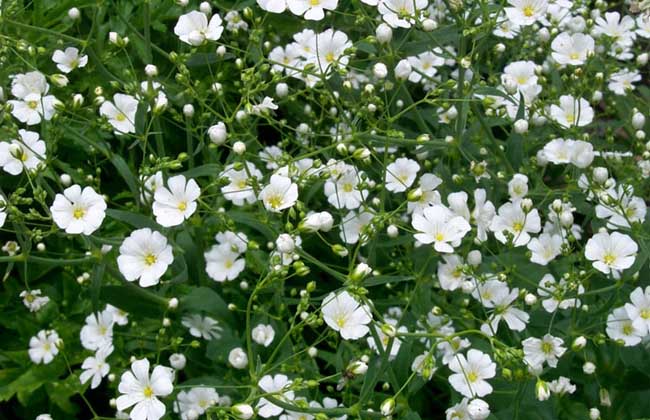
Baby's breath, also known as gypsophila, panicled baby's breath and baby's breath, is a perennial herbaceous plant of the genus Gypsophila in the carnation family (Caryophyllaceae), native to the **Altai Mountains and Tashkurgan. It grows at an altitude of 1100-1500 m in riverbanks, grasslands, fixed sand dunes, stony slopes and farmland. Its roots and stems can be used medicinally, and it is cultivated for ornamental purposes. Let's take a look at how to plant baby's breath!
Baby's Breath Growing Habits
Baby's breath is cold-hardy, prefers a cool climate, and dislikes hot, rainy weather and waterlogging. It likes a warm, humid environment with plenty of sunlight. The optimum growing temperature is 15-25°C; above 30°C or below 10°C it tends to form rosette-shaped clusters, growing only stems and no flowers. It is best grown in a sunny spot in loose, fertile, well-drained slightly alkaline sandy loam. The soil should be loose, rich in organic matter and moderately moist, with a pH of about 7-9. The soil must never become waterlogged, which causes root rot and plant withering.
Baby's Breath Seedling-Raising Techniques
1. Cuttings: In spring, cut about 10 cm of new shoots from the plant, insert 3-4 of them as a cluster into a sand bed, spray water to keep them moist; they root in about 15 days, then after about 20 more days of cultivation they are transplanted into soil and grown into large seedlings for sale. Generally they root in about 30 days. In the plum rain season, softwood cuttings can be used: select the current year's tender shoot tips for cuttings, and they root 2-3 weeks after insertion.
2. Sowing: Choose loose soil to make a bed and sow in September, cover lightly with fine soil; germination occurs in about 10 days, and before winter begins move them to a cold frame to overwinter. The optimum germination temperature is 15-20°C, and the optimum growing temperature is 10-25°C. The sowing period is early autumn or early spring; they can also be sown directly in the open field in November before the ground freezes, or sown in early spring.
Baby's Breath Planting Methods
1. Land preparation: The roots rot easily. Generally, well-drained slightly alkaline calcareous soil or gravelly loam is best. For acidic or neutral soil, apply some lime appropriately to adjust the soil's pH. Before planting, deep-plow the soil 40-50 cm, apply enough organic fertilizer, and appropriately add some phosphorus and potassium fertilizer. Make raised beds with a bed surface height of 30-40 cm.
2. Planting: Plant 2000-2500 plants per mu (666.7 sq m), using double-row planting with a row spacing of 50 cm and a plant spacing of 35-50 cm. Irrigate thoroughly before planting, then plant on a cloudy day and water thoroughly after planting. Planting time: for cut flower cultivation, if produced in a greenhouse, planting can be done in summer, autumn or even early spring. In this way, flowers can be harvested from early autumn until early summer. After harvesting, the plants should be dug up in June-July, then cold-stored until August-September, and replanted.
Baby's Breath Planting Management
1. Temperature: Growth is best at a daytime temperature of 25°C. If it exceeds 30°C for too long a time or too many days, the chance of deformed flowers increases. The night temperature is best at 10-15°C; below 10°C, combined with the short days of autumn and winter, it easily leads to a dormant state or rosette formation.
2. Light: Light has a profound effect on whether baby's breath flowers, especially in winter. If baby's breath in summer is given 80-24 Klux of illumination, all plants can flower; the difference is that the less light the plants receive, the correspondingly fewer flowers they bear. In winter, plants given 58 Klux can all flower. Those given 24 Klux cannot flower even if given a continuous 24-hour full-light period.
3. Water: Baby's breath has a relatively high water requirement during the seedling stage. After pinching, sufficient water and nutrients are still needed so that the plants can gradually change from the vegetative growth stage to the reproductive growth stage, that is, enter the bolting stage (flowering stage). Until the small flower spikes emerge and the petals grow out, water should be slightly reduced to prevent a decline in cut flower quality and stem stiffness, and to promote neat, uniform flowering.
4. Fertilizer: Like other herbaceous flowers, baby's breath has a relatively high demand for fertilizer and water, but it most fears indiscriminate fertilizing, concentrated fertilizer and one-sided application of nitrogen, phosphorus or potassium fertilizer. It should follow the two fertilizer (and water) principles of “apply dilute fertilizer frequently, in small amounts but many times, with complete nutrition” and “alternate dry and wet; when dry, dry it out thoroughly; do not water if not dry; when watering, water thoroughly”. After fertilizing, keep the leaves and flowers dry at night. After planting, apply topdressing in stages: mainly nitrogen fertilizer in the early stage and mainly phosphorus and potassium fertilizer in the later stage.
Baby's Breath Seasonal Management
1. Spring: After the temperature rises, growth recovers rapidly and gradually enters the flower bud differentiation stage and flowering stage, with a high demand for fertilizer and water. Fertilizer and water management follows the cycle of “Huabao”→clear water→“Huabao”→clear water, with an interval of about 2-4 days. After entering the seed-setting stage, stop fertilizer application.
2. Autumn: After the sown baby's breath seedlings are potted and have recovered for a period, fertilizer and water management should be stepped up quickly. Fertilizer and water management follows the cycle of “Huabao”→“Huabao”→clear water→“Huabao”→“Huabao”→clear water, with an interval of about 1-3 days; the interval is shorter on sunny days or during high temperatures, and longer or no watering on rainy days or during low temperatures.