Reasons and Solutions for Snake Plant Leaves Turning Soft
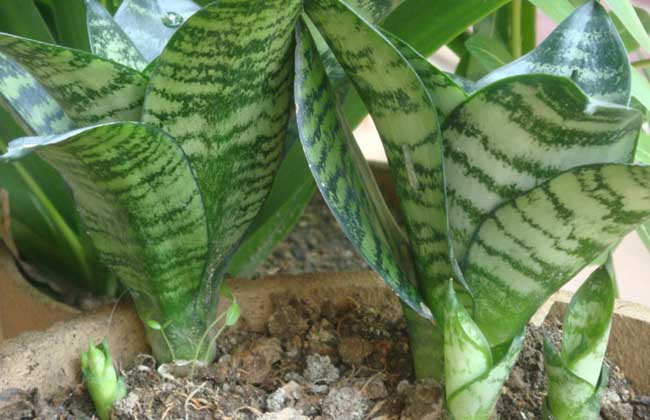
Snake plant (Sansevieria) is a common household potted plant, a perennial evergreen herbaceous plant of the genus Sansevieria in the family Liliaceae. During cultivation, soft leaves are a frequent occurrence. In fact, there are mainly four reasons why snake plant leaves turn soft: direct strong sunlight, overwatering, too-low temperatures, and bacterial soft rot. Let's take a look together at what to do when snake plant leaves turn soft!
Direct Strong Sunlight
[Cause] The snake plant is a relatively shade-tolerant plant. It can be grown under diffused light, or in a spot where the light is not too intense. If exposed to scorching sun, it will develop sunburn spots and the leaves will turn soft.
[Solution] The snake plant loves light, so it must be exposed to sunlight regularly. It is best to place it in a spot where it can receive direct sunlight. If conditions do not allow this, then place it somewhere close to the sunlight. Being kept in a dark place for a long time will cause the leaves to turn yellow.
Frequent Watering
[Cause] The snake plant has an underdeveloped root system. Watering too frequently can easily cause the roots to lack oxygen and rot, which then causes the leaves to turn soft.
[Solution] When watering the snake plant, follow the principle of preferring dry over wet. In spring, when new shoots emerge at the root crown, water appropriately more to keep the potting soil moist. During the rainy season, never let water accumulate in the pot. Normally, you can wipe dust off the leaf surface with clean water to keep the leaves clean and shiny. Generally speaking, if the soil is relatively loose, water twice a week; in winter when the weather is colder, watering just once is enough.
Too-Low Temperatures
[Cause] The snake plant likes a warm environment. When temperatures are too low, the snake plant's growth will also be affected.
[Solution] The snake plant has fairly high temperature requirements. Its suitable growing temperature is 20-30°C, and it stops growing below 13°C. In winter, the lowest temperature should not drop below 10°C, otherwise the base of the plant will rot, causing the entire plant to die.
Bacterial Soft Rot
[Cause] After the snake plant is harmed by bacterial soft rot, the leaves turn pale yellow-green or grayish-yellow, and water-soaked soft rot spots appear on the stem base near the ground, making it easy to break. The rhizome turns yellow and soft-rotted, and the roots wither and die.
[Solution] When watering, avoid splashing water onto the leaves. If diseased leaves are found, remove and destroy them promptly. When the disease occurs, spray with 12% copper quinolinolate 600x solution or 72% agricultural streptomycin 4000x solution. Spray once every 7-10 days, for 2-3 consecutive times.