Causes of and Solutions for Yellowing Leaves on Snake Plants
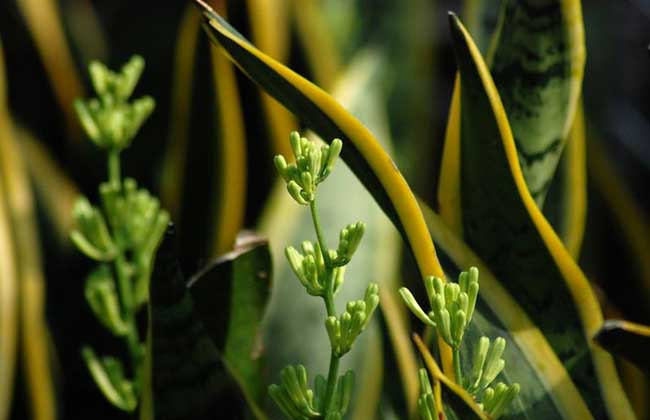
Snake plant, also known as bowstring hemp, thousand-year plant, etc., is a perennial evergreen herbaceous plant of the genus Sansevieria in the Liliaceae family. Its rhizome grows in a creeping manner, and the plant can reach a height of about 1 m. The leaves grow in clusters and stand upright, with horizontal rootstocks. When cultivated at home, it often does not bloom, and it is mainly grown for its foliage. Now let us take a look at what to do when snake plant leaves turn yellow!
What to Do When Snake Plant Leaves Turn Yellow?
1. Snake plants are relatively drought-tolerant, and their roots are somewhat fleshy. If the soil has poor aeration and drainage, the roots are prone to rot. Once the roots are damaged, the leaves will naturally wilt.
2. Snake plants lack sunlight. Even indoor plants need sunlight. Without sufficient light, they will wither. Now that spring has arrived, it is recommended to place them in a spot with relatively abundant sunlight.
3. The snake plant has been exposed to wind. This is what experienced flower growers say, because snake plants cannot be placed in an overly ventilated environment.
4. The snake plant lacks trace elements such as iron, calcium and magnesium. At this time, the corresponding trace elements should be supplemented in an appropriate amount.
5. Yellowing leaves on a snake plant may be caused by an overly developed root system. In this case, it needs to be repotted.
6. The snake plant may have pests and diseases. If repotting during this period, it is best to turn over and sun-dry both the flowerpot and the potting soil.
How to Grow Snake Plants
1. Soil: Snake plants are not demanding about soil and can be managed relatively extensively. They prefer loose sandy soil and humus soil, and are tolerant of drought and poor soil. For pot cultivation, use 3 parts fertile garden soil, 1 part coal cinders, and add a small amount of bean cake crumbs or poultry manure as base fertilizer. They grow very robustly, and even when the pot is full, their growth is not inhibited. Generally, repot once every two years, in spring.
2. Light: Snake plants grow well under conditions of sufficient light. Apart from avoiding direct scorching sun in midsummer, they should receive plenty of sunlight in other seasons. If placed in a too-dark indoor spot for too long, the leaves will become dull and lack vitality. However, indoor potted plants must not be suddenly moved into the sunlight; they should first adapt in a dark spot to avoid the leaves being scorched. If indoor conditions do not allow it, they can also be placed in a spot relatively close to sunlight.
3. Temperature: Snake plants are native to western Africa and southern Asia, and are distributed in tropical Africa and India. The suitable growing temperature is 20-30°C, and the overwintering temperature is 10°C. In winter, the temperature should not be lower than 10°C for a long time either, otherwise the base of the plant will rot, causing the entire plant to die.
4. Water: Snake plants should be watered in an appropriate amount, following the principle of preferring dryness over moisture. Usually, wipe dust off the leaf surface with clean water to keep the leaves clean and glossy. In spring, when new plants sprout at the root crown, water appropriately more to keep the potting soil moist. In the high-temperature summer season, the potting soil should also be kept moist regularly. After late autumn, the amount of watering should be controlled, and the potting soil should be kept relatively dry to enhance cold resistance. During the winter dormant period, watering should be controlled to keep the soil dry, and watering should avoid pouring into the leaf clusters.
5. Fertilizing: Snake plants do not have high fertilizer requirements. If only nitrogen fertilizer is applied for a long time, the patterns on the leaves will become dull, so compound fertilizer is generally used. Fertilizing should not be excessive. During the peak growing season, fertilize 1-2 times a month, with a small amount each time. Standard compost can be used when repotting. During the growing season, apply dilute liquid fertilizer 1-2 times a month to ensure the leaves are verdant and thick. Alternatively, evenly bury 3 holes of cooked soybeans in the soil at the edge of the pot, 7-10 beans per hole, taking care not to let them touch the roots. Stop fertilizing from November to March of the following year.
Pest and Disease Control for Snake Plants
1. Bacterial soft rot
[Symptoms] After infection, the leaves change from green to light yellow to grayish yellow. Water-soaked soft rot appears at the stem base near the ground, and in the later stage the affected leaves are prone to collapse and break. When the rhizome is infected, it becomes straw-yellow and soft-rotted, and the roots rot and die. Roots affected by waterlogging also turn black, rot and die. The disease is especially severe in spring and summer with high temperature and rain, and during typhoon and heavy rain weather. The pathogen is caused by bacteria.
[Control] In winter and spring, keep the temperature above 10°C and control watering. In the high-temperature weather of midsummer, provide slight shading. During the vigorous growing periods in spring and autumn, apply more phosphorus and potassium fertilizer to improve disease resistance. It is best to choose disease-free soil or burnt soil, or to sterilize with heat before planting. Diseased leaves found should be promptly cut off and burned. In the early stage of the disease, you can choose medical-grade streptomycin sulfate 2000-fold solution, 47% Kasumin wettable powder 700-fold solution, or 30% Lvde suspension concentrate 500-fold solution, spraying once every 5-7 days, for 2-3 consecutive sprays.
2. Fusarium leaf spot
[Symptoms] Fusarium leaf spot, also called leaf spot disease, first shows round lesions on the leaves, which can expand to a diameter of 12 mm. They are slightly sunken, light reddish brown, with pale yellow edges. The lesions are scattered and spread over the entire leaf. The centers of the lesions dry up and fall off, forming holes. When several lesions merge with each other and girdle the leaf, the part above the diseased area dies. The pathogen is a fungus of the order Sphaeriales in the subdivision Deuteromycotina. The disease occurs easily in high-temperature and rainy seasons.
[Control] Reduce soil moisture. In the early stage of the disease, you can choose Bordeaux mixture, 53.8% Kocide 2000 dry suspension concentrate 1000-fold solution, or 47% Kasumin wettable powder 700-fold solution, spraying 2-3 consecutive times, once every 5-7 days.
3. Anthracnose
[Symptoms] The lesions begin at the leaf tip or leaf edge and are brown, with obvious or unobvious concentric rings on the surface of the lesions. On the diseased leaves, scattered or regularly arranged small black spots form. The pathogen is a fungus of the subdivision Deuteromycotina, called Colletotrichum sansevieriae. In the south, high-temperature weather and shaded, humid conditions favor the disease, especially from April to June, when it is more severe.