How to grow snake plant 'Golden Edge' (Sansevieria trifasciata 'Laurentii') properly? A detailed guide to its care
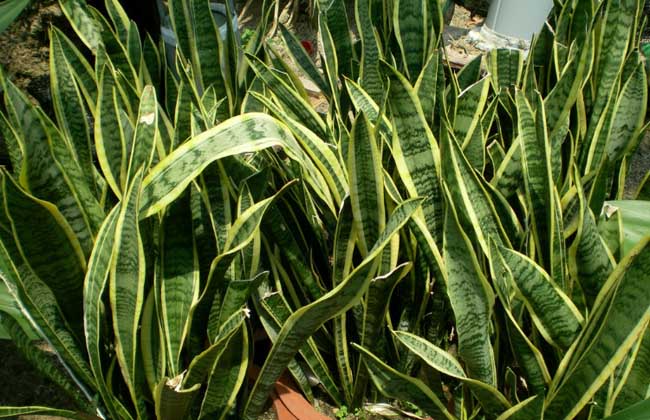
Snake plant 'Golden Edge' is a foliage plant that can purify indoor environments. It is a perennial herbaceous plant of the genus Sansevieria in the family Agavaceae (Asparagaceae). Its rhizome is rolled into a tube shape, and the leaves emerge as tubes, gradually unfolding and flattening as the leaves grow taller. It is distributed in tropical Africa, India and southern Asia. Let us take a look below at how to grow snake plant 'Golden Edge' properly!
Propagation methods for snake plant 'Golden Edge'
Snake plant 'Golden Edge' is mainly propagated by division, and seedlings can be raised throughout the year, but spring and summer are the best times; it can be done in spring together with repotting. Take the plant out of the pot, use a sharp knife to separate the offsets from the mother plant, trying to avoid damaging the root system, and let the separated offsets carry as many roots as possible. Apply sulfur powder or plant ash to the cuts, let them dry slightly, and then pot them up. After separation, the offsets should be placed in a dark indoor spot, protected from rain, and watering should be controlled to prevent the cuts from rotting. Only after new leaves grow can they be moved to normal care. It should be noted that young plants propagated by cuttings from snake plant 'Golden Edge' will revert to the ordinary snake plant.
How to grow snake plant 'Golden Edge'
1. Soil: Snake plant 'Golden Edge' requires loose, well-aerated soil for cultivation, so when mixing soil for it, be sure to use 2/3 leaf mold plus 1/3 garden soil. Remember that the soil must be loose and breathable, otherwise moisture will not evaporate easily, causing the rhizome to rot.
2. Sunlight: Snake plant 'Golden Edge' likes light, so be sure to let it come into contact with sunlight often; it is best to place it where it can receive direct sunlight. If conditions do not allow this, then place it somewhere close to the sunlight. Being kept in a dark place for a long time will cause the leaves to turn yellow.
3. Temperature: Snake plant 'Golden Edge' has fairly high temperature requirements. The suitable growing temperature is 20-30°C, and in winter it should not go below 10°C, so special attention must be paid, especially in northern regions. From late autumn to early winter, when the weather turns cold, it should be placed indoors, preferably somewhere above 10°C, and watering should be controlled. If the room temperature is below 5°C, watering can be stopped.
4. Watering: Snake plant 'Golden Edge' should be watered in moderation, following the principle of preferring dry over wet. In spring, when new plants sprout at the root crown, water a little more to keep the potting soil moist. In the hot summer season, the potting soil should also be kept moist regularly. After late autumn, watering should be reduced and the potting soil kept relatively dry to enhance cold resistance. During the winter dormant period, watering should be controlled and the soil kept dry. When watering, avoid pouring water into the leaf clusters.
5. Pruning: Compared with other home-grown green plants, snake plant 'Golden Edge' grows relatively fast, so once the pot becomes full, manual pruning should be carried out, mainly by cutting away old leaves and overly dense areas to ensure sunlight and growing space.
6. Repotting: Snake plant 'Golden Edge' is a perennial plant. Generally speaking, it should be repotted once every two years. When repotting, be sure to add nutrients to the new soil so as to ensure its nutrient supply.
7. Fertilizing: Snake plant 'Golden Edge' does not have high fertilizer requirements. It only needs to be fertilized twice a month during the growing season. Be careful to apply diluted liquid fertilizer so as to ensure lush growth.
Precautions for snake plant 'Golden Edge'
1. Likes warmth: Snake plant 'Golden Edge' likes warmth, and grows best at 20-25°C; not only does it grow quickly, but its color is also vivid. In winter, even when kept indoors, it must not be below 8°C, otherwise it may suffer cold damage and rot easily.
2. Likes sunlight: Snake plant is a long-day foliage plant. Because snake plant 'Golden Edge' has three colors in its leaves, it needs sunlight even more; the better the light, the more brilliant the leaf color. When moved indoors for viewing, attention should also be paid to light.
3. Likes dryness: If the growing medium for snake plant 'Golden Edge' is too wet, the base of the leaves rots easily. The potting soil should be completely dry before watering with fertilizer solution.
4. Likes light fertilizer: During the growing period, snake plant 'Golden Edge' should be given a light fertilizer once a week along with watering. It is best to use imported, highly soluble compound fertilizer diluted and poured on. At the same time, pay attention to sterilization; fertilizer solution and fungicide can also be applied together.
5. Likes cleanliness: You can use a clean, smooth cloth to wipe dust off the leaf surface, making the leaves clean, shiny and brightly colored, thus improving the ornamental effect.
Pest and disease control for snake plant 'Golden Edge'
1. Scale insects
[Harm] The main pest of snake plant 'Golden Edge' is scale insects. They generally lie dormant on the leaves without moving and survive by sucking the plant's sap. Because the tissue of leaves damaged by scale insects is injured, in severe cases part of the leaf or the entire plant may die.
[Control] Wiping with a soft cloth can remove them.
2. Rot disease
[Harm] It occurs on the leaves. In the early stage, the lesions are water-soaked spots. After expansion, the lesions become round to irregular, dark gray, soft-rotted and slightly sunken. In the later stage, the lesions dry out and become sunken, grayish brown, with red-brown edges, and black mold spots appear under humid conditions.
[Control] Replace the potting soil in time or mix quintozene into the soil. A soil fungicide such as hymexazol can also be sprayed on the soil. In the early stage of the disease, spray 50% carbendazim or thiophanate-methyl at 800 times dilution.
3. Sunscald
[Harm] Affected leaves show indistinct wrinkling and wilting. In severe cases, the wilting areas become water-soaked, the affected parts necrose, and yellowing and rotting progress until the patches dry up.