How to care for Philodendron 'Imperial Green'? Detailed guide to growing methods and precautions
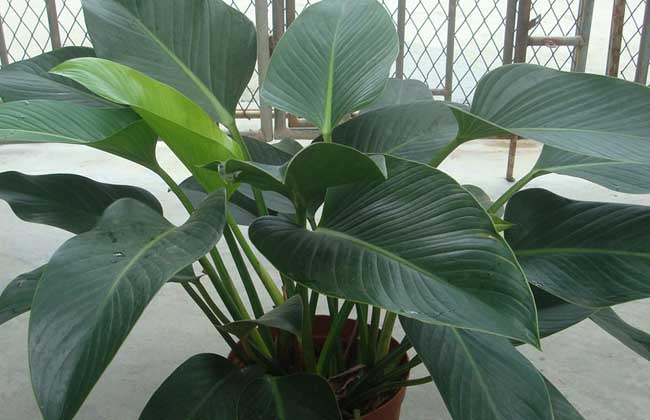
Philodendron 'Imperial Green' is also known as Philodendron 'Imperial Green', Xishu banana, evil-warding king, etc. It is a plant of the genus Philodendron in the Araceae family, with extremely strong vitality. It absorbs various toxic gases as nutrients and has an air-purifying effect. It is suitable for homes, office buildings, guesthouses, hotels and other places. Arranged indoors, it is elegant and refined, rich in tropical rainforest atmosphere. Now let us take a look at the growing methods and precautions for Philodendron 'Imperial Green'!
Growth habits of Philodendron 'Imperial Green'
Philodendron 'Imperial Green' is a plant that prefers a warm, humid, semi-shaded environment and is afraid of severe cold; the overwintering temperature should not be lower than 5°C. Philodendron 'Imperial Green' should preferably be placed in a semi-shaded place, avoiding direct sunlight in summer. During the growing period, the soil should be kept moist regularly, and excessively dry conditions should be avoided; place it away from radiators and air conditioning vents. Avoid strong light; the optimum growth temperature is 20-30°C, and growth begins at 10°C. It has no strict requirements for soil, and grows best in sandy loam rich in humus and with good drainage. For potted plants, nutrient soil is mostly made by mixing peat and perlite.
Propagation methods for Philodendron 'Imperial Green'
1. Cuttings: Cutting propagation of Philodendron 'Imperial Green' is best done between May and September. Cut off robust stems with relatively long branches and insert them directly into clean river sand, then place them in a semi-shaded place and maintain relatively high air humidity. The ambient temperature should preferably be around 25°C. After cutting, roots can form in 20-25 days.
2. Division: Division propagation of Philodendron 'Imperial Green' requires that when small shoots grow at the base of the old plant, the small shoots should be carefully separated from the old plant, trying not to damage the old plant or its roots. You can also choose to pinch off the growing tip of side shoots, which can both dwarf the plant and produce more side shoots. When the newly grown side shoots are about 15 cm, cut them off with aerial roots and plant them separately.
Growing methods for Philodendron 'Imperial Green'
1. Soil: Philodendron 'Imperial Green' has no strict requirements for soil. Sandy loam rich in humus and with good drainage is relatively good. For potted plants, a mixture of peat and perlite is generally used.
2. Watering: Philodendron 'Imperial Green' likes a humid environment, and its leaves are broad and thin, so its demand for water is relatively large. Therefore, during the growing cycle, the potting soil needs to be kept moist, especially during the high-temperature period in summer when it cannot lack water. However, it should not be watered too much either; water accumulation in the potting soil can easily cause root rot and death of the Philodendron 'Imperial Green' plant.
3. Sunlight: Philodendron 'Imperial Green' likes a semi-shaded environment and has no strict requirements for light, but it cannot tolerate long-term shaded conditions, otherwise the leaf color will become lighter, the petioles will lengthen, and the leaves will droop, reducing its ornamental value. It also cannot be exposed to direct strong light, otherwise the leaves will easily show dried leaf tips, scorched leaf margins, whitened leaf color, and loss of luster. Therefore, it is most suitable to grow it in a semi-shaded environment or one with ample scattered light.
4. Fertilization: During the vigorous growth period, Philodendron 'Imperial Green' needs sufficient fertilizer, preferably nitrogen-based fertilizer. At the same time, note that too much fertilizer should not be applied at one time; it is best to apply thin fertilizer frequently. After entering autumn, pay attention to controlling the amount of fertilizer to facilitate overwintering. When the temperature is below 20°C, fertilization should be stopped.
5. Pests and diseases: Common diseases of Philodendron 'Imperial Green' include leaf spot, anthracnose, etc., generally controlled with wettable powders such as carbendazim, thiophanate-methyl, and zineb, with relatively obvious effects. Pests mainly include red spider mites, scale insects, etc., which can be controlled by spraying pesticides, while also strengthening the management of the growing environment.
6. Pruning: Usually after Philodendron 'Imperial Green' has been grown for a period of time, leaves will begin to appear yellow, withered, scorched, etc. At this point, it is necessary to check. If it is not caused by disease but simply by metabolism, then old leaves need to be pruned in time to reduce the loss of plant nutrients.
Precautions for Philodendron 'Imperial Green'
1. Philodendron 'Imperial Green' likes a warm climate. In terms of temperature, it needs to be kept at around 20°C and cannot be lower than 10°C. It should also avoid being hit by radiators, air conditioning, and cold wind.
2. Philodendron 'Imperial Green' originates from tropical rainforests and has a relatively large demand for water. Generally, air humidity should be kept between 50-75%. Below 50%, leaves tend to turn yellow and dry at the edges. Air humidity can be increased by spraying or sprinkling water.
3. Watering Philodendron 'Imperial Green' is best done when the surface of the potting soil looks dry. During the high-temperature period in summer, it can be kept moist. In winter, if the ambient temperature is below 15°C, watering needs to alternate between dry and wet.
4. Philodendron 'Imperial Green' likes light, but also avoids direct strong light. The growing environment is best in a semi-shaded place or one with ample scattered light. It should not be kept in a shaded environment for a long time, otherwise the leaves will easily turn yellow. Light also should not be too strong, lest the leaves whiten and lose their luster.
5. Fertilization for Philodendron 'Imperial Green' should follow the principle of applying thin fertilizer frequently, mainly nitrogen fertilizer.