How to grow potted yew? Growing methods and precautions
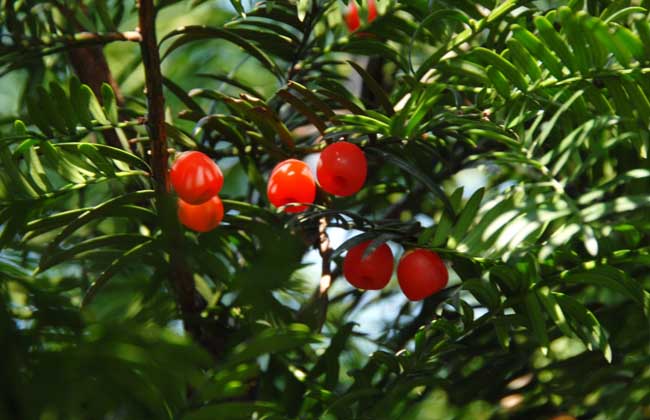
Yew is a tree species endemic to China, also known as purple yew, red bean tree, Guanyin yew, etc. It is an arbor plant of the genus Taxus in the family Taxaceae, a national first-class rare and protected tree species in China. It is a shallow-rooted plant with an inconspicuous main root and well-developed lateral roots. It is recognized worldwide as an endangered natural rare anticancer plant. Let us take a look at how to grow potted yew!
Growth habits of yew
Yew has the characteristics of shade preference, drought tolerance and cold resistance, and requires soil pH of 5.5 to 7.0. It is shade-tolerant in its habitat and can also grow under dense forests. It is mostly seen in coniferous and broad-leaved mixed forests dominated by Korean pine, growing on rocky or barren soil on mountaintops, mostly in shrub form. It is mostly scattered under moist, fertile coniferous and broad-leaved mixed forests on shady or semi-shady slopes. It likes a cool and humid climate and can withstand low temperatures below minus 30°C. It has strong cold resistance, with the optimum temperature being 20 to 25°C. It likes moisture but fears waterlogging, and is suitable for planting in loose, moist, well-drained sandy loam soil.
Propagation methods of yew
1. Sowing: Yew is generally sown in early spring. After the seeds have been stored for 1 year, when 30% of the seeds have cracked and shown white, sieve out the seeds in time, disinfect them in a 0.2% potassium permanganate solution for 10 minutes, then rinse them clean with water. After drying off the surface water, sow them evenly in the furrows. After sowing, dig up screened yellow soil with mycorrhiza from under pine forests to cover the seeds, with the thickness just enough to hide the seeds. Pay attention to shading during the seedling stage, and build a shade shed during the seedling period. The seed emergence rate is above 70%.
2. Cuttage: During the tree's dormant and sprouting period, choose a mixed substrate of sand, sawdust and perlite as the cutting soil. Select 1- to 4-year-old woody seedling branches, cut the cuttings into small sections 10 cm, 15 cm or 30 cm long. When cutting the branches, the cuts are required to be smooth, with the lower cut in a horse-ear shape, and leaves removed below 2/3. Choose agents such as ATP, ABT, NAA, IBAA, etc. to treat the cuttings, then insert them and cover with film. The cuttage survival rate is generally above 85%.
How to grow potted yew?
1. Light: Yew is a shade-loving and drought-tolerant plant, and should be placed indoors. In summer, proper shading is needed, and it should not be placed in a room with west-facing sunlight, nor at an air conditioner outlet or next to a heater, as that will increase the evaporation of water from the yew leaves, causing the branches and leaves to dehydrate and eventually the leaves to curl and dry up. In summer, the light duration should be as short as possible, while in autumn and spring it can be longer.
2. Pot soil: Choose a slightly larger flower pot for yew, and punch a few more holes in the lower part of the pot to enhance the pot's water permeability and air permeability. The soil should be loose, rich in humus, fertile, water-retaining, fertilizer-retaining and breathable, with the soil slightly acidic, and loam is best. Clay is not breathable, and sandy soil has poor fertilizer and water retention, so it is not suitable. In addition, a mixed cultivation substrate can also be made from peat soil, perlite, etc. and loam.
3. Water: When a little yellow-white appears on the surface of the pot soil and the leaves curl slightly, there is no need to water; just spray the leaf surface. When the soil turns white, watering should be done. Water thoroughly at one time so that the pot soil fully absorbs enough water. For outdoor placement, water once every 15 to 20 days; indoors, water once every 20 to 25 days. Keep the soil moisture content at about 40%. Note that watering too much or too frequently will cause root rot in yew.
4. Fertilizing: For each potted yew, apply 0.2 jin of organic fertilizer and 0.02 jin of compound fertilizer. Farmyard manure and cake fertilizer (such as cottonseed cake, peanut cake, hemp cake) can also be added. Fertilizer should be applied along the pot wall as much as possible, and must not be close to the yew roots. Generally, newly bought yew bonsai contains nutrient soil, so no fertilization is needed within 3 months, and after that, apply once every 2 to 3 months.
5. Repotting: After about one year of potted yew, the sapling gradually grows larger and the root system becomes well developed, so transplanting and repotting are needed at this time. Break the old pot, while not damaging the original soil ball, move it into a new pot, and water to settle the roots, ensuring that the root system and soil are closely combined and survival is ensured. If conditions permit, the yew sapling can be transplanted into the field, and the growth rate will be faster.
6. Pruning: When the lower branches and trunks of the yew bonsai grow too densely, dry, yellowed and fallen leaves will appear. Part of the overly dense lower branches and trunks can be pruned away. During pruning, it can be shaped freely, such as umbrella-shaped, tower-shaped, round-shaped, etc. In order to keep the yew crown beautiful, the terminal buds and some lateral buds can be appropriately removed.
7. Pests and diseases: Under normal circumstances, yew has very few insect pests. If the yew is found to turn yellow or have pests and diseases, it can be watered or sprayed with thiophanate-methyl and potassium dihydrogen phosphate. Yew will suffer root rot, stem rot and root decay during the rainy season, especially young trees. At this time, dikesone can be used for spraying and care. In high-temperature and dry seasons, leaf blight and red blight are prone to occur, which can be prevented and controlled by spraying Bordeaux mixture.
Precautions for yew
1. Please do not place the yew bonsai at an air conditioner outlet or too close to a heater.
2. Every half month, the yew bonsai can be moved outdoors or to a balcony for two days of care (preferably on cloudy or rainy days), which is more conducive to its natural growth.
3. When the yew bonsai sprouts new buds in spring, some metabolism (leaf replacement, leaf fall) will occur.