How to grow a water-cultured Aspidistra well? Detailed guide to the cultivation method
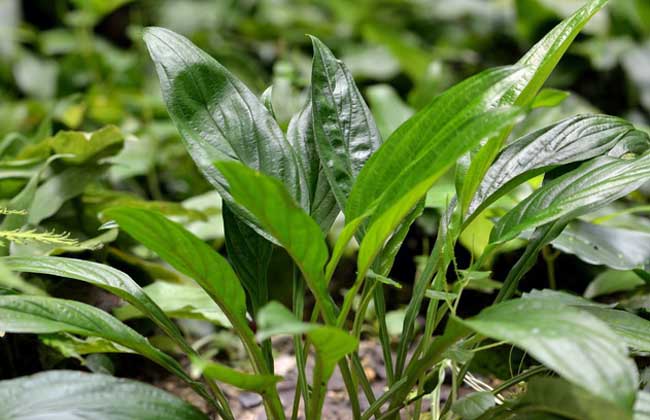
Aspidistra is also known as spider-eggs, large-leaf evergreen, bamboo-joint stem-extender, etc. It is a perennial evergreen herbaceous plant of the genus Aspidistra in the lily family. It has the ability to absorb formaldehyde, and also has a certain absorption effect on carbon dioxide and hydrogen fluoride, and can also adsorb a certain amount of dust. Now let us take a look at how to grow a water-cultured Aspidistra well!
Growth habits of Aspidistra
Aspidistra is native to the southern provinces and regions of China, and is now cultivated throughout China. It is used fairly widely, is evergreen in all four seasons, has an elegant plant shape, and has small and lovely flowers, making it much loved by people. It likes warm and humid conditions and a semi-shady environment, is relatively cold-tolerant, and is extremely shade-tolerant. The optimum growth temperature is 10-25°C, while the temperature range in which it can grow is 7-30°C, and the overwintering temperature is 0-3°C.
Division propagation of Aspidistra
1. Division time: Aspidistra is very suitable for home cultivation. When growing Aspidistra at home, the division method can be used for propagation. Division propagation of Aspidistra can be carried out in spring when the temperature rises and before new buds have sprouted, in combination with repotting. It is generally carried out in early spring (February and March) after the soil has thawed.
2. Division method: Take the mother plant out of the flower pot, shake off excess potting soil, separate the roots that are tangled together as much as possible, and cut it open into two or more plants with a sharp knife. Each divided plant must have a considerable amount of roots, and its leaves should be properly pruned so that each clump has 3—5 leaves, which helps with survival.
How to grow a water-cultured Aspidistra?
1. Choosing containers: According to the specific conditions of the Aspidistra variety, form, specifications, and flower color, choose substitute bottles, pots, vats, and other containers that can complement and bring out the best in the Aspidistra variety. Buy or make them yourself according to the principles of choosing water-culture containers, so that they are appropriate to use and elegant to look at. Never just grab whatever container is at hand or use them arbitrarily, so as not to affect the image of the water-cultured Aspidistra and the beauty of indoor decoration. Achieve unity and harmony between the container, the flower, and the room environment, so as to achieve a relatively ideal ornamental effect.
2. Removing soil and washing roots: Soil cultivation is organic nutrition, but after switching to water culture, it completely changes to inorganic nutrition cultivation. The organic matter in the soil and attached to the root system must be thoroughly cleaned off, so as not to affect the normal growth of the water-cultured Aspidistra and the invasion of pests and diseases. The method of washing the roots is to dig the selected flower plant out of the soil or gently tip it out of the flower pot. First use the right hand to lightly lift the stems, and the left hand to lightly support the root system, then switch to the right hand and gently shake, slowly pat, so that the soil on the roots falls off and all the roots are exposed. Then soak in clean water for 15-20 minutes, and gently rub and wash the roots with your hands. After 2-3 changes of water and washing, until the roots are completely free of soil, and the water used to wash the roots is clear and transparent without mud or sand, only then is it considered washed clean. It must be done so that not a bit of soil remains. This is one of the important steps for successful water culture and must not be neglected.
3. Cutting off old roots: After the Aspidistra has been washed clean of soil, according to the growth condition of the flower's root system, appropriately cut off old roots, diseased roots, and old and yellow leaves, because the roots of a water-cultured Aspidistra are also an important part of the display, so when tidying the root system, its beauty of form must also be considered. After pruning its roots and leaves, wash it once more in clean water to rinse away the residual root hairs left by cutting, so as to avoid bringing them into the water-culture container and causing contamination.
4. Root disinfection: After the Aspidistra root system has been washed clean, prepare a 0.1% potassium permanganate aqueous solution and place it in a plastic or enamel basin. The amount of solution can be determined according to how many Aspidistras are to be soaked. Several plants or many plants of Aspidistra can be soaked at one time, with the standard being to submerge all the roots. After soaking for 10-15 minutes, take the Aspidistra plant out of the solution, then rinse it in clean water and it can be planted. Note that the root disinfection time must not be too long or too short, and the concentration of the potassium permanganate solution must not be too strong or too dilute. Apart from using a balance to measure it, its proper ratio is mainly determined by experience in preparation and by looking at the color of the solution (a light purplish-red).
5. Scientific planting: If it is a glass vase, because glass is relatively thick and has a certain weight, you can straighten out the Aspidistra root system and carefully place it into the vase. To keep the Aspidistra from falling over, you can fix it around the mouth of the vase with small stones or pebbles, then pour water into the vase body to 2/3 full, and be careful to spread out the root system. If a plastic vase is used, because its texture is very light, even with water it is difficult to support the Aspidistra plant, causing it to be top-heavy and fall over. Therefore, for this kind of container, before planting, you can first put a certain amount of stone granules into the vase to increase the vase's weight, and then plant the Aspidistra into the vase as before. If other flower pots without bottom holes, or round and rectangular fish tanks, are used to grow water-cultured flowers, then the problem of fixing the roots in the water must be considered.