How to Grow and Care for Lucky Bamboo (Dracaena sanderiana)
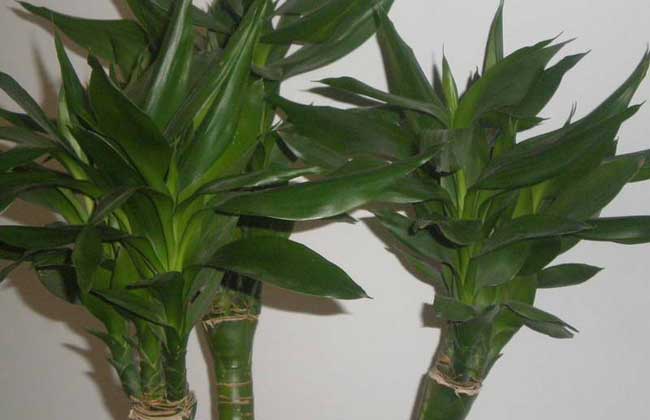
Lucky bamboo is often grown as a potted ornamental plant. Placed in the home, it can absorb indoor carbon dioxide, thereby improving indoor air. Moreover, lucky bamboo grows quickly from the seedling stage, reaching about 1.5 m in a single year. Its straight, tall form looks elegant indoors and can show off the owner's refined taste. Let's take a look at how to grow lucky bamboo!
The Value of Growing Lucky Bamboo
1. Bringing prosperity and wealth: Lucky bamboo has a powerful prosperity-boosting effect. In feng shui, balcony plants that boost prosperity are all tall and thick, and the thicker and greener they are, the better the effect. Lucky bamboo is a typical example. Place it at the doorway, and wealth is sure to come knocking.
2. Protecting the home and warding off evil: Lucky bamboo is a plant that protects the home and wards off evil. If you feel that your family is always falling ill, work is always going poorly, or studies are always slipping, you can place a lucky bamboo in front of the door and let it drive away the evil influence, giving you back a happy home.
3. Health and well-being: Lucky bamboo is a water-associated plant. A house with a door facing east can place a lucky bamboo to improve the health of the kidneys and liver.
How to Propagate Lucky Bamboo
1. Division: Lucky bamboo can be propagated by division in early spring (February to March) together with repotting. When dividing, take an overly dense clump out of the pot, cut it apart at the rhizome with a knife, and pot each piece separately. Be careful not to damage the roots.
2. Sowing: Propagating lucky bamboo from seed is best done in April to May. Before sowing, soak the seeds in warm water for 1 to 2 days. They germinate about 40 days after sowing. The seedlings grow very slowly, and can only be transplanted for growing on after about half a year.
3. Cuttings: Propagating lucky bamboo from cuttings is done in May to June. Cut one-year-old stems into cuttings with 2 to 3 nodes, remove some of the leaves, insert them into a sand bed, and keep it moist. They can root within the same year.
How to Grow Lucky Bamboo
1. Pruning: Trim off the leaves at the base of the lucky bamboo stem and cut the base into a slanted edge to increase the area for absorbing nutrients.
2. Changing the water: Before lucky bamboo has rooted, change the water every 2 to 3 days. Once it has grown roots, only top up the water instead of changing it.
3. Position: Before lucky bamboo has rooted, it is best not to move it, otherwise the plant cannot adapt to the new environment.
4. Soil: Lucky bamboo likes airy, sandy soil. When watering, slightly moist is best.
5. Temperature: The suitable growing temperature for lucky bamboo is 20 to 35 °C, so in summer avoid direct sun exposure, and in winter take care to protect it from freezing.
6. Fertilizing: For lucky bamboo grown in water, add a few drops of special plant nutrient solution to the water every month. For soil-grown plants, bury an appropriate amount of nitrogen-phosphorus-potassium compound fertilizer in the pot every month.
7. Pest prevention: No matter which method is used to grow lucky bamboo, when pests appear you should spray a little potassium permanganate or carbendazim wettable powder to sterilize and disinfect.
What to Do When Lucky Bamboo Leaves Turn Yellow?
1. Water-yellow: Young leaves turn dull yellow and lose their luster, old leaves show no obvious change, stems are thin and yellow-green, and new shoots shrivel and stop growing. This indicates overwatering. Take the plant out of its pot, let the root ball air-dry in a ventilated, shaded place, then put it back in the pot.
2. Drought-yellow: Yellowing from lack of water is different from yellowing from too much water. Yellowing from water shortage shows as withered, dried tips or edges, with old leaves turning yellow and dropping from the bottom up, while new leaves grow fairly normally. Just water thoroughly and generously.
3. Scorch-yellow: Strong direct sunlight falling on some shade-loving plants (such as spider plant, hosta, etc.) easily causes the leaf tips and edges to wither, and yellow spots to appear on the sun-facing parts of the leaves. Simply move them to a shaded spot.
4. Lack of light: When kept in a shaded environment for a long time, the leaves cannot get enough sunlight and cannot form chlorophyll, so the whole plant's leaves turn yellow and then drop. Adding light can prevent this problem.
5. Fertilizer-yellow: Yellowing caused by too much fertilizer or too high a concentration shows as dry brown tips on new leaves, usually with thick, lusterless leaves that are uneven and not spread out, and old leaves turning scorched yellow and dropping. Stop fertilizing immediately, and in severe cases flush out some of the fertilizer with plenty of clean water.
6. Lack of fertilizer: This shows as young leaves becoming paler, yellow or light green, while old leaves remain fairly normal or gradually turn from green to yellow. Check the potting soil; if it has hardened, replace it. Usually apply light fertilizer frequently and water with some alum water at the right time (lucky bamboo is a foliage plant, so it should be given fertilizer mainly based on nitrogen).
7. Root pruning: Do not cut off the roots in winter, as then the plant cannot absorb water and the leaves will naturally turn yellow.