How to grow potted fernleaf bamboo? These care methods you need to master
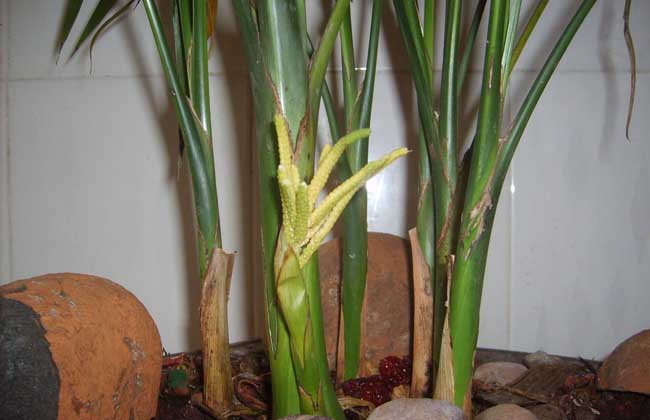
Fernleaf bamboo is also known as rice bamboo, jintou bamboo, Penglai bamboo, and so on. It is a variant of the hedge bamboo (Bambusa multiplex) in the grass family, Bambuseae tribe, with a short plant type and dense, graceful green leaves that look like a fern's tail. It is often used for potted ornamental display, embellishing small courtyards and rooms, and is also often used to make bonsai or as low hedge material. Let's take a look below at how to grow potted fernleaf bamboo!
Propagation methods of fernleaf bamboo
1. Division: Division propagation of fernleaf bamboo can be done in early spring when repotting. When dividing, take the overly dense clumps out of the pot, cut them apart at the rhizome with a knife, and pot them separately. Be careful not to damage the roots. When dividing, each shoot bud should have at least one old bamboo culm attached, and fibrous roots should be retained as much as possible to ensure survival. The newly divided plants should be planted in pots of moderate size, filled with fertile soil, watered carefully, kept moist, and maintained in a semi-shaded place; the shoot buds will then grow rapidly.
2. Sowing: Sowing propagation of fernleaf bamboo is best done from April to May. Before sowing, soak the seeds in warm water for 1 to 2 days. After sowing, they will sprout in about 40 days. The seedlings grow very slowly, and it takes about half a year before they can be transplanted for cultivation.
3. Cuttings: Cuttings of fernleaf bamboo are best done from May to June. Cut one-year-old branches into cuttings with 2 to 3 nodes, remove some of the leaves, insert them into a sand bed, keep them moist, and they can take root the same year.
How to grow potted fernleaf bamboo?
1. Soil: Fernleaf bamboo prefers acidic, slightly acidic, or neutral soil, with pH 4.5 to 7.0 being suitable, and it dislikes heavy, alkaline soil. Soil in the north is strongly alkaline, so 0.2% ferrous sulfate can be added. The soil should preferably be loose, fertile, well-drained sandy loam, which can be made by mixing farmland soil with red-yellow soil, humus soil, and fine sand.
2. Temperature: Fernleaf bamboo is an evergreen clumping shrub that prefers warm, humid, and semi-shaded environments. It has somewhat poor cold tolerance, cannot tolerate strong sunlight or exposure, and fears waterlogging. It is suited to fertile, loose, and well-drained loam. In winter, the temperature should not be lower than 0 degrees.
3. Light: Fernleaf bamboo likes light and tolerates slight shade, and prefers a warm, humid climate. It likes moisture and warmth, and also likes semi-ventilated and semi-shaded conditions. In winter, it should be moved indoors to a sunny place. Fernleaf bamboo likes sunny, high, and airy places, hence the saying, "It thrives in sunlight and should be planted on a high terrace." In spring, summer, and autumn, it only needs to be placed in a ventilated spot by a window, and in winter it can be placed in a sunny spot, and it will grow well.
4. Water: Fernleaf bamboo likes moisture and fears water accumulation. After potting, water thoroughly the first time, and afterward keep the potting soil moist. Do not water too much, otherwise the rhizomes and roots are prone to rot. From potting to establishment, the leaves should also be sprayed with water frequently. If the potting soil lacks water, the bamboo leaves will curl; at this point, water promptly, and the bamboo leaves will unfold again. In summer, water once every 1 to 2 days on average; in winter, water less, but ensure the potting soil stays moist to prevent "dry freezing."
5. Fertilizer: Fernleaf bamboo fertilizer is mainly organic fertilizer; decomposed livestock manure, garbage compost, and river mud are all acceptable. Organic fertilizer is mainly used as a base fertilizer, mixed into the potting soil for use, generally at 10% to 15% of the potting soil volume. During the growing season, applying 1 to 2 times a month of dilute nitrogen fertilizer is sufficient.
What to do if fernleaf bamboo leaves turn yellow?
1. Sunlight exposure: Fernleaf bamboo likes a semi-shaded environment. If the sunlight is too strong, it will speed up the evaporation of water from the leaves of fernleaf bamboo, causing the leaves to wither and turn yellow. But if fernleaf bamboo is placed in a shaded environment with no light for a long time, it will lack chlorophyll, causing the leaves to turn yellow or even fall off. A semi-shaded spot by a window has sufficient light, no strong direct sunlight, and good ventilation, so fernleaf bamboo should be moved to a semi-shaded place. Generally, in spring, summer, and autumn, placing fernleaf bamboo in a ventilated spot by a window is sufficient, and in winter, placing it in a sunny spot is enough.
2. Lack of nutrients: If fernleaf bamboo lacks nutrients during growth, especially if fertilizer is not applied, it will also cause the young leaves to appear pale yellow. In this case, fertilize appropriately and water. A lack of phosphate fertilizer in the soil or excessive fertilization can both cause fernleaf bamboo leaves to wither and turn yellow; if phosphate fertilizer is lacking, just supplement fertilizer.
3. Long-term fertilizer deficiency: If nitrogen fertilizer has not been applied for a long time or the pot and soil have not been changed, the soil will lack nitrogen and other nutrient elements, causing the branches and leaves to become thin and weak, with thin, yellow leaves. The pot should be tipped out promptly, replaced with new loose and fertile cultivation soil, and gradually given more dilute decomposed liquid fertilizer or compound flower fertilizer. Excessive fertilization. If too much fertilizer is applied, new leaves will become thick and fleshy, and mostly uneven, while old leaves will dry at the tips, scorch yellow, and fall off. Fertilization should be stopped immediately, watering should be increased so the fertilizer flows out through the drainage holes at the bottom of the pot, or the pot should be tipped out immediately, the soil ball rinsed with water, and then replanted into the pot.
4. Water aspects: When fernleaf bamboo lacks water, the leaf edges or leaf tips will dry and turn yellow, and may even fall off. At this point, water the fernleaf bamboo promptly, but do not water too much; watering thoroughly once to keep the potting soil moist is sufficient. Too much water will cause root rot, and the leaves will take on a watery yellow color; after loosening the soil, dry out the moisture. If the leaves appear watery yellow, especially if the young leaves are rather small and no longer grow upward, it indicates that there is too much water in the soil; at this point, loosen the soil and dry out the moisture. If the leaf edges or leaf tips dry and turn yellow, or even if the leaves fall off, it indicates that the soil lacks water, and the soil needs to be watered promptly.
5. Pests and diseases: Leaf spot disease caused by fungal and other pathogen infection easily causes localized necrosis of the leaves, with yellow spots or patches appearing, and in severe cases the whole leaf withers, turns yellow, and falls off. After infection by mosaic virus, yellow-green mottled patches appear on the leaves. When attacked by scale insects, red spider mites, and the like, the leaves will also become locally yellow and withered, or even the whole leaf wilts, turns yellow, and falls off. In all cases, pesticide should be sprayed promptly for control.