How to care for potted Monstera deliciosa? Detailed care methods and precautions
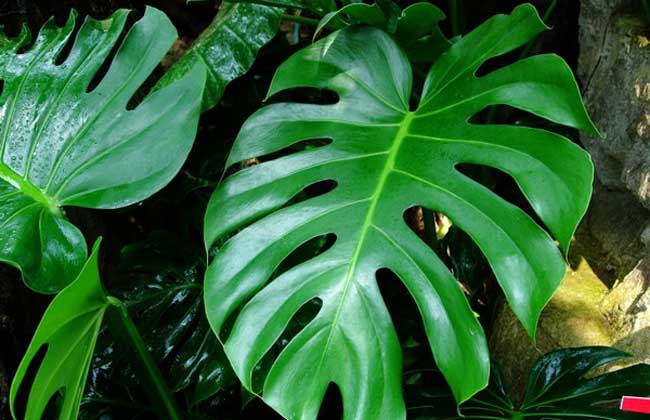
Monstera deliciosa is a well-known large indoor foliage plant, also known as Penglai banana, iron wire orchid, perforated Philodendron, etc. It is a climbing shrub plant of the genus Monstera in the Araceae family, native to Mexico. It is widely introduced and cultivated for ornamental purposes in various tropical regions. In Europe, America, and Japan, potted plants are commonly used to decorate living rooms and windowsills. Let's take a look at how to care for potted Monstera deliciosa!
Growth habits of Monstera deliciosa
Monstera deliciosa is native to Mexico and is cultivated outdoors in Fujian, Guangdong, Guangxi, Yunnan and other places in China, and mostly cultivated in greenhouses in Beijing, Hubei and other places. It prefers warm and humid environments, and must avoid strong light exposure and dryness. It is shade-tolerant and easily grows in fertile, loose, micro-acidic loam with high water absorption and good water retention. Leaf mold or peat soil is best. The optimum growth temperature is 20-25°C. Below 5°C, it is prone to frost damage. When the temperature rises above 32°C, growth stops.
Propagation methods of Monstera deliciosa
1. Sowing: Before sowing Monstera deliciosa, soak the seeds in warm water at 40°C for 10 hours. The sowing soil should be sterilized at high temperature. The seeds are relatively large, so spot sowing can be used. After sowing, maintain the room temperature at 20-25°C, cover the box opening with plastic film, and maintain humidity above 80%. Generally, germination occurs 20-25 days after sowing. If the room temperature is too low during the sowing process, it will not only affect seedling emergence, but may even cause the seeds to become water-soaked and rot.
2. Cuttage: The best time for Monstera deliciosa cuttage is April-May in spring and September-October in autumn. Select current-year side branches with full stem tissue and robust growth as cuttings. The cuttings should be 20-25 cm long. Remove the leaves at the base, keep the small leaves at the upper end, cut off long aerial roots, and keep short aerial roots to absorb water and promote rooting. Use a mixed substrate of coarse sand and peat or leaf mold for the cutting bed. After cutting, maintain 25-27°C and relatively high air humidity. Rooting begins only about 1 month after cutting.
3. Division: Division of Monstera deliciosa is carried out in summer and autumn. Split off the side branches of a large Monstera deliciosa in entire sections, with some aerial roots, and plant them directly in wooden barrels or pots. This not only has a high survival rate, but also achieves a quick finished shape.
How to care for potted Monstera deliciosa?
1. Light: Monstera deliciosa likes warm and humid environments, tolerates drought poorly, and fears direct sunlight, otherwise it easily causes leaf withering. In summer, place Monstera deliciosa indoors or under a shade shed. Do not place it on a balcony with excessively strong sunlight for exposure, as this can easily cause death. When the winter temperature drops to 6°C, move Monstera deliciosa indoors to keep it warm.
2. Watering: Monstera deliciosa needs sufficient water, and the culture soil must be kept moist frequently. During the summer growing period, water once in the morning and once in the evening, and also sprinkle water on the leaf surface regularly to keep the leaves bright and the air humid. In winter, water evaporates slowly, so water once every 3-4 days. For routine watering, once a day is sufficient.
3. Fertilizing: Monstera deliciosa is a plant that relatively likes fertilizer, so attention should be paid to fertilizing it appropriately. During the growth period of Monstera deliciosa, apply dilute cake fertilizer water once every half month. With sufficient and appropriate fertilization, Monstera deliciosa will grow with pleasing leaf color.
4. Pests and diseases: Monstera deliciosa is highly susceptible to scale insect damage, and the stems and leaves are most easily attacked by scale insects. They can be cleaned with an old toothbrush and then sprayed with a 1000-fold solution of 40% omethoate. Common diseases of Monstera deliciosa include leaf spot, gray spot, and stem blight. Attention should be paid to timely prevention and control.
5. Repotting: Potted Monstera deliciosa needs to be repotted once a year, and the best time for repotting is between March and April. When repotting, remove the old soil, cut off the dead roots of Monstera deliciosa, and then add decomposed organic fertilizer or phosphorus and potassium fertilizer to the pot as base fertilizer.
Precautions for Monstera deliciosa
1. Fears strong light exposure: Monstera deliciosa is a typical shade-tolerant plant. Large-scale production must include shading facilities, and 50% shade netting can be used. Especially for sown seedlings and newly rooted cuttings, direct sunlight must be avoided to prevent leaf scorching. Mature plants should also be shaded during midsummer, otherwise the leaves will age, lack natural luster, and reduce ornamental value.
2. Afraid of dry air: Monstera deliciosa naturally grows in tropical rainforests and likes humidity, but water accumulation in potted soil can also cause root rot, causing the plant to stop growing, leaves to droop, lose luster, and become uneven. Watering should follow the principle of preferring wetness over dryness, keeping the pot soil moist regularly but not waterlogged. In spring and autumn, water once every 2-3 days. In midsummer, in addition to daily watering, spray water multiple times to keep the leaf surface fresh. For hanging cultivation, spray water more frequently. In winter, leaf transpiration weakens, so the amount of watering should be reduced.
3. Apply thin fertilizer frequently: Monstera deliciosa is a relatively fertilizer-tolerant foliage plant. To promote more new leaves and keep the leaf color green with natural luster, apply fertilizer once every half month during the growing period. When fertilizing, be careful not to let the fertilizer solution stain the leaf surface. At the same time, the roots of Monstera deliciosa are relatively tender, so avoid applying raw fertilizer and concentrated fertilizer to prevent root burn. It is best to use "Huiyou" 20-8-20 four-season high potassium nitrate fertilizer and 20-20-20 general-purpose fertilizer, which are more beneficial to the growth of Monstera deliciosa.
4. Needs tying and shaping: Monstera deliciosa is a large foliage plant with thick stems and large leaves. Especially when dividing adult plants, supports should be set up and tied to prevent lodging and deformation. After the shape is set, remove the supports. At the same time, after shaping, when the stem node leaves grow too densely and the branches and vines grow too long, pay attention to pruning the whole plant, striving for a natural and beautiful appearance.