How to grow potted Crown of Thorns (Euphorbia milii)? A detailed guide to care methods
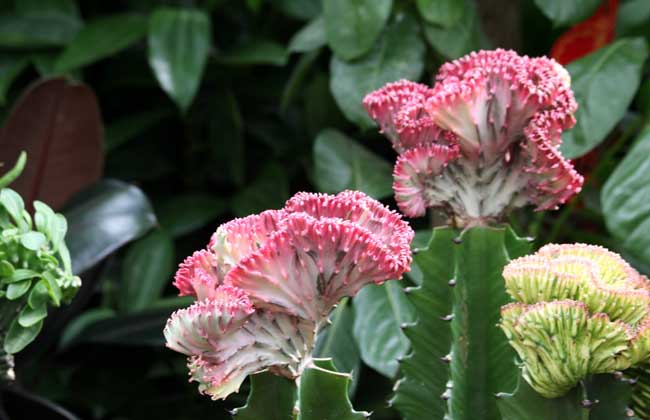
Crown of Thorns, also known as Jin'gangzuan, Tiehaitang and so on, is a succulent plant of the genus Euphorbia in the family Euphorbiaceae, native to the Americas. Because it closely resembles the qilin of ancient Chinese legend, it is also called Yuqilin (Jade Qilin), and because at night when illuminated by light the thorns on the plant reflect a sparkling golden glow, it got the name Jinqilin (Golden Qilin). Now let us take a look together at how to grow potted Crown of Thorns!
Growth habits of Crown of Thorns
The stems of Crown of Thorns are densely covered with brown hard thorns; the leaves are alternate, broadly lanceolate, very few in number, and all grow on new branches. It is native to the cold regions of the Americas. In China's Guangdong, Guangxi, Yunnan and other provinces it is cultivated outdoors, while in North China, East China and other places it is mostly grown in pots for ornamental enjoyment. It likes full sunlight but also tolerates half shade, and will not die of drying out from slight drought.
Propagation methods of Crown of Thorns
Crown of Thorns is best propagated by cuttings. From May to June, cut 8 cm to 10 cm long cuttings from the tips of the mother plant's branches, wipe off the white sap flowing from the cut, dip them in plant ash, leave them for 3 to 4 days until the wound dries, then insert them into clean sandy soil. After inserting, water sparingly to keep the potting soil in a half-dry state, and roots will form in about a month or so. In the autumn of the following year, transplant them separately into flower pots. Usually water sparingly, watering only after the soil has dried, otherwise the roots will rot. In summer, keep the room temperature at around 10°C and they can overwinter safely.
Cultivation methods for Crown of Thorns
1. Soil: For planting Crown of Thorns, the potting soil is best a mixture of a larger amount of pond mud (river mud) and a small amount of coal cinders. This kind of mixed soil has excellent drainage and aeration, which is very beneficial to the growth of Crown of Thorns.
2. Watering: Crown of Thorns likes neutral soil and water; soil and water that are too acidic or too alkaline will threaten its growth. Since it is a cactus-type plant, water it sparingly; it is best to water once every 6 to 7 days. Those planted outdoors in full sunlight can be watered by spraying, once every 2 days. There must never be standing water in the flower pot, otherwise the roots easily rot. When watering, the water should be brought to room temperature; if the temperature of the water used differs too much from the surface temperature of the Crown of Thorns plant, it can easily cause the surface of the Crown of Thorns to crack, and may even lead to the death of the plant.
3. Light: Crown of Thorns originates from the deserts of South America and likes high temperatures, light and full sun exposure; abundant sunlight is more conducive to promoting its growth. Precisely for this reason, balconies and rooftops in the south have become their best cultivation sites. In the north, because Crown of Thorns is cold-tolerant and drought-tolerant and easy to keep alive, placing them indoors for growing is also no problem. But if conditions permit, moving them outdoors into full sun on sunny days will make them grow even better.
4. Fertilizing: Crown of Thorns is suited to neutral fertilizers, such as potassium nitrate, or certain organic fertilizers, such as peanut residue cake or bean residue cake. It can be fertilized once a month, and during the growing period in May and June it can be given a little more.
5. Pests and diseases: Crown of Thorns has relatively few pests and diseases, but if kept long-term in a greenhouse or in a poorly ventilated spot, it is prone to damage by scale insects. In winter and spring, spray-wash the leaf dust with clean water once every 10 days. In addition, it is sensitive to alcohol, tea and coal gas.
6. Repotting: When the temperature warms up and rises in spring, you can repot the Crown of Thorns between Qingming and Guyu. When repotting, remove the old soil, clear away the spent soil among the roots, and remove decayed roots. After repotting, keep the potting soil moist, first leave it indoors for about 10 days, then gradually move it outdoors.