How to grow potted Gerbera daisies? Detailed care methods and tips
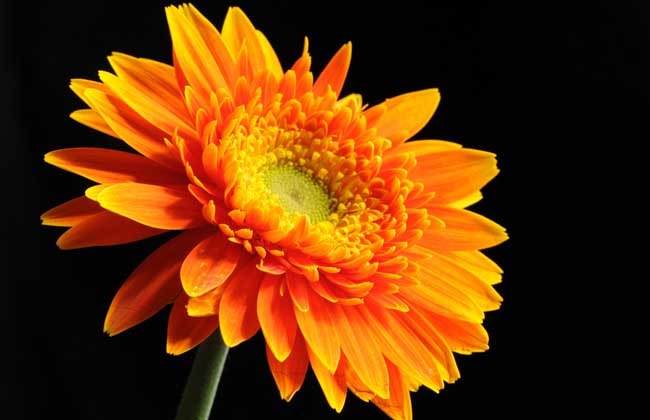
Gerbera daisy, also known as Furlong flower, lamp flower, Persian flower, etc., is a perennial herbaceous plant of the genus Gerbera in the Asteraceae family. It has relatively thick fibrous roots, terminal inflorescences, large flowers, rich flower colors, and requires little labor to manage. In warm regions it can be supplied year-round, for flower arrangements and making flower baskets, and can also be grown as a potted ornamental. Let's take a look below at how to grow potted Gerbera daisies!
Growth habits of Gerbera daisy
Gerbera daisy is native to South Africa and adapts to mild climates. It is heat-tolerant and slightly cold-tolerant, and prefers environments that are warm in winter, cool in summer, well-ventilated, and sunny. The optimum growth temperature is 20-25°C during the day and around 16°C at night. The optimum flowering temperature is not lower than 15°C, and a growing environment with daytime temperatures not exceeding 26°C allows it to bloom year-round. The optimum temperature during the winter dormant period is 12-15°C, and growth stops below 7°C. It prefers fertile, loose, well-drained sandy loam rich in humus, avoids heavy clay soil, and favors slightly acidic soil. The optimum pH for growth is 6.0-9.0.
Propagation methods of Gerbera daisy
1. Sowing: Each Gerbera daisy flower can usually produce twenty to thirty seeds. They can be sown in spring or autumn - spring sowing in March and May, autumn sowing in September and October. The germination rate of Gerbera daisy seeds is relatively low, only about 50%. After sowing, cover with paper to prevent direct sunlight. At a temperature of 20-25°C, germination occurs within about two weeks. Sixty to seventy days after sowing, when the seedlings have three or four true leaves, transplant them into flower pots or plant them out in the open field. With proper cultivation, flowering can be seen in two to three months.
2. Division: Gerbera daisy division propagation is mostly carried out in March and April. First dig out the mother plant and divide it into several daughter plants. The daughter plants must have buds and roots, and should not be divided too small. When potting, they should not be planted too deep. It is best to plant them in groups of two per hole, which helps increase the number of flowers.
How to grow potted Gerbera daisies?
1. Soil: Gerbera daisy is very sensitive to water, so use a medium with good air permeability and drainage, preferably a substrate of mixed peat and perlite. A pH of 5.5 to 6.0 and an EC value of 0.7 to 1.0 are beneficial for the absorption of trace elements.
2. Watering: Gerbera daisy is very sensitive to moisture, so the correct watering time must be ensured. Water in the morning or evening, and keep the plant relatively dry at nightfall. When the plant begins to grow roots, water from below, and a bottom-soaking method can be used. During high temperatures, watering from above the plant is possible, but be careful to prevent fungal mold starting from the center of the plant.
3. Sunlight: The most suitable day length for Gerbera daisy during growth is 11 to 13 hours, so artificial supplemental lighting can be used when light is low. Generally, the requirement for artificial supplemental lighting is 3500 to 4000 lux per square meter.
4. Temperature: The most suitable growth temperature for Gerbera daisy is between 15°C and 25°C, with the maximum not higher than 30°C and the minimum not lower than 13°C. High temperatures will affect normal flower bud differentiation, and low temperatures will cause the plant to die.
5. Fertilizing: Gerbera daisy is a fertilizer-loving perennial root flower with high fertilizer demand. The ratio of nitrogen, phosphorus, and potassium in fertilization is 15:18:25, once every 5-6 days, once every 10 days. If high temperatures or relatively low temperatures cause the plant to enter a semi-dormant state, stop fertilizing.
6. Pests and diseases: The diseases of Gerbera daisy include leaf spot, powdery mildew, and viral disease. For leaf spot, spray with 70% thiophanate-methyl wettable powder at 800-1000 times dilution or 50% carbendazim wettable powder at 500 times dilution. For powdery mildew, use 70% thiophanate-methyl at 1500 times dilution or 75% triadimefon wettable powder at 1000-1200 times dilution for control, once every 7-10 days, spraying two to three times continuously.
7. Pruning: The lower leaves of the basal leaf cluster of Gerbera daisy easily turn yellow and age, and should be removed promptly. This not only helps the emergence of new leaves and new flower buds, but also helps ventilation and strengthens the plant's growth. In addition, if the branches and leaves are too luxuriant and shade each other so that air cannot pass through, part of the leaves can be appropriately removed.