How to grow potted camellias well? Master these care essentials
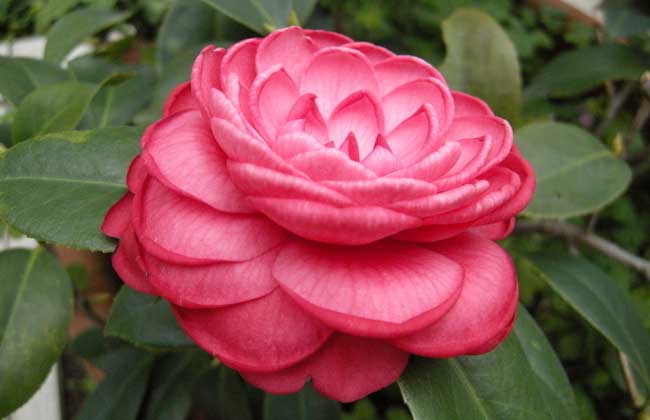
Camellia is a traditional ornamental flower in China, also known as camellia (shancha). It is the general name for many plants and horticultural cultivars of the genus Camellia in the family Theaceae. Because of its graceful plant form, dark green and glossy leaves, and brilliant and colorful flower shapes, it is treasured by the world horticultural community. There are extremely many cultivars, with flower colors including red, purple, white, and yellow. Now let us take a look at how to grow potted camellias well!
Growth habits of camellias
Camellias fear wind and like sunlight, high and airy terrain, air circulation, warmth and humidity, good drainage, loose and fertile sandy loam, loess, or humus soil. pH 5.5-6.5 is best. The suitable temperature is between 20-32°C; growth stops above 29°C, and at 35°C the leaves will show scorched symptoms. A certain temperature difference is required. Environmental humidity should be above 70%. Most cultivars can tolerate a low temperature of -8°C. South of the Huai River, they can generally overwinter naturally. They like acidic soil and require good air permeability. To favor root hair development, peat, rotten sawdust, red soil, humus soil, or a mixed substrate of the above can usually be used for cultivation.
Propagation methods of camellias
1. Cuttings: Cutting propagation is mostly carried out in May-June. It is advisable to choose robust current-year branches as cuttings, cut them into 10-12 cm lengths, keep 2-3 leaves at the upper part, and remove the lower leaves. Insert them into a plain sand seedbed or flower pot. River sand or loose mountain soil can both be used as potting soil. After inserting, water thoroughly, then spray water appropriately afterward, keep the soil moist, and provide shade. Roots can form in about 60-70 days.
2. Air layering: High-branch layering is mostly carried out in April-May. The method is to select a branch from the previous year, girdle the bark at the layering site, with a girdling width of 0.5 cm, wrap the girdled part with plastic film of appropriate size, with a wrapping length of 10-15 cm. First tie the lower opening tightly, fill it with moist culture soil, always keep the soil moist, then tie the upper opening tightly. After roots form, it can be cut off and planted separately.
How to grow potted camellias?
1. Soil: Soil is the foundation of camellia growth. All nutrients and so on for camellias are obtained from the soil, so the soil requirements are quite high. Generally, the soil is relatively high in humus, with a pH value between 5-6.5, slightly acidic. The best soil formula is 50% mountain soil, 40% sawdust or edible mushroom residue, and 10% cake fertilizer powder or livestock manure and phosphate fertilizer powder.
2. Temperature: The suitable growth temperature for camellias is 18-25°C. If the environmental temperature is too high or too low, it is not conducive to camellia growth. Special attention should be paid in winter: move the plant indoors for growth, and generally at noon move the plant to the balcony. In summer, also pay attention to sun protection to prevent excessively high temperatures.
3. Watering: Camellias all like to grow in a moist environment, so camellias should mainly be watered, but note that it is better to keep the soil from being too dry or too wet. Generally, water more in spring and summer, which is also beneficial to camellia growth. In winter, pay attention to watering less; watering once every two to three days is best.
4. Fertilizing: Camellias are fertilizer-loving plants, so during cultivation, remember to fertilize. Generally, during the growth period, add phosphorus and potassium fertilizer, which is also beneficial to camellia growth and also makes the flowers bloom more abundantly. At the same time, also pay attention not to fertilize too much.
5. Pruning: The pruning work for camellias is also very important. Generally, when camellia flower buds are dense, it is recommended to carry out regular pruning work, cut off weak branches, and tidy the flower buds. This can also promote the camellia's absorption of nutrients.
6. Pests and diseases: Camellias are very prone to pests and diseases. Generally, there are two kinds, black mildew and anthracnose. Note that during the period of pests and diseases, it is better to spray camellias with some medicines for pests and diseases, which can play a very good role in promoting growth.
7. Repotting: After camellias have been potted for 1 year, it is recommended to repot and change the soil once, which helps provide a better growth environment. The new pot should be larger than the old pot to facilitate the stretching and development of the root system. Repotting time should preferably be in April in spring or in autumn. During the process, try to remove some old roots, replace with fertile and loose new soil, and combine this with placing base fertilizer.