How to grow potted coleus? Cultivation methods and precautions
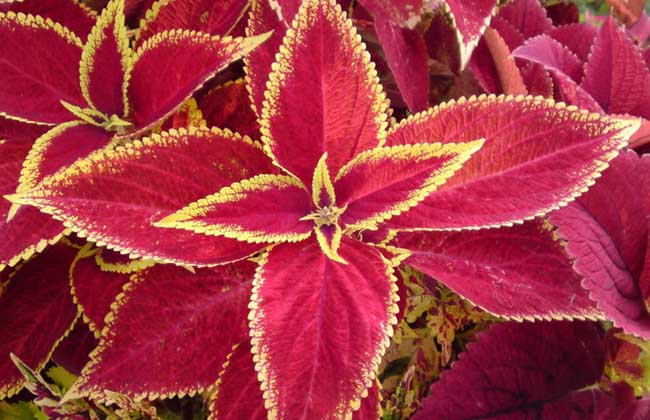
Coleus is also known as five-colored sage, laolai shao, five-color grass, and so on. It is a perennial herbaceous plant of the genus Coleus in the Lamiaceae family. Indoor displays are mostly small to medium-sized potted plants. To keep the plant shape beautiful, unopened flower spikes are often cut off and placed on low tables and windowsills for appreciation. For courtyard cultivation, it can be used for flower beds or plant borders, and several pots can also be arranged into patterns to decorate venues and theater foyers. Now let us take a look at how to grow potted coleus!
Growth habits of coleus
Coleus is a flowering plant with very strong adaptability and can be seen in many parts of our country, especially more commonly in the south. It is often cultivated in gardens in various places, and the main cultivation bases include Jiangsu, Zhejiang, Anhui, and other places. It is a warmth-loving plant with strong adaptability. The winter temperature should not be lower than 10°C. In summer, provide slight shading during high temperatures. It likes ample sunlight, and sufficient light can make the leaf color vivid.
Propagation methods of coleus
1. Sowing: Mostly used for varieties whose plant quality remains unchanged after sowing. The suitable temperature is 18°C, and both spring and autumn are suitable. Sufficient light is needed during germination. Keep the propagation sand bed moist. About 2 weeks after sowing, it will germinate. When it grows to have 4 robust seedlings, it can be transplanted into small pots about 10 cm in diameter. When the seedling leaves cover the pot, it can be planted into a large pot 20-23 cm in diameter. The germination rate is high, and the seedlings emerge neatly.
2. Cuttings: Used for propagation of varieties with a high survival rate from cuttings and whose sexual reproduction quality is prone to variation. As long as the temperature is suitable, it can be done in all four seasons, generally preferably in May to June. Select excellent plants with brilliant colors and use softwood cuttings. The cuttings are 8-10 cm long, and loose, fertile coarse sand is best for the propagation soil. Remove the two lower leaves of the cuttings. Insert the cuttings to a depth of about 1/3 of their length. After insertion, pay attention to shading and place them in a cool place for care. Keep the potting soil moist. At a temperature of about 20°C, roots can form in about 10 days, and after another 2 weeks they can be transplanted into pots.
Water propagation of coleus
1. Container: The cutting container for coleus can be a wide-mouth bottle, or a mineral water bottle with the upper part cut off and the lower part filled with clean water for use. The container must be clean, and the water must also be clean. It is best to additionally store water in a large cola bottle for more than a day for use in cutting and subsequent management.
2. Cuttings: When the main stem of coleus or a side branch after pinching has 4 nodes or is about 10 cm long, choose one with a thick stem, leave only 1 to 2 nodes of opposite leaves at the base, cut off the upper part, and make the cut smooth without crushed or torn wounds. Then cut off the lowest pair of leaves of the cutting, and gather every 3 to 5 cuttings neatly at the base, loosely tying them together with white thread, ready for water propagation.
3. Management: Generally, it is best for the cuttings to enter the water 3 cm to 4 cm from the bottle mouth. After that, place them in a spot with scattered light. Note to change the clean water every 2 to 3 days (use the stored water), and pay attention to topping up the water level in the bottle daily due to evaporation. Generally, under conditions of 18°C to 25°C, white roots can be seen in 7 to 10 days.
4. Potting: In addition to being easily produced at the stem nodes, adventitious roots of coleus can also sprout from the straight, thick stem, which provides conditions for the cuttings to take shape as early as possible. When multiple adventitious roots 1 cm to 2 cm long are seen at the base of the cuttings, they can be potted or planted in time. Note that the operation should be careful and not damage the root system. Generally, after another 10 days or so of care in a shaded spot, they can enter normal management.
How to grow potted coleus?
1. Soil: Potted coleus requires a sandy culture soil rich in humus, loose and fertile, and with good drainage and aeration.
2. Watering: The water requirement of coleus is to keep the potting soil and environment often moderately moist. Avoid drought and prevent waterlogging, so as to avoid leaf dehydration and loss of color, and root infection with soft rot.
3. Sunlight: When the light is soft and sufficient, the leaf color of coleus is strikingly brilliant, but avoid direct strong sunlight under a clear summer sky, which makes the leaf surface rough and lose its glossiness. In shaded environmental conditions, the leaf color is also not vivid.
4. Temperature: Coleus likes a warm, humid climate and fresh-air environmental conditions. The suitable indoor temperature in winter is 20°C to 25°C, and the minimum overwintering temperature must not be lower than 10°C. If the temperature is too low, the leaves turn yellow and fall off, and below 5°C the plant dies.
5. Fertilizing: Coleus has low fertilizer requirements. During the growing season, apply a thin fertilizer mainly based on nitrogen fertilizer 1-2 times per month.
6. Pruning: During the seedling stage of coleus, pinch the tips multiple times to promote side branches and make the plant shape full. After flowering, keep 2-3 nodes on some branches and cut off the rest to regenerate new branches.
7. Pests and diseases: During the seedling stage, coleus is prone to damping-off, so attention should be paid to disinfecting the sowing soil. During the growing period, it can be harmed by leaf spot disease, which can be sprayed with a 500-fold dilution of 50% thiophanate wettable powder. When cultivated indoors, it is prone to harm by scale insects, red spiders, and whiteflies, which can be controlled by spraying a 1000-fold dilution of 40% omethoate emulsifiable concentrate.