How to care for a potted Norfolk Island pine? Detailed care guide
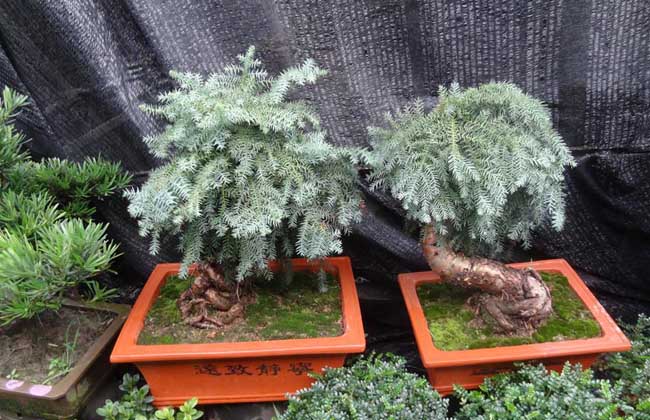
The Norfolk Island pine, also known as the heterophyllous Araucaria, Norfolk Island pine, and fine-leaved Araucaria, is an evergreen tree of the genus Araucaria in the family Araucariaceae. It is generally grown as a potted young tree, under 2 m tall, with a pointed tower-shaped crown, dark green color, upright stem, whorled lateral branches extending horizontally, and twigs alternately arranged in two rows, extending horizontally or slightly drooping. Now let's take a look at how to care for a potted Norfolk Island pine!
Growth habits of the Norfolk Island pine
The Norfolk Island pine originates from the southeastern coastal regions of Oceania, such as northern Australia. It has now been introduced and cultivated in provinces such as Guangdong. Some cities in northern China began introducing Norfolk Island pine bonsai in 2002, and they have grown well. It likes warm, humid environments and grows well in sunny places. It has a certain tolerance for shade, but strong sunlight exposure in summer should be avoided. It is not tolerant of cold or drought and is suited to well-drained, humus-rich, slightly acidic sandy loam.
Propagation methods of the Norfolk Island pine
1. Sowing: Seedlings grown from seed are sturdy and strong, with vigorous growth, making them suitable for mass propagation. Generally, from July to August, the freshly collected seeds are first scarified to promote germination; otherwise, if left in the soil too long, the seeds are prone to rot. Then the treated seeds are sown in a sand bed and covered with fine sand about 1.5-2 cm. Under conditions of 25-28°C and a certain humidity, they will germinate in about 2-3 weeks, and should be planted immediately after germination.
2. Cuttings: If the main axis or a vigorous shoot is chosen as the cutting, it easily causes the plant's crown to be deformed, growing only horizontally and affecting its ornamental value. Cut the tip 2-3 nodes of a healthy, easily rooted branch as the cutting, remove some leaves, soak it in clean water overnight, and then insert it into a sand bed using coarse sand or vermiculite as the substrate. Maintain a temperature of 20-25°C and relatively high air humidity, and it will root in about 3 months.
How to care for a potted Norfolk Island pine?
1. Soil: The Norfolk Island pine is suited to well-drained, humus-rich, slightly acidic sandy loam. When potted, a substrate mixed from garden soil, leaf mold, and peat moss is best.
2. Watering: From spring to autumn, the Norfolk Island pine should be watered more, but waterlogging in the pot must be avoided. During high temperatures and dryness, spray water on the potted plant and the nearby ground to lower the temperature and increase humidity. Water promptly; do not wait until the soil dries out before watering. From late autumn onward, gradually reduce watering to enhance its cold resistance.
3. Light: The Norfolk Island pine likes diffused light and is best placed in a bright spot in a shed. If kept in a dark place for a long time, it should be moved into the sunlight every few weeks for appropriate exposure, which can keep the dark green leaves a beautiful color.
4. Temperature: The Norfolk Island pine has a long growing season and can grow all year round except when the summer temperature exceeds 32°C.
5. Fertilizing: During the growing season, the Norfolk Island pine should be given a supplementary fertilizer every 2 weeks, preferably a compound fertilizer containing nitrogen and potassium. Insufficient fertilizer easily causes the branches and leaves to turn yellow.
6. Pests and diseases: The Norfolk Island pine has very few pests and diseases. When cared for indoors, scale insects are commonly seen and can be controlled by spraying methidathion, chlorpyrifos emulsifiable concentrate, Guoguang Jiebisi, and the like, with good results.
Precautions for the Norfolk Island pine
1. Summer and autumn are the growing season of the Norfolk Island pine. Potted plants can be placed in a semi-shaded spot outdoors or in a ventilated window spot with light. Avoid exposure to blazing sun above 35°C, and do not leave it for long in a lightless, shaded place, as either will cause the branches and leaves to turn yellow or grow leggy, affecting its ornamental value.
2. During the growth of the Norfolk Island pine, to prevent the trunk from leaning to one side, it is best to turn the pot once every half month so the plant receives light evenly. In addition, the trunk of young trees is fragile and easily bends and deforms, so a support should be set up from the young plant stage to fix the trunk. To prevent the plant from growing too tall, it should be repotted once every 2-3 years after the weather warms in spring. Usually, take care to protect the lateral branches so they are not damaged and affect the plant's shape.
3. Under normal conditions, the Norfolk Island pine does not need branch pruning; let it grow naturally. The suitable growing temperature is 10-25°C, and the overwintering temperature is above 5°C. During the winter, some light can be given, the potting soil should not be too dry, and on clear days water should also be sprayed to increase humidity.